Warehouse self storage is a different beast entirely from your typical storage unit. Think of it as the professional-grade big brother to the standard lock-up, built specifically for the demands of business and bulk storage. It gives you the scale and practicality of a warehouse but with the ease and flexibility you’d expect from self storage—no long-term leases, no crippling overheads.
Decoding Warehouse Self Storage
If a regular self storage unit is like renting a spare room or a garage for your personal bits and bobs, warehouse self storage is like having your own mini-distribution centre on speed dial. It’s the perfect middle ground for businesses that have outgrown a simple lock-up but aren’t quite ready to commit to a massive, expensive commercial lease.
These bigger spaces are more than just a place to dump excess stock; they're active operational hubs. This is where businesses can manage inventory, keep expensive equipment safe, and even run light fulfilment operations, all on their own terms. For a growing company, this model is a total game-changer, offering a way to scale up without being weighed down by a rigid, long-term property contract.
Who Benefits from This Model
This kind of storage is a perfect fit for a whole range of businesses that need serious space combined with dead-simple access and top-notch security. It’s not just about stashing overflow stock—it’s a smart move for making your whole operation run smoother.
- E-commerce Retailers: Online sellers can transform a warehouse unit into a mini-fulfilment centre. It’s the ideal spot to hold stock, pack orders, and handle returns without splashing out on a dedicated facility.
- Tradespeople and Contractors: Electricians, plumbers, and builders have a secure home for their valuable tools, equipment, and materials. It keeps everything protected from theft and the elements between jobs.
- Growing Businesses: Companies hitting a growth spurt can easily scale their space up or down. Whether it’s seasonal demand or a big new contract, you only ever pay for the space you’re actually using.
Warehouse self storage provides the physical footprint for growth without the financial anchor of a long-term commercial lease. It’s all about agility, allowing a business to pivot its operational space as quickly as its market changes.
Many providers are now building in features you’d normally only find in large-scale logistics centres. To get a feel for how a traditional warehouse can operate like a business self storage unit, it’s worth looking into the details on value-added warehousing services that really boost functionality. The main difference often boils down to the type of unit you choose, and you can learn more about what sets them apart in our guide comparing indoor vs container storage options. This level of flexibility turns what could be a simple storage space into a crucial part of your company's logistics network.
The Strategic Benefits of Warehouse Storage for Your Business
Choosing warehouse self storage isn’t just about finding a bit of extra room; it's a savvy business decision that directly strengthens your bottom line and makes your operations more nimble. For too long, businesses have been stuck with the traditional path: leasing a commercial warehouse. This usually means getting locked into long-term commitments, paying hefty deposits, and getting hit with surprise costs like business rates and maintenance fees.
Warehouse storage completely flips that old model on its head.
By switching to a flexible solution, businesses can slash their overheads by a massive 40-60% compared to a conventional lease. That’s not just a saving; it’s cash you can pump back into what really matters—more stock, better marketing, or growing your team. Think of it as swapping a restrictive mortgage for a smart, pay-as-you-go subscription that expands right alongside you.
This infographic nails down the core ideas that make warehouse self storage such a powerful asset for any modern business.
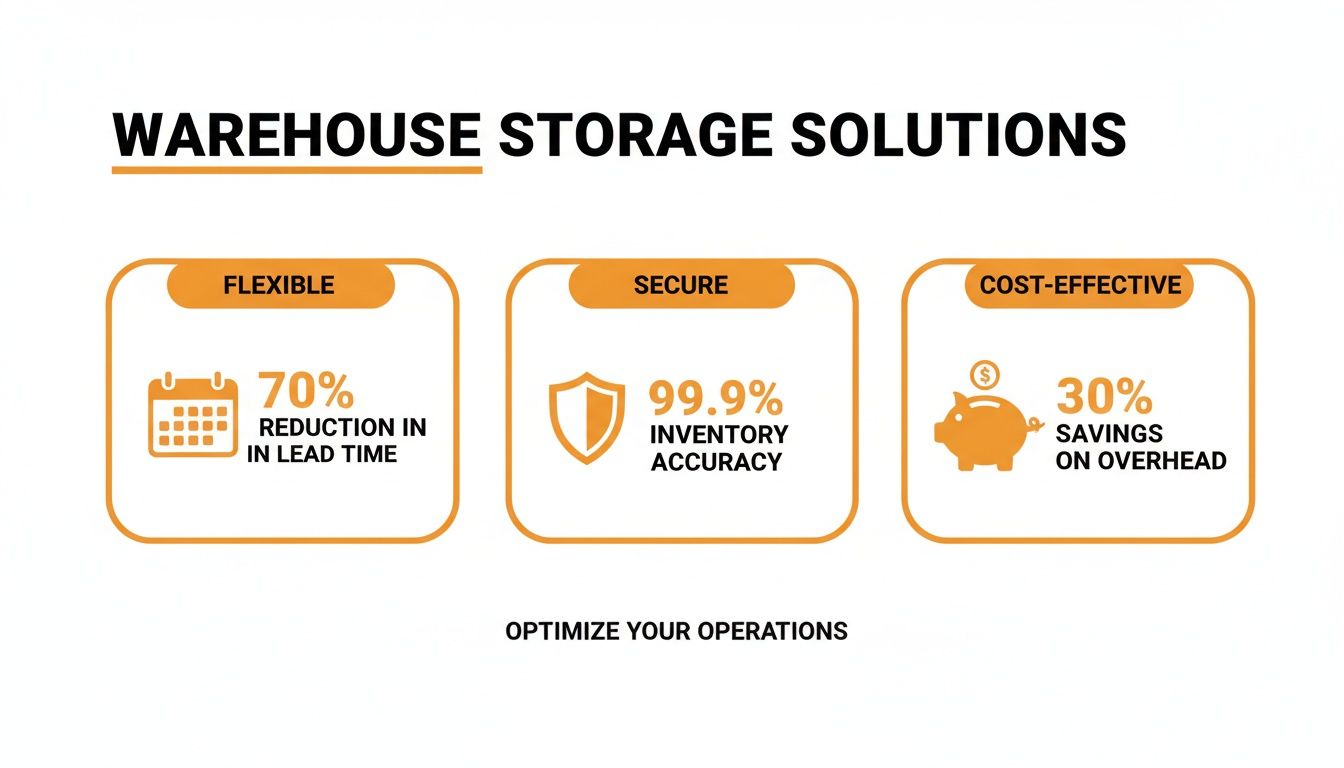
When you combine this kind of flexibility with solid security and real cost-efficiency, you’ve got a powerful tool for scaling up without taking on huge financial risks.
Unlock True Operational Flexibility
One of the biggest game-changers is the freedom to scale your space whenever you need to. A traditional lease chains you to a fixed square footage, which is almost always inefficient. You’re either paying for empty, echoing space during your quiet months or scrambling for room when things get busy.
Warehouse storage lets you react to market shifts in real-time. An e-commerce business, for instance, can easily grab a larger unit to handle the Christmas rush and then drop back to a smaller one in January, all without facing any penalties. This kind of agility keeps your storage costs perfectly in sync with your revenue.
Boost Your Logistical Efficiency
Getting all your stock, tools, or equipment centralised in one easy-to-reach spot is a massive workflow upgrade. Instead of juggling multiple small lock-ups or leaving valuable gear on different job sites, everything is organised and secure under one roof. This immediately leads to some serious improvements:
- Faster Fulfilment: E-commerce businesses can pick, pack, and ship orders far more quickly.
- Improved Security: Tradespeople can lock away expensive tools and materials, drastically cutting the risk of theft.
- 24/7 Access: You can operate on your own schedule, not a landlord’s. Get to your goods whenever you need them, whether it’s for an early-morning start or a late-night stock take.
It's no surprise that the UK's self-storage industry is booming to meet this demand. Projections show the total available space will hit 64.3 million square feet by 2025—a 7.2% jump that proves just how vital these services have become. With an annual turnover already north of £1.2 billion, the sector's growth is a clear testament to its value for businesses chasing flexible, cost-effective ways to operate. You can dive deeper into the numbers in the complete 2025 UK Self Storage Industry Report.
By transforming a fixed cost into a variable one, warehouse self storage allows you to convert a potential liability—excess or insufficient space—into a strategic asset that fuels growth and resilience. It’s a smarter way to manage your physical footprint in a fast-moving market.
Who Actually Uses Warehouse Self Storage
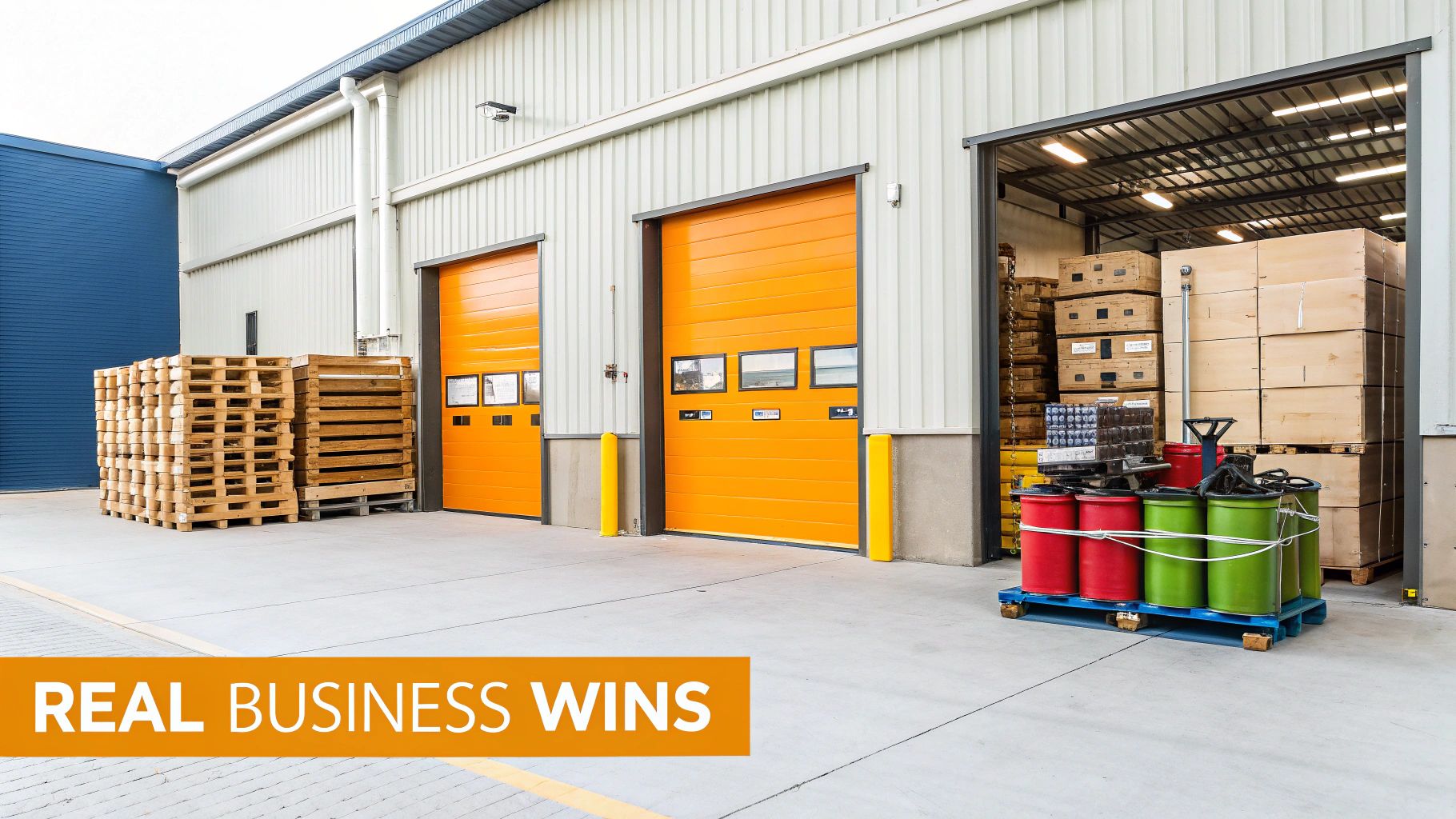
It’s one thing to talk about the concept of warehouse self storage, but it’s another to see how it actually plays out in the real world. This isn’t some exclusive service for massive corporations; it’s a seriously practical tool for a whole range of businesses and tradespeople looking for a smarter way to handle their physical assets.
Let’s step away from the theory and look at the real-life stories of businesses using these spaces to solve their everyday operational headaches. From online sellers to construction firms, the applications are as varied as the businesses themselves.
The E-commerce Fulfilment Hub
Picture an online retailer who started out in their spare room, quickly graduating to a garage overflowing with stock. Sales were booming, but they couldn't possibly justify the cost and commitment of a traditional warehouse lease.
By taking on a 500 sq ft unit, they instantly created a slick, streamlined fulfilment hub. This dedicated space meant they could finally:
- Get their inventory organised on proper racking for much faster picking and packing.
- Set up a proper packing station to process orders far more efficiently.
- Arrange for couriers to collect shipments directly from a professional business address.
This move didn't just clear out their garage; it completely transformed their operation. It gave them the power to handle more orders and project a much more professional image, all without being shackled to a crippling long-term lease.
The Tradesperson’s Secure Base
Now, think about a construction company with several teams working across different job sites. Leaving expensive tools and gear in a van overnight or on an unsecured site is a massive gamble. A single theft can bring a project to a screeching halt and cost thousands to replace everything.
This is where a secure outdoor container or a drive-up warehouse unit becomes an operational lifesaver. A single, secure lock-up gives them a central base to:
- Protect high-value assets, like tools worth over £50,000, from thieves.
- Store bulk materials bought at a discount, ready to go for the next job.
- Keep everything organised, which saves a ton of time and money that’s usually lost on misplaced equipment.
For many businesses, a warehouse self storage unit isn't just storage—it's an operational headquarters that provides security, organisation, and the flexibility to adapt to the demands of any project.
The UK's self-storage landscape really shows this growing demand. While plenty of residential customers use storage, businesses—especially e-commerce sellers and tradespeople—now make up a solid 27% of all customers. They're drawn in by the huge cost savings of 40-60% compared to traditional warehousing, using over 680,000 units across the country to fuel their growth. You can dig into more of these trends and see how different people use storage in The Box Co.'s 2025 UK storage statistics.
These examples really show just how adaptable warehouse storage is, offering smart solutions to real-world business challenges.
How to Choose the Right Unit Size and Type
Picking the wrong unit for your warehouse self storage isn’t just a minor hiccup—it can be a seriously expensive mistake. Paying for space you don't use will chip away at your profits, but underestimating what you need can throw your entire operation into logistical chaos. The trick is to stop thinking in abstract numbers and start picturing your stuff in a real-world space.
For example, a 200 sq ft unit isn't just a measurement. It’s a tangible space that can comfortably hold around 20 standard pallets of inventory, or everything from a large four-bedroom house. Visualising your stock or equipment this way is the first step toward making a smart choice. To really nail down the specifics, our detailed storage unit size guide is a great resource for breaking down exactly what fits where.
Indoor Warehouse vs Outdoor Container
It’s not just about size; the type of unit is just as crucial. Your two main options—indoor warehouse units and outdoor container storage—are built for very different jobs. The right one for you depends entirely on what you’re storing.
Indoor units are tucked away inside a larger building, giving them an extra layer of protection from the elements. This makes them perfect for anything sensitive to temperature swings or humidity. On the other hand, outdoor containers are tough, drive-up steel units designed for durability and super-easy access.
The right choice boils down to a simple question: Do your items need a stable, sheltered environment, or do they just need to be kept secure and dry?
To help you decide, let's look at a side-by-side comparison.
Indoor Warehouse Units vs Outdoor Container Storage
Here’s a direct comparison to help you decide between indoor and outdoor large-scale storage options based on your specific needs.
| Feature | Indoor Warehouse Unit | Outdoor Container Storage |
|---|---|---|
| Climate Protection | Excellent. Often climate-controlled, protecting against damp, rust, and extreme temperatures. | Good. Weatherproof and secure against rain and wind, but not temperature-regulated. |
| Best For | Electronics, documents, textiles, valuable furniture, and sensitive inventory. | Building materials, heavy machinery, tools, vehicles, and non-perishable stock. |
| Accessibility | Access via internal corridors. Can involve trolleys and lifts. | Direct drive-up access, making it incredibly easy to load and unload bulky items. |
| Security | Multi-layered with building access control, CCTV, and individual unit alarms. | Highly secure with heavy-duty locks, CCTV monitoring, and perimeter fencing. |
Ultimately, it comes down to knowing your inventory. Could your goods be damaged by the winter cold or summer heat? If there's any doubt, an indoor unit is the safer bet. But if you’re storing rugged equipment and need to get in and out fast, an outdoor container is probably the more practical and cost-effective solution.
What to Look For in Security and Protection
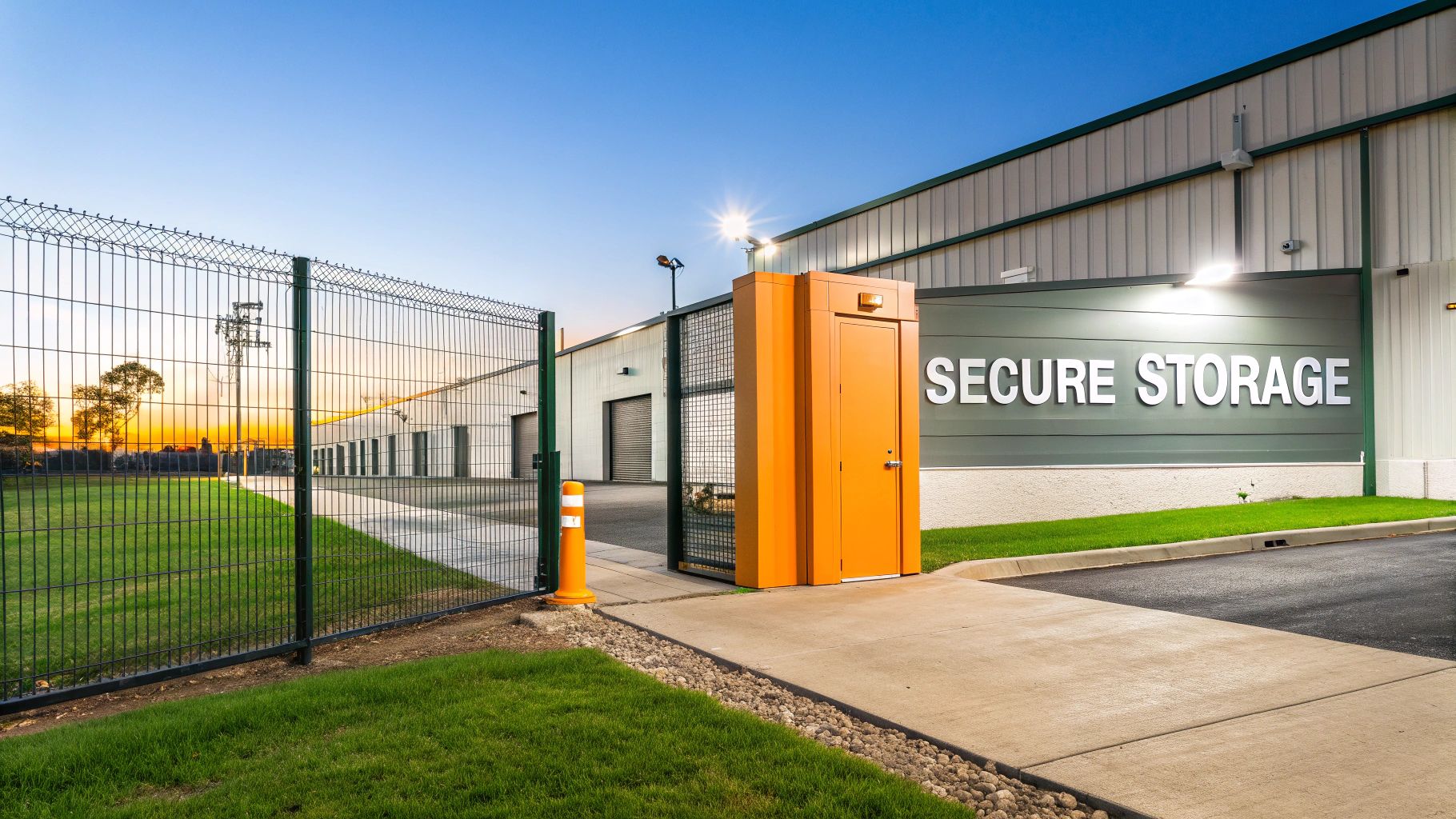
Let's be honest, when your business assets are on the line, basic security just won’t cut it. Storing high-value inventory or essential equipment in a warehouse self storage facility isn't just about finding space; it's about demanding a multi-layered defence system that works around the clock.
Think of it like securing a fortress. A simple padlock on the door is never enough. You need concentric rings of protection that deter potential threats before they even get close. This starts with a strong outer perimeter, moves to controlled access points, and finishes with robust security on your individual unit itself.
Core Security Layers to Demand
Before you even think about signing a contract, you need to verify that a facility offers a comprehensive security package. For us, these features are non-negotiable when you're protecting valuable business assets.
- 24/7 Monitored CCTV: Look for high-definition cameras covering all the key areas—entrances, exits, and corridors. And make sure the footage is actively monitored, not just sitting on a hard drive somewhere.
- Perimeter Security: A solid perimeter fence is the first line of defence. This should be paired with controlled electronic gate access that needs a unique code or key fob to get in.
- Individually Alarmed Units: The best facilities, like Orange Box Self Storage, go a step further by offering alarms on each individual unit. It’s a crucial alert that tells you if your specific space has been breached.
A complete security strategy also has to cover every single access point. This extends to the logistical areas, where understanding details like choosing the best dock lock for loading dock security needs becomes critical for any facility that handles frequent deliveries.
True security is all about layers. It’s the combination of perimeter fencing, controlled gate access, constant CCTV surveillance, and individual unit alarms that creates a genuinely secure environment for your goods.
Protection from the Elements
Beyond theft, you also need to think about protection from environmental damage. Are you storing sensitive electronics, vital documents, or delicate textiles? If so, a climate-controlled indoor unit is essential to prevent harm from damp and extreme temperature swings.
On the other hand, if you’re storing rugged tools or building materials, a weatherproof steel container provides excellent protection from the wind and rain.
Ultimately, robust security and environmental protection are vital in the UK self-storage market. With the industry’s turnover now past £1.2 billion, leading facilities invest heavily in these features to safeguard the assets of over 680,000 business users. But remember, physical security is only one part of the picture. For complete peace of mind, have a look at our guide on insurance for contents in a storage unit.
Getting Started with Orange Box Warehouse Self Storage
Ready to sort out your storage challenges and get your operations running smoothly? Grabbing a warehouse self storage solution with Orange Box is a straightforward process, designed to get you the space you need without any of the usual hassle. We’ve stripped back the paperwork and admin to make it simple to go from a quick query to moving your stock in.
Our whole approach starts with being upfront and transparent. You can get an instant online quote in just a few seconds, giving you a clear, no-surprises idea of the cost from the get-go. Whether you need a massive unit at our Gateshead facility or a secure container in Middlesbrough, our system gives you everything you need to make the right decision on the spot.
Your Simple Booking Journey
We believe finding the right storage should be quick and painless. The entire process is built around your convenience, removing the typical headaches that come with securing commercial space.
- Get Your Instant Quote: Use our online tool to pick your location and unit size, and you'll see the price immediately.
- Reserve Your Space: Happy with your choice? You can reserve your unit right there online or have a chat with our support team over the phone.
- Move In On Your Schedule: With a flexible contract sorted, you can move your items in whenever it works for you. Simple as that.
At Orange Box, we’ve taken the complexity out of business storage. Our flexible, rolling contracts mean you’re never locked into a long-term commitment. It gives you the power to adapt your space as your business grows and changes.
The Orange Box Advantage
Choosing Orange Box is about more than just renting four walls and a door; it’s about partnering with a team that gets your security and operational needs. Every single one of our locations is kitted out with top-tier security to give you complete peace of mind.
- Advanced Security: Our facilities are protected by 24/7 monitored CCTV, secure electronic gate access, and individually alarmed units for that extra layer of defence.
- Dedicated Support: Our friendly team is always on hand to answer your questions, offer advice on unit sizes, and make sure your entire experience is seamless from start to finish.
- Strategic Locations: With prime spots like Gateshead and Middlesbrough, you get dead-easy access to major transport routes, making your logistics far simpler.
This commitment to great security and proper service ensures that your business assets aren't just stored—they're properly protected. Get started today by grabbing your free, no-obligation quote and discover a smarter way to manage your business’s physical footprint.
Your Questions About Warehouse Storage, Answered
When you're looking at warehouse self storage, it’s completely normal to have a few questions before you jump in. We get it. To make sure you move forward feeling confident, we’ve gathered some of the most common queries we hear from business owners and individuals and answered them straight.
What Can I Legally Store in My Unit?
While our warehouse units are incredibly versatile, there are strict rules in place to keep everyone—and their property—safe. For the most part, you can store business inventory, equipment, tools, and archived documents without any issues.
However, some items are universally off-limits for safety and legal reasons. This list always includes:
- Flammable or Combustible Materials: Think petrol, paint, solvents, and gas canisters. They're a definite no.
- Perishable Goods: Any food items that can spoil are forbidden, as they attract pests.
- Living Things: This one’s straightforward – no plants, animals, or any other living organisms.
- Illegal or Hazardous Items: Firearms, explosives, and toxic waste are strictly prohibited.
It’s always a good idea to double-check the specific terms of your rental agreement, as policies can vary a little between facilities.
Is My Own Insurance Necessary?
Yes, absolutely. While a reputable facility like Orange Box Self Storage provides top-tier security for the building itself, you are responsible for insuring your own goods. The facility’s insurance covers the structure, not the contents of individual units.
Think of it this way: your landlord’s building insurance doesn’t cover your personal belongings inside your flat—you need your own contents insurance for that. The same principle applies here. Your own policy is what protects you against unforeseen events like fire, theft, or water damage.
What Is the Minimum Rental Term?
One of the best things about warehouse self storage is the flexibility, and that definitely extends to contracts. Most facilities, including Orange Box, run on a simple rolling monthly agreement.
This means you’re not locked into a long-term lease. You can rent a unit for as little as one month, which gives you the freedom to scale your space up or down as your business needs change. This pay-as-you-go model is far more practical and cost-effective than a traditional commercial lease that often demands a commitment of several years.
Can Deliveries Be Sent Directly to My Unit?
This is a huge plus for many of our business clients. Most modern facilities are well-equipped to handle commercial deliveries, allowing couriers and suppliers to drop off pallets and packages directly.
Policies do differ, but many providers will happily accept deliveries on your behalf during office hours and place them securely in your unit for you. This service effectively transforms your storage unit into a functional logistics hub, saving you time and streamlining your supply chain. Just be sure to chat with your facility manager about their specific delivery acceptance policy to get everything set up correctly.
Ready to secure a flexible, safe, and accessible home for your business assets? The team at Orange Box Self Storage is here to help you find the perfect warehouse storage solution. Get your free, no-obligation quote today and see how easy it is to get started.