

A Grantham electrician can lose half a morning searching for the right fitting beneath ladders, cable drums and spare tools in a crowded van. A market trader may have seasonal stock stacked through the spare bedroom, while an online seller works around parcels in the hallway and risks sending the wrong item because incoming goods, packed orders and returns share one untidy space.
That isn't a shortage of floor area. It's a workflow problem. The right storage solutions for small businesses in Grantham should reduce retrieval time, protect stock, support fulfilment and remain flexible as the business changes. Rent matters, but so do access hours, loading arrangements, security, contract terms and the distance between the unit and the next job.
Grantham's business base makes this a mainstream operational issue. The UK had an estimated 5.5 million private-sector businesses at the start of 2024, including 5.45 million small businesses with 0 to 49 employees, representing 99.2% of all businesses, according to the UK Government's Business Population Estimates. A town with trades, retailers, professional firms and logistics activity needs storage that works around real working days, not generic household overflow.
Why Grantham Small Businesses Need Storage That Works as Hard as They Do
Take the electrician with the overloaded van. Every morning starts with a decision that shouldn't exist: unload equipment to reach a part, or carry unnecessary stock to the next appointment. A missing connector means a diversion to a supplier. A badly placed ladder delays loading. Tools left unsecured create a security concern, while boxes moved repeatedly suffer avoidable damage.
The same pattern affects other local operators. An online seller may know exactly what is in stock but still lose time because best-selling products sit behind slow-moving cartons. A small office may have files, exhibition materials and archived paperwork occupying valuable workspace. A gardener might need secure room for tools and materials without paying for a full warehouse.
Practical rule: Choose storage by the actions your team performs there, not by the number of boxes you can fit inside.
Grantham's industrial history helps explain why flexible space remains useful. The British Manufacturing and Research Company site began as a wartime shadow factory in the 1930s, producing 20mm Hispano-Suiza aircraft cannon, with 24-hour working becoming normal during the Second World War. The site later went through post-war uses before the company closed in 1992 and the site was sold in 1994, a local pattern of production, reuse and changing premises documented in the official detailed business population tables.
That history doesn't dictate where a modern business should store stock, but it reflects a town where firms may operate from converted, compact or shared premises rather than purpose-built warehouses. Off-site storage can therefore act as a buffer between the customer-facing workspace and the less glamorous parts of the operation, including archived records, spare equipment, packaging and seasonal inventory.
Storage also competes with other business priorities. If you're deciding which activities deserve limited time and budget, guidance on how to prioritise marketing channels can help you weigh visibility work against operational improvements. The point is not to choose marketing or storage. It's to understand whether the storage arrangement is freeing productive time or consuming it.
A suitable unit should answer practical questions:
- Can a tradesperson collect parts before the first appointment?
- Can an online seller pick, pack and hand over orders without double-handling cartons?
- Can an office retrieve records without exposing them to damp or disorder?
- Can the business reduce space when seasonal stock leaves?
- Can staff and contractors access the unit safely and consistently?
If the answer is no, a larger unit won't fix the underlying issue. It may only give the clutter more room.
The Four Main Storage Types and Their Trade-Offs
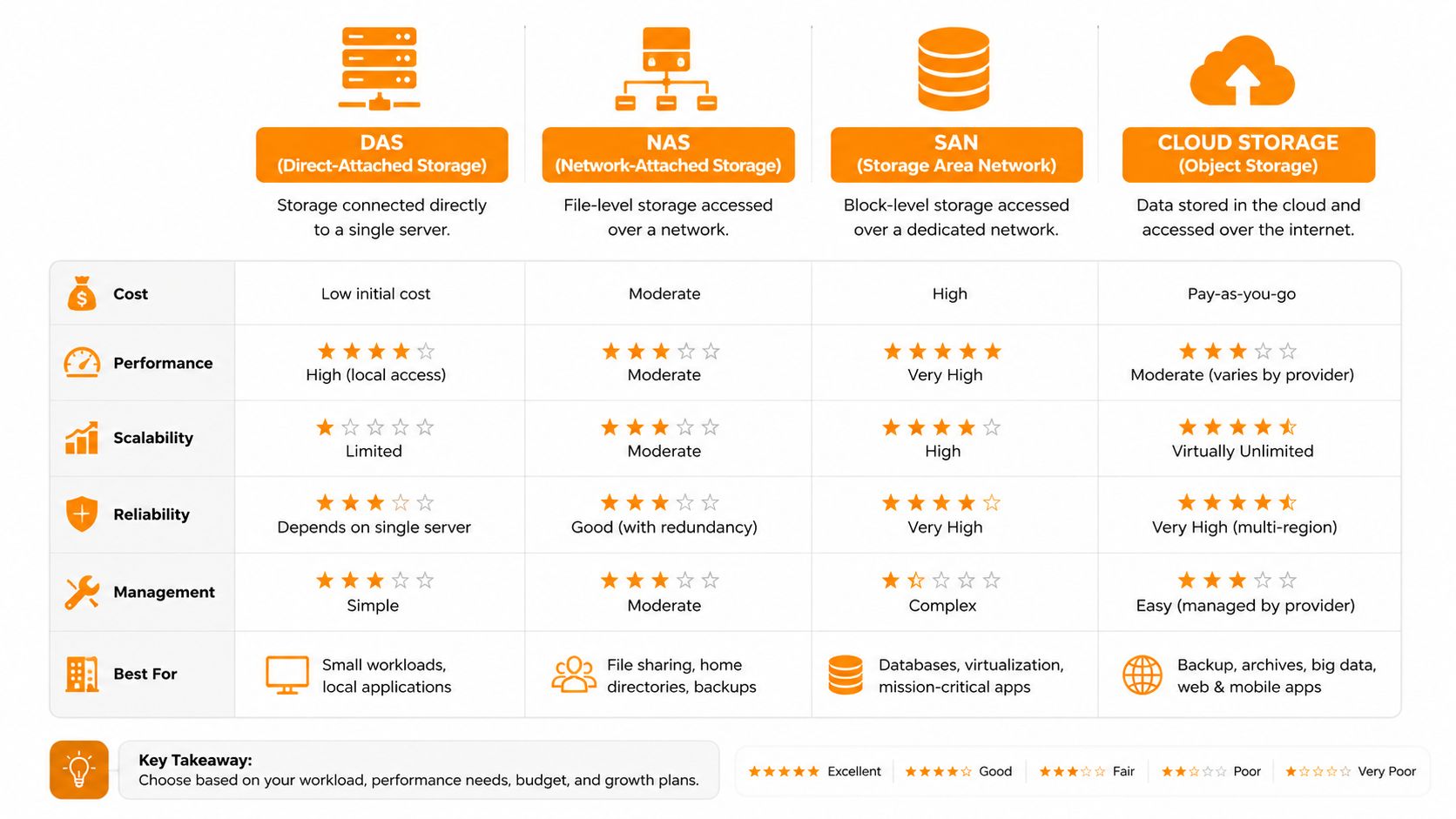
The four main choices are traditional self-storage, container storage, warehouse-style units and office-storage hybrids. Treat them as different working environments, not interchangeable boxes.
Traditional self-storage units
A standard internal unit is like renting a spare garage without taking on a whole property. It normally suits boxed stock, tools, records, packaging and household-sized business overflow. You get a defined area, controlled entry and a relatively straightforward rental arrangement.
The trade-off is workflow. Internal units can be excellent for frequent access when opening hours match your business, but they may be less convenient for pallet deliveries, large machinery or repeated loading with a van. Ask whether trolleys, lifts, loading bays and vehicle access support the way you work.
Container storage
Container storage is the practical budget option for bulky tools, equipment and sturdy stock. Think of it as a secure metal shed in a yard. It gives you a clear footprint and can work well for a contractor who loads materials in batches rather than picking individual products throughout the day.
The compromise is accessibility and environmental control. A container may be less comfortable for sorting small items, less suitable for paper or climate-sensitive goods, and more awkward when you need a quick retrieval. It's cheap only if the contents tolerate the conditions and your access pattern remains occasional.
Warehouse-style or business-park units
A warehouse-style unit resembles renting a spare shop floor or workshop rather than a cupboard. It suits businesses that need more room to receive deliveries, stage stock, use shelving or handle bulky goods. The nearby warehousing ecosystem matters here. Company-registration data identifies operators in Grantham and Lincolnshire under storage and warehousing classifications including SIC codes 52103 and 52101, as shown in this Companies House listing.
These units usually make more sense when storage has become part of daily operations. They can offer better vehicle access and space for organised handling, but they may involve higher rent, more complex terms or a less central location.
Office-storage hybrids
An office-storage hybrid combines desk space with a stockroom, archive room or small workshop area. It's the closest option to adding a second room to your business. Professional services firms, designers and small agencies may value the ability to work, meet clients and store materials at one address.
The downside is that you may pay for workspace you don't need. It's also a poor fit for dirty, heavy or high-volume stock. Choose it when proximity to staff and administration matters more than loading speed.
The right question isn't “Which unit is cheapest?” It's “Which unit lets us complete the next job with the fewest extra steps?”
How to Choose the Right Storage Setup for Your Business
Start with the business rhythm. A plumber, online seller and professional services office may all need the same amount of floor area, yet require completely different storage performance.
A tradesperson should rank access frequency first. The unit must support early starts, quick loading and secure tool retrieval. Security follows closely because tools and specialist equipment are expensive to replace, while climate control usually matters less for durable materials. Contract flexibility matters if the business is growing or moving towards a larger workshop.
An online seller should prioritise workflow and access. Shelving, lighting, a packing surface and space for incoming parcels can matter more than a low headline rent. Climate control moves up the list for clothing, paper goods, electronics or stock vulnerable to damp and temperature changes. A unit that's cheap but awkward to reach can slow fulfilment every day.
A professional services office should put security, document protection and climate control near the top. Access may be less frequent, but archived files need orderly retention and safe retrieval. A small unit with suitable internal conditions can be more sensible than an exposed container, even when the container offers a lower price.
A useful general guide to choosing business storage options can help you consider the premises decision alongside insurance, access and business continuity. For a more local service comparison, review business self-storage options and test each feature against your actual operating day.
| Criterion | Trades | Online seller | Office / professional |
|---|---|---|---|
| Access frequency | Highest priority, especially before jobs | Highest priority for picking and dispatch | Moderate, based on retrieval needs |
| Security | Critical for tools and equipment | Critical for saleable stock | Critical for records and client materials |
| Climate control | Usually secondary | High for sensitive products | High for paper and delicate items |
| Contract flexibility | Important during business growth | Essential when stock cycles change | Useful for archive reduction |
| Inventory size | Driven by materials and equipment | Driven by product range and turnover | Usually limited to records and samples |
| Cost | Judge against lost job time | Judge against fulfilment speed | Judge against workspace recovered |
Cost should come last in the decision, not because it's unimportant, but because a cheap unit with poor access may cost more in productive time. Once you've ranked these criteria, unit size becomes easier to judge. You'll know whether you're paying for storage alone or for a working extension of the business.
Unit Sizing and Layout Examples for Common Grantham Businesses
Avoid choosing a unit by vague labels such as small, medium or large. Measure the stock you have now, identify what arrives next, and leave a usable route from the door to the items you retrieve most often.
For tradespeople, a 75 to 100 sq ft unit can suit bulk materials, pipe, secure tool overflow and equipment that shouldn't remain in the van. Put the heaviest items close to the entrance, use racking near the roller door and keep a clear route for loading. Don't stack frequently used fittings behind long-term stock.
Online sellers need a layout built around movement, not storage density. A 50 to 150 sq ft unit may accommodate shelving along one wall, a packing zone and a separate position for incoming parcels. Keep best sellers at waist height, place packaging within reach of the packing surface and label every shelf by product or SKU. If returns enter through the same route as outgoing orders, give them a defined holding area so they don't contaminate pick stock.
A small office or professional services firm may need 25 to 75 sq ft for archived files, samples, event materials or seasonal marketing equipment. Climate control matters most here, particularly where paper and sensitive materials are involved. If you're storing records, consider a dedicated business document storage service rather than treating files as miscellaneous boxes.
| Business type | Recommended unit | Typical contents | Layout priority |
|---|---|---|---|
| Tradesperson | 75 to 100 sq ft | Tools, pipe, fittings, equipment and materials | Heavy stock by the door, racking and clear loading route |
| Online seller | 50 to 150 sq ft | Saleable stock, packaging, parcels and returns | Shelving, pick path and dedicated packing zone |
| Office / professional | 25 to 75 sq ft | Files, samples and marketing materials | Labels, dry conditions and easy archive retrieval |
Use floor tape or cardboard to mark the proposed footprint at your current premises. Stack representative boxes to the height you can safely handle, then allow circulation space rather than filling every corner. A full unit may look efficient, but it becomes slow to work in.
Don't over-buy during the first six months. Start with the smallest footprint that supports safe movement and predictable growth. Review the layout when stock cycles change, not only when the door becomes difficult to close.
A Local Checklist for Evaluating Grantham Storage Providers
Visit the facility before signing. Photos rarely show the distance between parking and the unit, whether a van can turn comfortably, or how easy it is to move a heavy box from the loading point.
Start with security. Ask whether CCTV covers entrances, vehicle areas and internal access points. Check for individual alarms, perimeter fencing and gated entry. Find out who can enter the site and whether staff record unusual activity. A keypad alone doesn't tell you how the wider site is managed.
Questions to ask on site
- Access hours: Can a tradesperson arrive early, or can an online seller collect packing stock after a late dispatch?
- Loading arrangements: Is there level access, a trolley, a loading bay and parking close enough for repeated trips?
- Climate protection: Are internal units temperature-managed, and which goods does the provider recommend keeping away from containers?
- On-site management: Is someone present to handle deliveries, answer questions and respond to access problems?
- Insurance requirements: Must you arrange separate cover, use the provider's option or provide proof of an existing policy?
- Contract terms: Is the agreement rolling monthly, fixed-term or subject to notice rules that could leave you paying after moving out?
Orange Box Self Storage operates in the Grantham area and presents business storage with flexible contracts, varied unit sizes and secure access. Treat those as points to verify directly. Confirm current opening or access hours, insurance options, deposits and any additional charges before comparing the offer with another provider. The Grantham business storage facility information is a useful starting point, but your stock and working pattern should decide whether the setup fits.
Compare the service you'll use, not the brochure you'll read.
Score two or three providers against the same categories. Give each one a simple rating for access, security, loading, environmental protection, flexibility and total cost. Don't allow a low rent to compensate automatically for restricted access or poor loading.
Storage also supports the way customers find and contact local firms. If your business is improving its online visibility, a practical service-business SEO strategy for 2026 can sit alongside the operational review. The strongest local presence still suffers if the business can't locate stock, meet delivery commitments or respond promptly.
The Hidden Costs of Choosing the Cheapest Unit
The cheapest unit can be the most expensive choice when your business uses storage actively. A low rent doesn't compensate for a journey that forces you to leave a job, a loading area that turns every collection into a slow manual transfer, or conditions that damage the contents.
Restricted access is the first hidden cost. A tradesperson who can't collect materials before an appointment may make an extra trip or delay the customer. An online seller with limited evening access may miss a dispatch routine and spend the next morning catching up.
Environmental conditions create another risk. Damp can affect paperwork, packaging and stock. Poor temperature control may damage electronics, textiles or other sensitive goods. If the provider's insurance has exclusions or a high excess, a theft or damaged pallet can remove the apparent saving immediately.
Contract terms can trap cash too. A business that outgrows a unit shouldn't have to keep paying for unused space, while a firm with seasonal inventory needs a sensible way to reduce its footprint after the busy period.
Consider a simple comparison without pretending to know the exact figures in advance. A cheaper out-of-town container may save rent, but two unnecessary journeys can consume the saving in fuel and staff time. One damaged pallet can erase it altogether. A slightly dearer Grantham facility with longer access, better loading and stronger security may produce a lower operating cost even when its advertised price is higher.
The Midlands benchmark provides useful context. One UK storage industry source places regional pricing at about £23 per sq ft per year, compared with £29.13 per sq ft nationally in 2025; the figures appear in this UK storage pricing analysis. At Midlands rates, a 100 to 150 sq ft unit equates to roughly £2,300 to £3,450 per year, before provider-specific extras.
Use those figures as a benchmark, not a quote. Calculate the true cost per productive hour, not just the cost per square foot.
Budgeting Tips and Your Next Steps in Grantham
Build a monthly budget that includes more than rent. Add insurance, deposits, access charges, locks, shelving, packing materials and the time spent travelling to the facility. If the unit sits outside your normal route, include fuel and the value of staff time for each collection.
For an online seller considering a move from a 40 sq ft unit to a 75 sq ft unit, list the added rent first, then add any insurance change, shelving, packing bench, labels and access-related costs. Compare that total with the operational gain: fewer stock searches, a cleaner pick path, faster packing and less stock kept at home. Don't invent the answer before you collect quotes. Use the same cost sheet for every provider so the comparison stays fair.
A practical booking sequence looks like this:
- Measure current stock: Record floor footprint, stack height, awkward items and incoming deliveries.
- List must-have features: Separate essentials, such as early access or climate protection, from preferences.
- Shortlist providers: Compare two or three facilities in and around Grantham.
- Visit in person: Test parking, loading, lighting, security and the route to the unit.
- Read the contract: Check notice periods, insurance, deposits, access conditions and extra charges.
- Start proportionately: Use a short trial or rolling arrangement where available before making a longer commitment.
Review the decision every six months. Stock cycles change, product ranges expand, records move into digital systems and a tradesperson may add equipment or staff. Storage should follow turnover and workflow, not become a permanent cost simply because nobody revisited the arrangement.
The best storage solutions for small businesses in Grantham give you room to work, not just room to put things. Measure first, price the full operating cost and choose the facility that removes friction from the next customer order or job.
Orange Box Self Storage offers business storage, varied unit sizes, secure access and flexible rental arrangements for firms that need space for stock, tools, equipment or documents. Visit Orange Box Self Storage to review the available options and discuss a setup that matches how your Grantham business works.