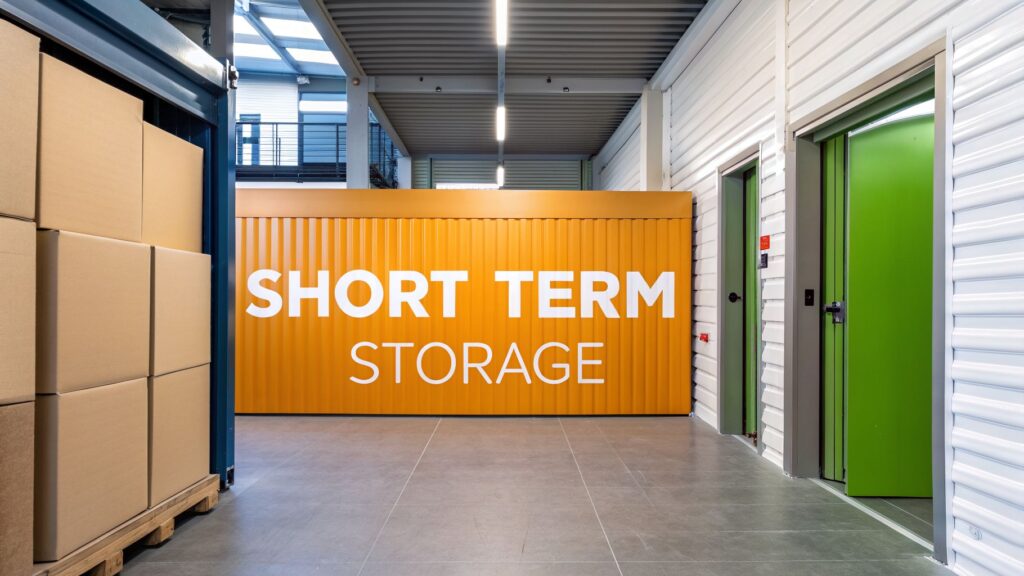
Think of short term storage as a flexible, on-demand spare room. It’s a temporary space you can rent for just a few weeks or months, giving you breathing room during life's big transitions without getting tied into a lengthy contract. It’s a simple, 'pay-as-you-go' answer to a very common problem: having more stuff than space.
Unlocking Flexibility with Short Term Storage
At its heart, short term storage is all about flexibility. Unlike traditional leases that often demand long, rigid commitments, this option is designed for when you have a temporary overflow of belongings. It’s the perfect fix when your needs are short and specific.
This kind of adaptable space has become more important than ever. The UK self-storage market is on track to hit £2.4 billion by 2034, partly because renters need more flexible solutions and remote work has changed how we use our homes. This trend, explored in the full UK self-storage market report, shows just how much people need convenient, temporary space.
Who Benefits from Short Term Storage?
Many people right here in the Nottingham and Derby area find themselves in situations where a temporary storage unit is the ideal solution. Whether you’re dealing with a house move, a big decluttering project, or just need a bit of extra room, understanding the practical side of an event like downsizing and moving can make your needs much clearer.
A quick look at this table can help you see if short term storage is the right fit for you.
Is Short Term Storage Right for You?
| User Type | Common Scenario | Key Benefit |
|---|---|---|
| Homeowners | Moving house, renovating, or decluttering to sell. | Frees up space at home without a long-term cost. |
| Students | Moving between halls and home for the summer. | Avoids the hassle of transporting everything back and forth. |
| Small Businesses | Managing seasonal stock or holding extra inventory. | Provides flexible space without a costly warehouse lease. |
| Tradespeople | Securing tools and materials between jobs. | Keeps valuable equipment safe and accessible. |
As you can see, it’s a practical fix for a wide range of temporary challenges.
Here’s a closer look at a few common scenarios where it proves invaluable:
- Homeowners: When you’re getting a house ready for sale, decluttering is everything. A short term unit can hold that extra furniture and those personal bits and bobs, helping you create a more spacious and appealing home for viewings. It's also a lifesaver during renovations or when there's an awkward gap between moving out of your old place and into the new one.
- Students: University life means a lot of moving—from halls to student houses and then back home again. A small, affordable unit is perfect for stashing your belongings over the summer break, saving you the headache of lugging everything across the country.
- Businesses and Tradespeople: Small businesses can use short term storage to handle seasonal inventory swings or to hold onto excess stock without committing to a larger, more expensive warehouse. For local tradespeople, it’s a secure spot to keep tools and materials safe and sound between jobs.
Think of it like this: short term storage isn’t about finding a permanent second home for your things. It’s about creating a temporary, secure holding bay that gives you breathing room during a period of change. It bridges the gap, allowing you to focus on the task at hand, whether that’s selling your home or growing your business.
Choosing the Right Storage Unit Size
One of the first questions on everyone’s mind is, ‘What size storage unit do I actually need?’ It’s a great question because getting it right is crucial. Picking one that’s too big means you’re paying for empty space, but one that’s too small will leave you playing a stressful game of real-life Tetris on moving day.
Visualising the space is the best way to get a feel for what you need. For example, a 25 sq ft unit is about the size of a large walk-in wardrobe. It’s perfect for stashing away boxes, a few small bits of furniture, or the entire contents of a student dorm room over the summer. It's a solid choice for a quick declutter or for storing seasonal gear like skis or garden furniture.
To make things even clearer, this decision tree shows how different people—from homeowners to students—can figure out their short-term storage needs.

The flowchart helps connect common life events, like moving house or starting uni, directly to the type of storage that makes the most sense. It’s a simple way to see where you fit in.
Comparing Common Unit Sizes
When you need a bit more breathing room, a 50 sq ft unit offers space comparable to a large garden shed. You can comfortably hold the contents of a studio flat in there, including a sofa, a bed, and plenty of boxes. For those moving out of a one-bedroom flat, a 75 sq ft unit is often the sweet spot.
One of our most popular sizes, especially for homeowners, is the 100 sq ft unit. Think of it as being about the size of a single-car garage. It’s large enough to store the furniture and belongings from a two-bedroom flat or a small house, making it a reliable go-to for anyone between moves.
To help you get a better handle on what each size can hold, here’s a quick comparison.
Typical Short-Term Storage Unit Sizes and What They Hold
| Unit Size (sq ft) | Comparable To | Typically Holds |
|---|---|---|
| 25 | Large walk-in wardrobe | Boxes, small furniture, student dorm contents, seasonal items. |
| 50 | Large garden shed | Contents of a studio flat, including a sofa, bed, and boxes. |
| 75 | Transit van | Contents of a one-bedroom flat. |
| 100 | Single-car garage | Furniture and belongings from a two-bedroom house. |
This should give you a good starting point, but if you want to dive deeper, you can explore our complete storage unit size guide which provides even more comparisons.
Tips for Making the Right Choice
Before you commit, take a quick inventory of everything you plan to store. It’s easy to focus on floor space, but don’t forget to think vertically. Using sturdy, uniformly sized boxes means you can stack them high and really make the most of the unit’s height—you might even get away with renting a smaller, cheaper unit.
The best way to get a true feel for the space is to see it for yourself. We always suggest popping into one of our facilities in Nottingham or Derby to look at a few different sizes. A quick five-minute visit can save you from making a costly mistake.
It’s no secret that storage is in high demand. The UK now has around 64 million square feet of self-storage space, but with indoor occupancy rates hitting a peak of 77 percent in October, booking ahead is a smart move. This ensures you’ll get the right-sized unit when you need it, especially during the busiest times of the year.
Understanding Your Short Term Storage Costs
Figuring out the cost of short-term storage shouldn't feel like guesswork. Once you understand what goes into the price, you can budget with confidence and find a solution that’s right for your wallet. The final figure isn't just a random number—it’s a clear reflection of the space, location, and flexibility you need.
The biggest factor, by far, is the unit size. You wouldn’t rent a five-bedroom house for a weekend city break, and the same logic applies here. A compact 25 sq ft unit for a few boxes will always be more affordable than a spacious 100 sq ft unit designed to hold the contents of an entire home.
Core Pricing Factors
Several things come together to shape your monthly rental fee. Location is a big one; a facility in a busy city centre will naturally have a different price point than one on the outskirts of Nottingham or Derby. Demand also ebbs and flows, with prices sometimes shifting during peak moving seasons like summer.
The length of your stay is another key piece of the puzzle. The real beauty of short term storage is its flexibility. Most good facilities, including ours, run on simple rolling monthly contracts.
This 'pay-as-you-go' approach is the heart of temporary storage. It means you’re never locked into a long-term commitment. You only pay for the time you actually need, whether that’s one month while you move house or three months during a renovation.
What Is and Isn't Included in the Price
When you get a quote, it’s good to know exactly what’s covered. A standard rental fee almost always includes:
- Your private, secure unit: An exclusive space that only you can access.
- Site maintenance and upkeep: This ensures the facility is always clean, tidy, and running smoothly.
- Core security features: This covers essentials like 24/7 CCTV, secure perimeter fencing, and controlled gate access.
While the main services are included, a few things are usually offered as optional extras. These aren't mandatory, but they provide extra protection and convenience.
Common add-ons to look out for are:
- Contents Insurance: Every reputable storage facility will require your goods to be insured. While we work hard to keep the site secure, this policy protects the financial value of your specific belongings against the unexpected. You can usually buy a specialised, low-cost policy right at the facility.
- High-Security Padlocks: You'll need a solid padlock to secure your unit's door. Facilities typically sell high-quality, robust padlocks on-site that are designed for the job.
- Packing Materials: Things like boxes, bubble wrap, and tape are often available to buy from reception, which can be a real lifesaver if you run out on moving day.
Getting your head around these details helps you see the full picture. If you want to dive even deeper into budgeting, our detailed guide on how much self-storage costs in the UK breaks it down even further. By knowing what to expect, you can avoid any surprises and make a decision you feel great about.
How to Pack Your Items for Safe Storage

You might think that for short-term storage, you can just throw things in and be done with it. But taking a bit of time to pack properly is the single best thing you can do to make sure your belongings come out in the same condition they went in. It’s less about just filling boxes and more about a smart strategy.
The first step? Use the right materials. It's tempting to use any old boxes you have lying around the house, but grabbing sturdy, uniform-sized boxes makes a massive difference. They’re far easier to stack, which lets you build stable columns that won’t fall over and helps you make the most of every inch of vertical space.
It’s a professional approach that more and more people are adopting. The use of self-storage in the UK has more than doubled, climbing from 1.29% to 3% of the population between 2018 and 2026. This trend, which you can read about in Statista's storage usage statistics, shows that people are realising the value in protecting their items properly, even for a short time.
A Practical Packing Checklist
To make life easier, go into your packing with a clear plan. A little bit of prep now will save you a world of headaches later, especially if you need to pop back and grab something from your unit.
Label Everything Clearly: This is non-negotiable. Mark every box with its contents and which room it came from. If you want to be extra organised, number each box and keep a matching list on your phone.
Protect Fragile Items: Wrap things like dishes, glasses, and other breakables one by one in packing paper or bubble wrap. Pack them snugly into boxes and stuff any gaps with crumpled paper or towels to stop them from rattling around.
Prepare Furniture and Appliances: Drape dust sheets or old blankets over your furniture to protect it from scuffs and dust. If you're storing a fridge or washing machine, make sure it’s completely clean and dry inside to stop mould from growing.
Think About Weight Distribution: Put your heavier items, like books, into smaller boxes. It makes them much easier and safer to lift. Lighter things, such as bedding and cushions, can go in the bigger boxes.
Following these simple tips creates a system that not only protects your gear but also makes unpacking a doddle.
Organising Your Unit for Easy Access
How you actually load your unit is just as important as how you packed the boxes. A smartly organised unit means you won't have to empty the whole thing just to find that one box you suddenly need.
Plan your layout before you start moving anything in. The aim is to create a small walkway down the middle of your unit. This simple trick gives you access to the boxes at the back without having to play a frustrating game of Tetris with everything at the front.
Put items you know you'll need sooner, like important documents or seasonal clothes, right near the door for easy access. Big, heavy things like furniture should be placed along the back and side walls. If you have delicate items that need a consistent environment, it’s worth thinking about your options; you can learn more about our climate-controlled storage units to see if they’re a better fit for your more sensitive belongings.
This little bit of forward-thinking turns your storage unit from a cluttered mess into a functional, accessible space.
Your Storage Journey From Booking to Move-In
Renting a short term storage unit used to feel like a huge, complicated task. Thankfully, those days of endless paperwork and back-and-forth phone calls are long gone. Modern facilities have made the whole thing surprisingly straightforward, letting you sort almost everything from the comfort of your sofa.
It all starts with a quick online search. Look up facilities in the Nottingham or Derby area, and you'll be able to compare your options, check what’s available, and see pricing in real-time. Most sites have handy size guides to help you figure out what you need and will give you a no-obligation quote in just a few clicks.
Once you’ve settled on the right unit, the next step is the rental agreement, which is almost always handled online. You’ll fill in your details, agree to the terms, and set up your payment digitally. No printing, no posting, no waiting around.
From Digital Keys to Moving Day
With the agreement finalised, you’ll be sent your unique access code. Think of it as your personal, digital key to the facility. Instead of a physical key you could lose, this secure PIN gets you through the main gate, giving you access whenever you need it during opening hours.
The whole process is designed for pure convenience. You can book a unit in the morning and, in many cases, start moving your things in that very same afternoon. It’s a seamless experience that puts you in control from start to finish.
With your code ready, you’re all set for move-in day. Here’s a quick rundown of what to expect:
- Arrive at the Facility: Just drive up to the main gate and punch in your unique PIN on the keypad. The gate will open, letting you drive right up to your storage area.
- Locate Your Unit: Your unit number will be clearly marked, and facilities are designed to be easy to get around. The driveways are wide enough for cars, vans, and even larger moving lorries.
- Secure Your Space: Roll up your unit’s door, move your belongings inside, and then secure it with your own high-security padlock. That’s it – you’re now the only person with a key to your space.
This simple, secure process turns what could be a stressful day into a smooth and efficient one. It’s this focus on a hassle-free customer journey that makes modern short term storage such a practical solution for so many people.
When you’re looking at short term storage, you’re doing more than just renting some extra room. You’re entrusting your belongings to someone else, and that requires peace of mind. Knowing your things are safe isn't just a bonus feature; it's the whole point.
A good facility doesn't just rely on a padlock and a prayer. Instead, think of its security as a series of layers, like an onion. Each layer works together to create a secure environment that goes far beyond what you could achieve in a garage or a spare room.
It all starts with the perimeter. The first thing you should see is tall, secure fencing that encloses the entire site, acting as a clear first line of defence. This is backed up by bright, well-maintained lighting that leaves no dark corners for anyone to lurk in. These simple but effective measures set the tone for a secure facility right from the get-go.

Controlled Access and Constant Surveillance
Next up is access control. Any modern, reputable facility will have an electronic gate system that needs a unique PIN code to open. This is a game-changer. It means only paying customers can get on-site, and it automatically logs everyone who enters and leaves. It’s a huge step up from leaving your things in a friend’s shed where anyone could wander in.
On top of that, 24/7 CCTV surveillance is non-negotiable. You want to see high-definition cameras monitoring all the key spots—entrances, exits, and main driveways—providing a constant set of eyes on the property. When you’re comparing options for short term storage, the quality of their security is a big deal. For a good idea of what professional-grade security looks like, you can see the standards used in commercial warehouse security services, which top-tier storage facilities often mirror.
The final layer of security is your own unit. You should be the only one with the key for your high-security padlock. That gives you the final say over who gets into your space.
By combining perimeter fencing, controlled PIN access, constant CCTV monitoring, and your personal lock, a purpose-built facility creates a robust 'security onion'. Each layer adds protection, ensuring your items are significantly safer than they would be in almost any other temporary setting. This multi-layered approach is the core difference between professional storage and less secure alternatives.
A Few Questions We Hear All the Time
Even when you've got a good idea of what you need, a few practical questions always pop up. Here are the most common ones we get from our customers across Nottingham and Derby, with some clear, no-nonsense answers.
Do I Need Insurance for My Storage Unit?
Yes, any good storage facility will ask you to have insurance. Think of it this way: our security, like 24/7 CCTV and gated access, protects the building itself. Your insurance, on the other hand, protects the actual financial value of what’s inside your unit from things like fire or flood.
We can sort you out with a specialised, low-cost policy right at the reception desk when you move in. It’s also worth giving your home contents insurer a quick call – sometimes they cover items stored away from home, but you’ll want to double-check the specifics and any limits.
The facility’s security is the strong padlock on the gate. Your insurance is the policy that protects the financial value of what’s inside your unit. You really do need both for complete peace of mind.
What’s the Minimum Time I Can Rent For?
When it comes to short-term storage, most places run on flexible, rolling monthly contracts. That means the typical minimum rental period is just one month. It’s perfect because you aren't tied into a long commitment for a temporary need.
When you’re ready to move out, all you have to do is give a bit of notice, which is usually around 14 days. This setup is ideal because you only ever pay for the storage you actually use.
Are There Any Items I’m Not Allowed to Store?
Absolutely. For safety, insurance, and just plain common sense, there are a few things that are strictly off-limits. Every storage provider will have a clear list of what you can and can’t store.
It will always include things like:
- Flammable or explosive materials, like petrol, fireworks, or gas canisters.
- Perishable foods that could attract pests or start to smell.
- Illegal or hazardous substances, such as certain chemicals or toxic waste.
- Live animals or plants.
Your storage provider will run through the full list with you when you sign your agreement. It’s all about making sure the facility is a safe environment for everyone.
Ready to find the perfect temporary space for your belongings? Orange Box Self Storage offers flexible, secure, and affordable solutions in your area. Get your free quote online in seconds!