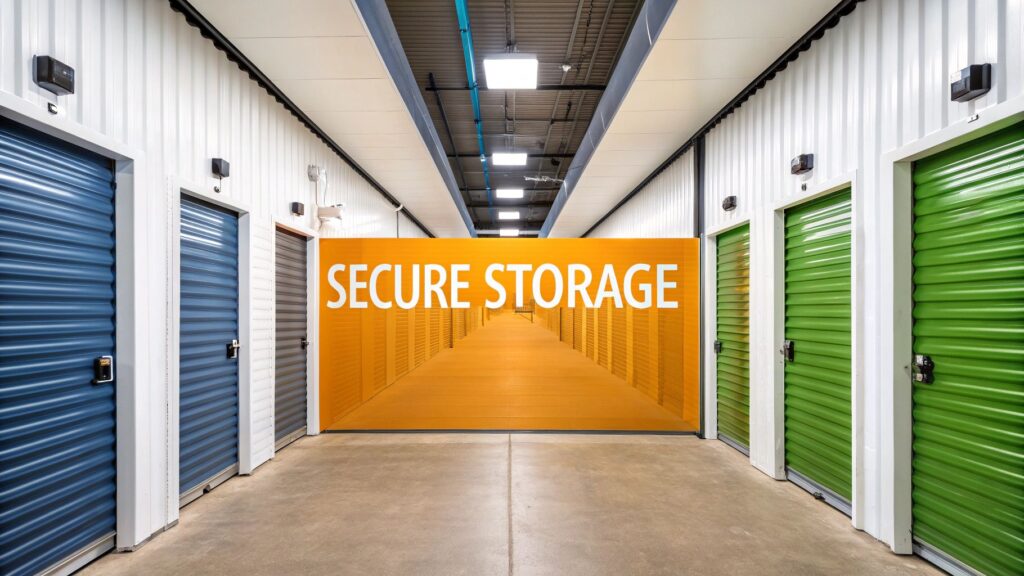
When you type "secure storage near me" into a search bar, you're not just looking for a space with a lock. You're looking for a personal vault, a place you can trust with the things that matter. True secure storage is built on layers of protection, from tough physical barriers and constant digital surveillance to tightly controlled access. It's this combined approach that gives you real peace of mind—something a simple padlock just can't offer.
What Secure Storage Really Means for Your Belongings
Think of your storage unit as a fortress. A single lock on the door is a good start, but what really makes it secure are the high walls, the watchful guards, and the controlled gate at the entrance. That’s the perfect way to picture modern self-storage, which relies on a whole system of safety measures working together to protect what you value most.
The industry has come a long way from the days of basic garages with flimsy roll-up doors. It's now a huge part of the UK economy, built on providing reliable and genuinely safe spaces. In fact, the UK self-storage sector has grown to an annual turnover of £1.2 billion, with over 2,900 facilities across the country. This boom reflects a growing demand for high-quality, dependable storage. You can explore more data on the container storage market surge to see just how much the industry has expanded.
The Core Components of Security
To really understand what you're paying for, it helps to break down the key elements that make a facility truly secure. These components all work together to create a protective bubble around your items.
- Physical Barriers: This is the most obvious layer. It includes sturdy perimeter fencing, well-lit grounds, and individually secured, solid-steel unit doors designed to stop anyone from getting in who shouldn't be.
- Digital Surveillance: High-definition CCTV cameras running 24/7 are absolutely non-negotiable. They keep an eye on key spots like entrances, exits, and corridors, creating a digital log of all activity on the site.
- Access Control Systems: Modern facilities use electronic gate systems that need a unique PIN or a key fob to get in. This ensures only paying customers can access the premises, and it creates a record of everyone who comes and goes.
In essence, secure storage isn't about one single feature; it's the combination of physical, digital, and procedural safeguards. Each layer reinforces the others, creating a comprehensive shield around your possessions.
Ultimately, when you're looking for secure storage near me, you should expect these features as the absolute minimum. This foundation of security is what separates a professional storage provider from a simple lock-up, giving you the confidence that your belongings are properly protected.
Your Essential Security Feature Checklist
When you’re comparing facilities to find the best "secure storage near me," it’s easy to get bogged down in sales pitches. To cut through the noise, you need a solid checklist that focuses on what actually keeps your belongings safe. Think of it like you're inspecting a house before buying—you wouldn’t just look at the paint colour, would you? You’d check the foundation, the roof, and the locks.
The same detailed approach is needed for storage. Real security is a system of overlapping features, each one working together to deter threats and protect your things around the clock. By knowing exactly what to look for, you can size up any facility like a pro and make a choice based on facts, not just promises.
To keep it simple, security measures generally fall into three core categories: physical, digital, and access control. This diagram gives you a quick breakdown of the key elements.
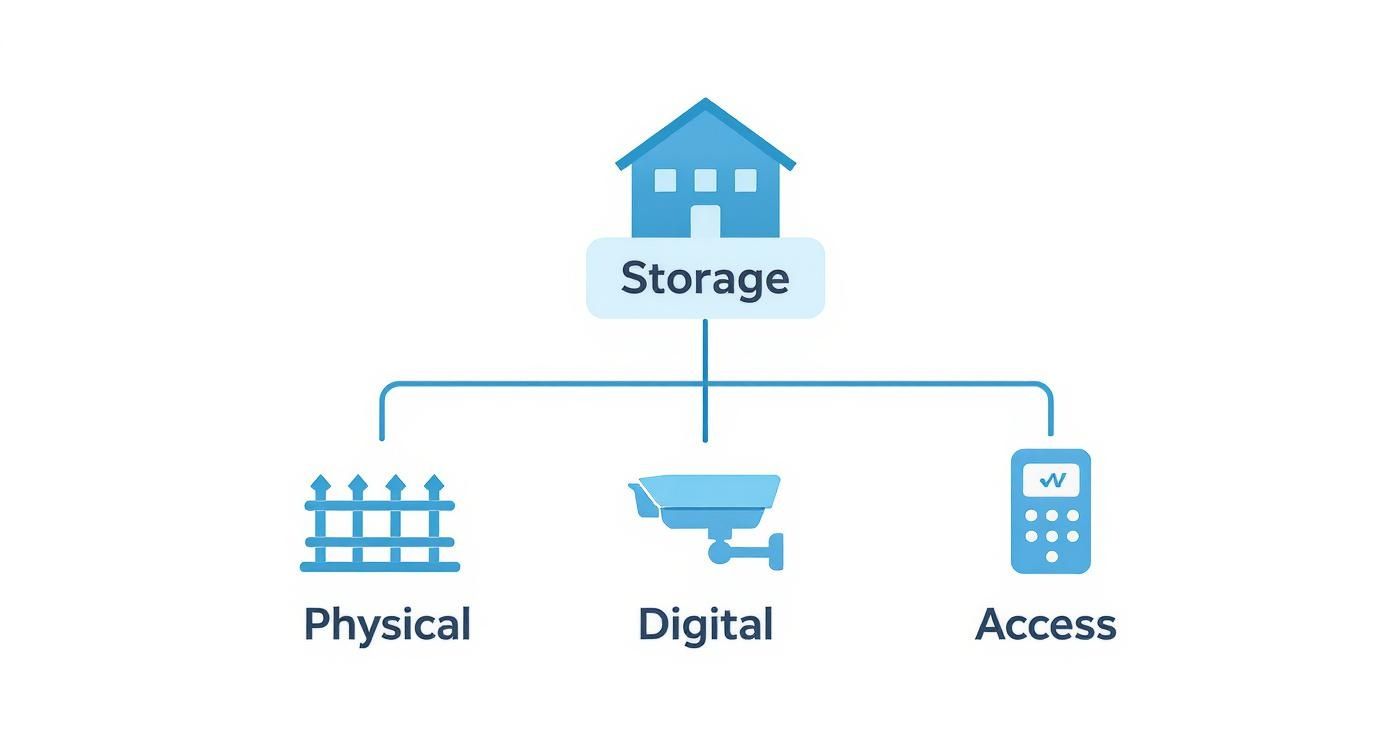
As you can see, a truly secure facility relies on all three branches working in harmony—one isn't enough on its own. Now, let’s get into the nitty-gritty of what makes each of these elements count.
Robust Physical Security
Your first line of defence is everything you can see and touch. A facility's physical security is its most obvious deterrent, sending a clear signal that the site is well-protected and not an easy target. Don't underestimate how important these foundational features are.
When you do an on-site visit, keep an eye out for these critical points:
- Perimeter Fencing: Look for high, sturdy fencing that goes around the entire property. It should be in good nick, with no gaps or obvious weak spots.
- Bright, Ample Lighting: A well-lit facility is a massive deterrent. All driveways, corridors, and areas around the units should be brightly lit, especially after dark.
- Unit Construction: The units themselves need to be made of solid steel, with doors that are tough to pry open. Flimsy materials are a big red flag.
Comprehensive Digital Surveillance
In this day and age, a solid digital security system is non-negotiable. High-quality CCTV acts as a constant, impartial witness, monitoring the facility 24/7 and recording all activity. It's not enough for a place to just have cameras; their quality and placement are what really matter.
A single, grainy camera at the entrance isn’t a security system—it’s a security gesture. You need comprehensive coverage from multiple high-definition cameras that can clearly capture faces and number plates, day or night.
When you're checking out a facility's CCTV, ask about camera resolution, where they're placed (entrances, exits, and main corridors are crucial), and how long they keep the footage. This digital layer provides accountability and is essential for investigating any incidents that might occur.
Advanced Access Control
Finally, controlling who gets onto the site is arguably the most critical security element. A simple padlock on your unit is just the last line of defence; the system that protects the entire facility is far more important. Any modern, secure storage facility must have a sophisticated access control system.
Look for a facility that uses:
- Electronic Gate Access: This requires a unique PIN code or key fob for entry, making sure only authorised people can get onto the premises.
- Individual Unit Alarms: For the highest level of protection, some premium facilities offer alarms on each unit door, which alert management of any unauthorised access.
- On-Site Staff Presence: Having staff on-site during business hours adds a vital human element to security, providing both assistance and an active deterrent.
This quick-glance table summarises what you should be looking for, separating the absolute essentials from the more advanced features that signal a top-tier facility.
Comparing Key Security Features in Storage Facilities
| Security Feature | What to Look For | Why It's Important |
|---|---|---|
| Perimeter Fencing | High, well-maintained, and fully enclosing the property. | The first physical barrier to deter unauthorised entry. |
| CCTV Surveillance | High-definition cameras covering key areas (gates, corridors). | Provides 24/7 monitoring and evidence if an incident occurs. |
| Gated Access Control | Unique PIN code or key fob entry system for tenants. | Ensures only authorised individuals can access the site. |
| Good Lighting | Bright, consistent lighting across the entire facility. | Deters criminal activity and improves safety for tenants. |
| On-Site Staff | Staff present during business hours. | Adds a human layer of security and provides immediate assistance. |
| Individual Alarms | Alarms on each storage unit door. | Offers the highest level of protection by detecting breaches at the unit level. |
By checking for these features, you can be confident you're choosing a provider that takes security as seriously as you do.
When putting together your security checklist, it can be helpful to look at guides on choosing security systems for businesses to get a better sense of commercial-grade protection standards. A facility that invests in these different layers is showing a real commitment to keeping your possessions safe.
Protecting Items Beyond the Lock and Key
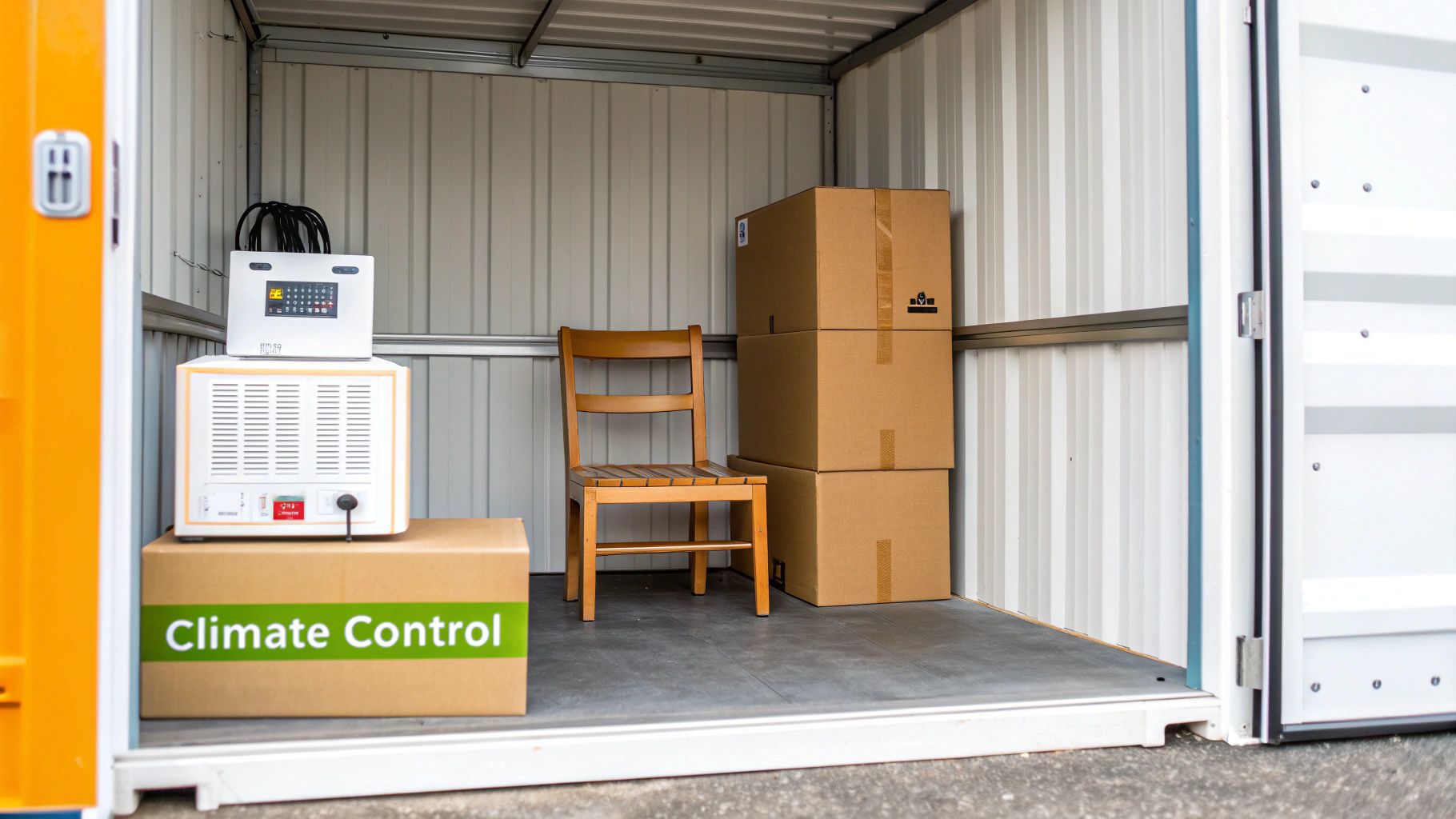
True security goes far beyond just preventing theft. The best storage facilities also defend your belongings against the silent threats of extreme temperatures, damp, and humidity—culprits that can cause irreversible damage over time. This is where environmental protection becomes every bit as crucial as a strong lock.
Think of it this way: a standard unit is like a simple garage, offering basic shelter from the elements. A climate-controlled unit, however, is more like another room in your house. It actively maintains a stable environment all year round, regulating both temperature and humidity to stop mould, rust, warping, and discolouration in their tracks.
Why Climate Control Is a Game Changer
Certain items are especially vulnerable to the UK's famously unpredictable weather, where a damp, chilly winter can quickly turn into a surprisingly hot summer. Without stable conditions, your most valued possessions are at serious risk.
Items that get the most out of climate control include:
- Wooden Furniture: Prevents wood from warping, cracking, or splitting.
- Electronics: Protects sensitive internal parts from moisture and extreme temperatures.
- Important Documents and Photos: Stops paper from yellowing, turning brittle, or being destroyed by mildew.
- Clothing and Fabrics: Keeps delicate textiles safe from mould and insect damage.
- Artwork and Antiques: Preserves their condition and value by avoiding environmental decay.
This need for specialised care has driven huge growth in the UK's warehousing and storage industry. With revenues hitting around £38.2 billion after a 5.7% annual growth spurt, facilities are investing more in advanced features like climate control to keep up. The market is also seeing more specialised options, such as innovative secure units for electronics, offering tailored protection.
The Critical Role of Self Storage Insurance
Another vital layer of protection is insurance. It's a common—and potentially very costly—mistake to think that the storage facility's own policy covers your belongings. In almost all cases, it doesn't. Their policy protects their building, not the items you've stored inside it.
Peace of mind isn't just knowing your items are behind a secure gate; it's knowing you're financially covered if the unexpected happens. Fire, flooding, or theft can occur even at the most secure sites.
This is why getting your own insurance is non-negotiable. Without it, you'd have no financial safety net if your possessions were damaged or lost. It’s a small price for complete protection, making sure you can replace what you’ve stored if the worst should happen.
To make sure you have the right cover, take a look at our guide on insurance for contents in a storage unit. By combining physical security with climate control and the right insurance, you create a complete safety net for everything you store.
Choosing the Right Size Unit Without Overpaying
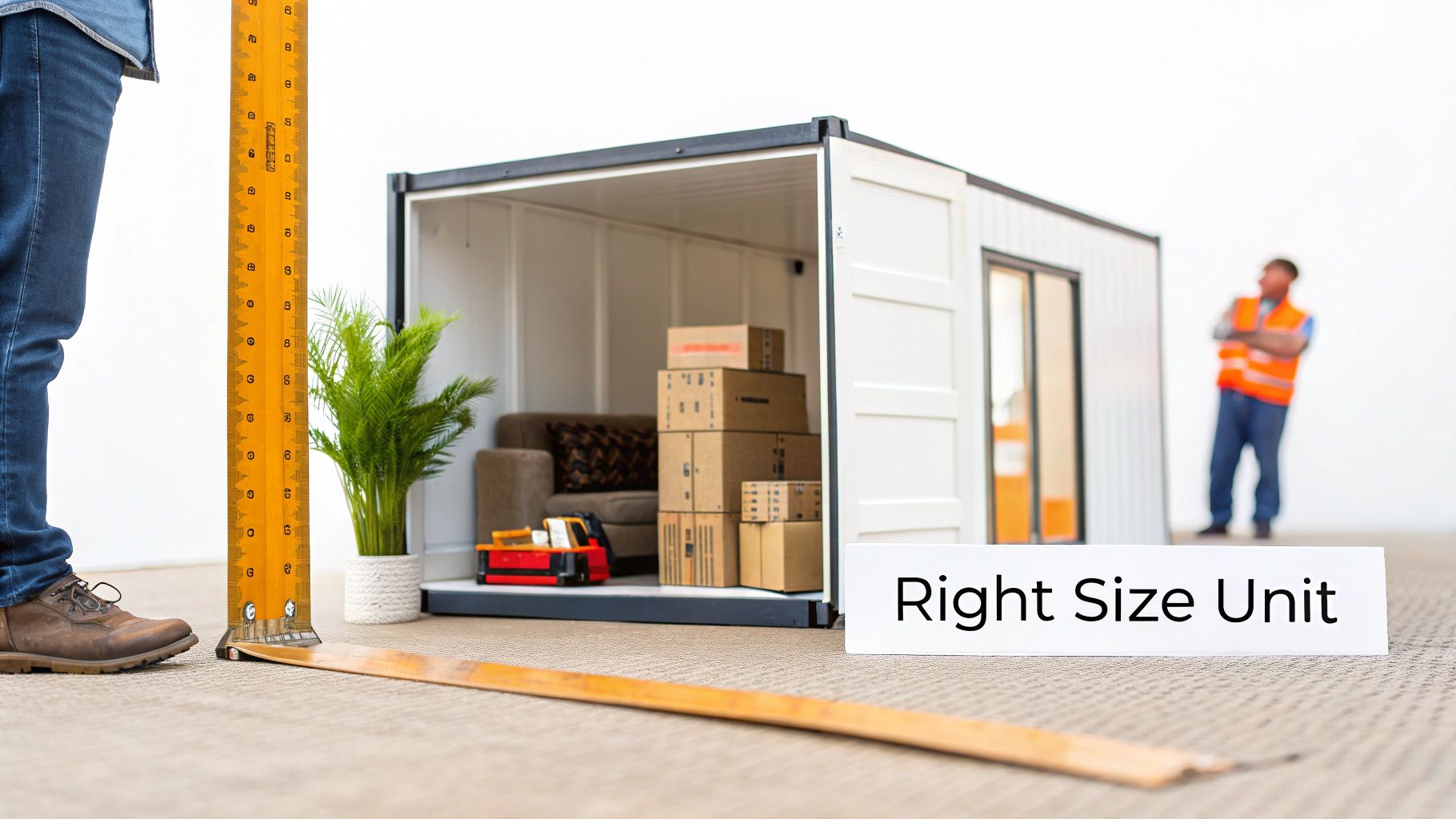
It’s one of the easiest mistakes to make. You rent a storage unit that’s way bigger than you need, and you end up paying for empty space every month. On the flip side, cramming everything into a unit that’s too small is a recipe for a disorganised, frustrating move.
The trick is finding that sweet spot. Getting it right ensures your search for "secure storage near me" ends with a choice that’s both practical and easy on your wallet.
Visualising space isn't always easy, so we often use simple comparisons. Think of a 50 sq ft unit as being like a large walk-in wardrobe—perfect for the contents of a studio flat, or just for stashing seasonal items and a few boxes. A 100 sq ft unit is closer in size to a typical single-car garage, ideal for holding the furniture from a one or two-bedroom home.
Making a good estimate before you book is essential. It will save you both time and money right from the get-go.
From Flats to Family Homes: A Quick Guide
Naturally, the amount of space you need comes down to the size of your home and how much stuff you actually own. A few boxes from a university dorm room won't need nearly as much room as the entire contents of a three-bedroom house.
Here’s a simple breakdown to help you get a rough idea:
- 1-Bedroom Flat: The contents usually fit comfortably within a 75-85 sq ft unit. This should be enough for a sofa, bed, a small dining set, and several boxes.
- 2-Bedroom House: You'll likely need something in the range of a 100-125 sq ft unit. This size can hold multiple bedroom sets, larger appliances like a washing machine, and living room furniture.
- 3-Bedroom House: For a standard family home, you should be looking at a 150 sq ft unit or larger. This provides enough room for all the major furniture, garden tools, and plenty of boxes.
To make things even simpler, our detailed storage unit size guide has visual aids and a handy calculator to help you find the perfect fit.
Understanding Your Rental Agreement
Beyond the unit's size, the terms of your contract play a huge role in the overall cost. Most storage agreements fall into one of two categories, and each has its own clear advantages.
Choosing the right contract is just as important as choosing the right size. A flexible lease gives you freedom, while a long-term agreement offers better value if your storage needs are more permanent.
A month-to-month lease offers maximum flexibility. This is perfect if you’re between house moves or only need storage for a short, uncertain period. However, if you need a more permanent solution—say, for business inventory or a long-term decluttering project—a longer-term agreement of six months or a year often comes with significant discounts, bringing your monthly rate down.
Always make sure you clarify the terms before signing. That way, you can be confident your choice lines up perfectly with both your budget and your timeline.
How to Find the Best Value on Your Storage Unit
When you’re searching for "secure storage near me," that first price you see online is just the starting point. To find real value and avoid any nasty surprises later on, you need to look at the bigger picture. The monthly rent is the main part, of course, but there are usually a few other costs to factor in.
Most places will have a one-off admin fee, a refundable security deposit, and a mandatory monthly insurance charge. Tallying these up gives you a far more accurate idea of your total investment. For a really detailed look at what to expect, check out our guide on how much self-storage costs in the UK.
Smart Strategies for Securing a Better Price
Getting a great deal isn't just about finding the rock-bottom cheapest unit; it's about getting the best possible value for your money. The UK storage market is pretty healthy right now, with the average rental return per square foot climbing by 6% to £29.13. This shows that prices are holding firm as the industry expands. You can learn more about these healthy economic indicators in the self-storage sector from the latest industry report.
Even with strong demand, there are still clever ways to save a bit of cash:
- Book Online: Many facilities, ours included, roll out exclusive introductory offers for customers who reserve their units through the website.
- Look Just Outside the City Centre: You can often find lower rental rates just a short drive from the city centre, where property costs aren't quite as steep.
- Ask About Long-Term Discounts: If you know you'll need storage for six months or more, it’s always worth asking if there's a discount for a longer commitment.
Think of it like booking a hotel. The location, how you book, and how long you stay all play a part in the final price. Applying that same logic to your storage hunt can lead to some serious savings.
By using these simple but effective tricks, you can make sure you’re not just getting a secure space, but one that fits comfortably within your budget. A little bit of planning upfront can make a huge difference to the overall cost, giving you fantastic value for your money.
Got a Few Last-Minute Questions? We've Got Answers.
As you get ready to book and are searching for "secure storage near me," a few final questions usually pop up. To help you feel completely confident in your choice, we’ve put together the most common queries we hear, with clear, straightforward answers.
Think of this as your final checklist to iron out any last-minute details. Getting these sorted now means a smooth, hassle-free experience from day one.
What Items Are Banned in a UK Self-Storage Unit?
For safety and legal reasons, every storage facility has a list of things you just can't store. Following these rules is non-negotiable—it protects your belongings, the facility, and everyone else storing there.
The list of prohibited items nearly always includes:
- Flammable or Explosive Materials: This means things like petrol, diesel, paint, paint thinner, fireworks, and gas canisters.
- Perishable Foods: Any food that can spoil or attract pests is a strict no-go to prevent infestations.
- Illegal or Stolen Goods: It goes without saying, but storing illegal substances, firearms, or any stolen items is forbidden.
- Living Things: You can't store live animals or plants inside a unit.
Always ask for the facility's specific list of prohibited items before you start packing. Storing something you shouldn't can instantly void your insurance and lead to the immediate termination of your rental agreement.
Understanding these restrictions is just part of being a responsible renter and keeping the entire site safe.
How Much Notice Do I Need to Give to End My Contract?
This is a critical detail that can save you from paying for time you don't actually use. The notice period is the heads-up you have to give the facility before you plan to move out and close your account.
Across the UK, the industry standard is usually a 7 to 14-day notice period before your next payment is due. But this isn't set in stone; some providers might require as much as a month's notice. It’s vital to get this clarified right from the start so you can plan your exit without getting hit with an unexpected bill.
Can I Get Into My Storage Unit Whenever I Want?
Access hours are a huge point of difference between facilities, so never assume they're all the same. Your ability to get to your stuff can make a massive difference, especially if you're running a business or just have an unpredictable schedule.
While many modern spots offer 24/7 access with secure electronic gates and individual PIN codes, it's not a universal perk. Other sites have more limited hours, like 6 am to 10 pm, which often lines up with when staff are on-site. If you need the freedom to pop in at any time, day or night, make sure you confirm 24-hour access before you sign anything.
Is My Own Padlock Enough to Keep My Unit Safe?
A high-quality padlock is your first line of defence, but it's just one piece of a much bigger security puzzle. Your lock secures your individual unit door, but it’s the facility's overall setup that truly protects the entire site.
Think of it like this: your padlock is the lock on your front door, but the facility provides the strong walls, the watchful security guard, and the main gate to the whole estate. Features like 24/7 CCTV, solid perimeter fencing, controlled electronic gate access, and on-site staff all work together. Your lock is simply the final, personal step in that system, giving you peace of mind that multiple layers of security are protecting your things.
Ready to find the perfect secure storage space for your needs? At Orange Box Self Storage, we provide top-tier security and flexible solutions to give you complete peace of mind. Book your secure unit online in seconds today!