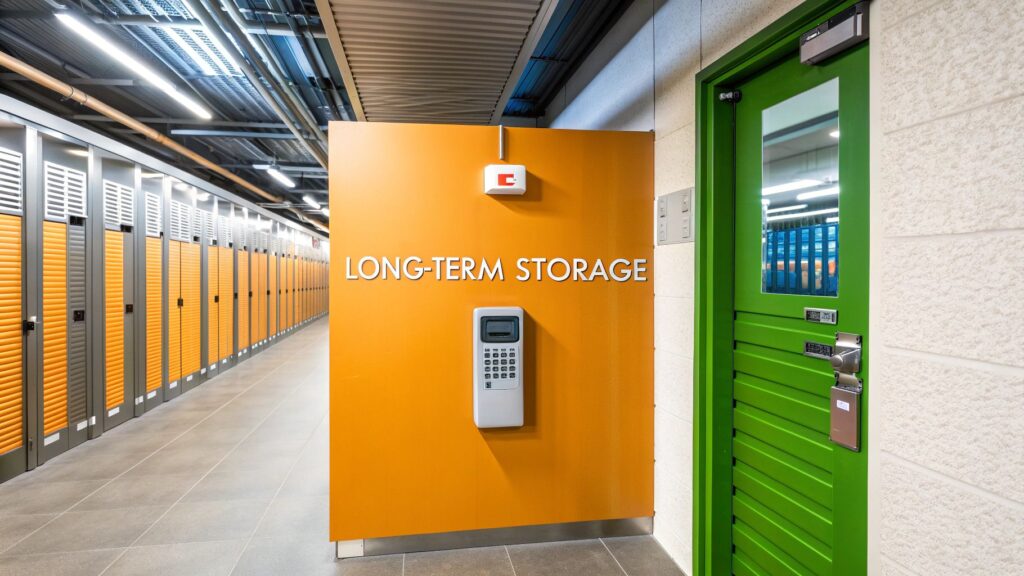
When you're searching for "long term storage near me," you're looking for much more than just an oversized cupboard. The best way to think about it is as your very own personal time capsule—a secure, dedicated space that safeguards your valued possessions through life’s biggest transitions, whether that’s for a few months or several years.
Why Long Term Storage Is Your Personal Time Capsule
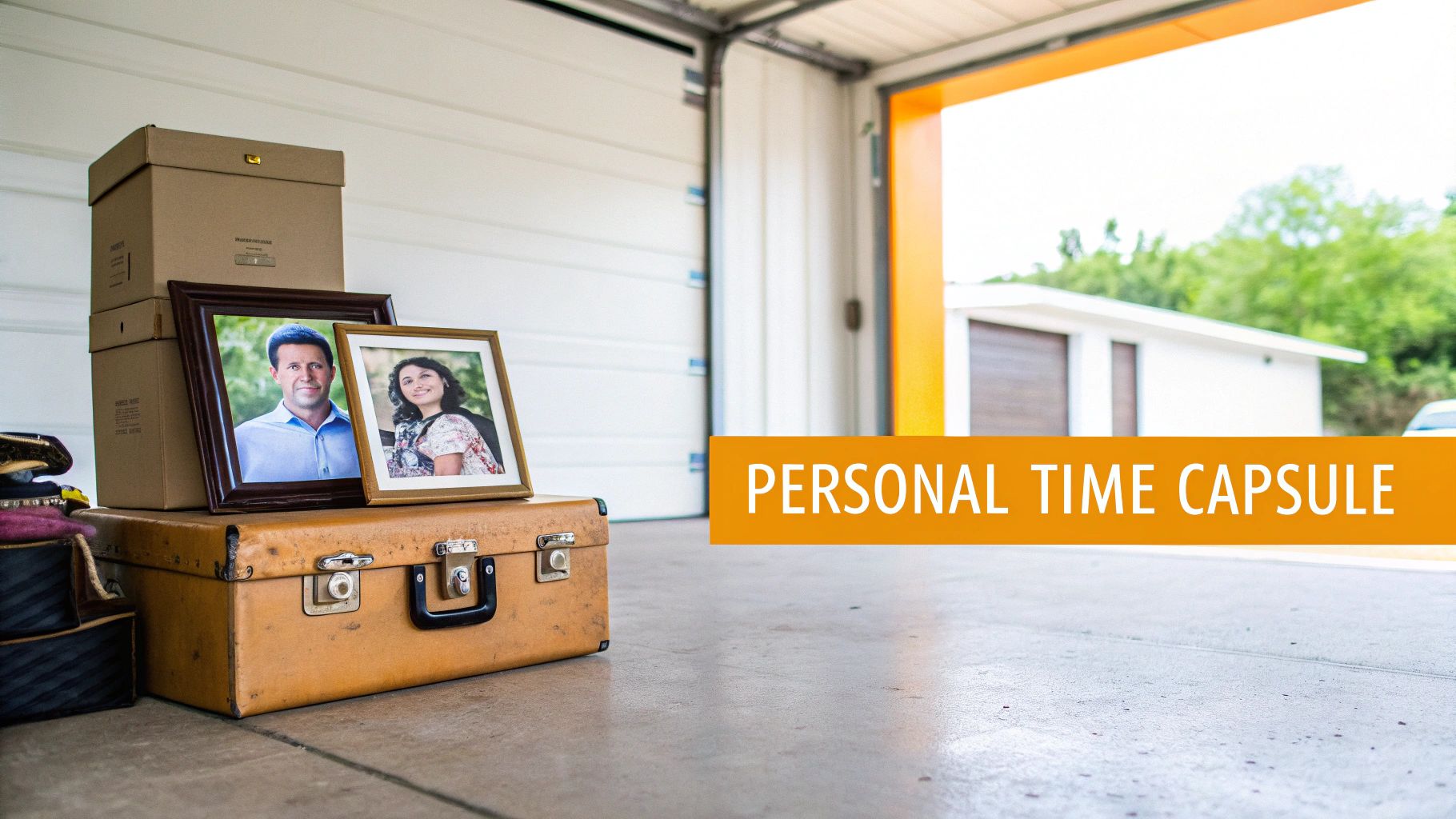
Long-term storage isn't just about stashing away boxes you don't have room for. It's a strategic solution, designed to protect what matters most when life gets complicated. This guide will help shift your perspective from seeing storage as a simple utility to understanding it as an essential service.
Common Reasons for Long Term Storage
People and businesses turn to long-term storage for all sorts of reasons, each one requiring a reliable and secure partner. You might be looking for a storage solution if you are:
- Moving or Renovating: A safe place to keep furniture and household goods protected from dust and damage during a lengthy home renovation or a complicated move.
- Downsizing: When moving to a smaller home, you can store sentimental items, family heirlooms, or furniture you aren't quite ready to part with.
- Managing Business Inventory: Businesses often use storage units as a cost-effective alternative to expensive warehouse space for holding stock, equipment, or archived documents.
- Studying Abroad or Relocating: For students or professionals moving temporarily, it provides peace of mind knowing their belongings are secure until they return.
Long-term storage offers a bridge between where you are and where you're going. It's the assurance that your possessions are preserved and waiting for you, no matter what changes life brings.
The demand for these solutions has grown significantly. The UK self-storage industry is projected to reach a total floorspace of 64.3 million square feet by 2025, a 7.2% increase from the previous year. This boom reflects the rising need for secure, long-term options in regions like Nottingham and Derby. You can explore more data on the self-storage industry's growth on januseurope.com.
Ultimately, choosing the right facility is about entrusting your belongings to a secure environment for an extended period, ensuring they remain in the exact condition you left them.
Your Essential Checklist for Choosing a Storage Facility
A quick search for "long term storage near me" will throw a dozen options your way. But let's be honest, not all storage facilities are built the same—especially when you’re trusting them with your belongings for months, or even years. To make the right call, you need to know exactly what to look for.
Think of it like choosing a long-term guardian for your possessions. A flashy website or a cheap introductory offer means very little if the fundamentals aren't right. You need to look past the surface and ask the right questions to make sure your things get the protection they deserve.
H3: Security Should Be Your Top Priority
When it comes to long-term storage, "basic" security just won't cut it. You need a multi-layered defence system that’s working around the clock to keep your valuables safe. A simple padlock on the door isn't enough when your items are out of sight for an extended period.
Your non-negotiable security checklist should include these essentials:
- 24/7 CCTV Monitoring: Look for high-definition cameras covering all the key spots—entrances, corridors, and loading bays. This is your first line of defence against potential thieves and provides a clear record of all activity on-site.
- Secure Gated Access: The facility absolutely must have electronic gates that require a unique PIN code to get in. This ensures only paying customers and staff can access the premises.
- On-Site Staff Presence: A facility with staff on-site during business hours adds a vital human element to security and means there’s someone available to help if any issues pop up.
H3: Climate Control Is Not a Luxury, It's a Necessity
So many people underestimate the quiet damage that temperature swings and humidity can do over time. For sensitive items, climate control isn't a "nice-to-have"; it's an absolute must. Without it, you’re risking irreversible damage to your most cherished belongings.
A climate-controlled unit basically acts like a preservation chamber. It keeps the environment stable to shield your items from mould, mildew, rust, and warping. It’s the difference between your wooden furniture cracking and your electronics failing versus keeping them in pristine condition.
This feature is especially crucial if you’re storing things like:
- Wooden or leather furniture
- Electronics and appliances
- Important documents and photographs
- Musical instruments and artwork
Long Term Storage Feature Comparison Checklist
Use this checklist to compare facilities and ensure you're getting the best protection for your belongings.
| Feature | Basic Storage (What to Avoid) | Secure Long Term Storage (What to Look For) | Orange Box Standard |
|---|---|---|---|
| CCTV | No cameras, or poor quality/coverage. | High-definition 24/7 monitoring of all key areas. | ✓ Comprehensive HD CCTV coverage. |
| Access Control | Open access or simple padlock system. | Unique PIN-coded electronic gate access. | ✓ Secure, individual PIN-code entry. |
| On-Site Staff | Unstaffed, especially after hours. | Staff present during business hours. | ✓ Friendly staff on-site to assist you. |
| Climate Control | Standard units exposed to temperature/humidity. | Units maintain a stable temperature and humidity. | ✓ Climate-controlled units available. |
| Contracts | Confusing terms, hidden fees, long notice periods. | Clear, flexible, and transparent contracts. | ✓ Simple, easy-to-understand agreements. |
Making sure these features are in place is the only way to get true peace of mind.
H3: Don't Overlook Accessibility and Contracts
Finally, think about how and when you'll actually need to get to your stuff. A great facility should work around your schedule, not the other way around. Ask about their access hours—are you stuck with typical office hours, or do they offer extended or even 24/7 access?
When it's time to review the contract, keep an eye out for red flags like vague terms, hidden fees, or ridiculously long notice periods. A trustworthy provider will always offer a clear, straightforward agreement. When you're looking at different options, it's helpful to read comprehensive guides on finding the best storage units so you can get a better sense of what top-tier facilities offer.
By methodically working through this checklist—security, climate control, and accessibility—you can confidently choose a long-term storage facility that gives you genuine peace of mind.
How to Pick the Perfect Unit Size Without Overpaying
Choosing the wrong unit size is one of the easiest—and most costly—mistakes you can make when renting long-term storage. Paying for space you don’t use is like renting a three-bedroom house for one person; it’s a needless expense that can add up to hundreds of pounds over time. Getting to grips with unit sizes is the key to finding the perfect fit for your budget.
Think of it in familiar terms. A small 25 sq ft unit is roughly the size of a large walk-in wardrobe. It's the perfect choice for a student needing to store their dorm room contents over the summer or for someone looking to declutter a single room.
On the other hand, a spacious 150 sq ft unit is more like a single-car garage. It can comfortably hold the entire contents of a three-bedroom family home, including bulky furniture, appliances, and dozens of boxes. Understanding these analogies helps you visualise your needs much more accurately.
Matching Your Items to the Right Unit
Before you commit, it helps to understand the types of units available. While most people think of personal storage for household goods, there are specialised options designed for different needs. These can include business storage for inventory, student storage with flexible terms, and even larger container storage for tools and equipment. The goal is to find a unit that not only fits your items but also suits your purpose.
This infographic highlights the core features to look for when making your choice.
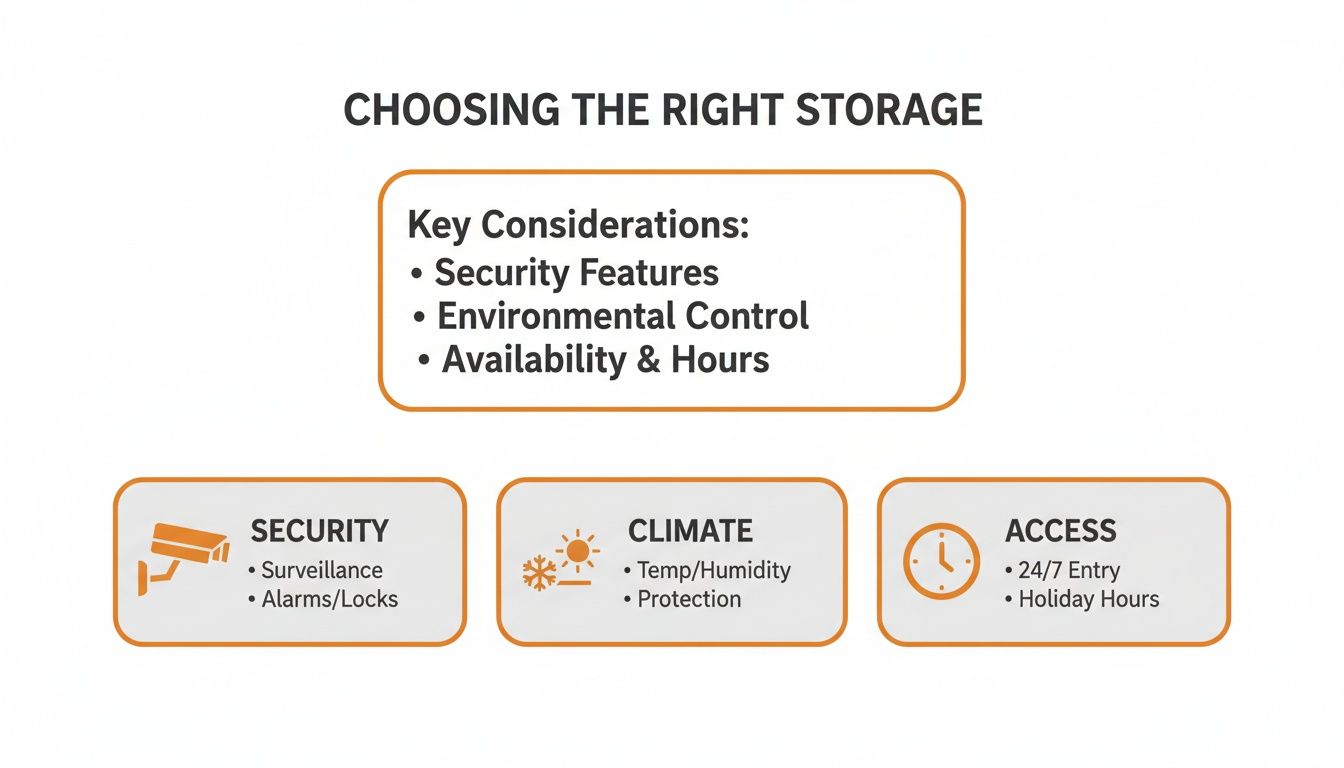
This visual guide reminds us that beyond just the size, the fundamentals of security, climate control, and accessibility are absolutely essential for protecting your belongings over the long haul.
Pro Tips for Maximising Your Space
You can often rent a smaller, cheaper unit just by packing smarter. The more efficiently you pack, the less space you'll need. It’s that simple.
- Go Vertical: Always stack your boxes high to take advantage of the unit's full height. Place heavier, sturdier boxes at the bottom and lighter ones on top to prevent crushing.
- Disassemble Furniture: Take apart items like bed frames, tables, and shelving. This dramatically reduces their footprint and makes them much easier to store.
- Create an Aisle: Leave a narrow walkway down the centre of your unit. This simple trick gives you access to items at the back without having to empty everything out first.
The popularity of self-storage has surged across the UK, with usage climbing from 1.29% in 2018 to 3% by 2024, showing just how vital extra space has become for households and businesses.
By applying these tips, you can fit more into less space, ensuring you only pay for what you truly need. For a more detailed breakdown, check out our guide on selecting the right storage unit size to find your perfect match.
Making Sense of Storage Prices and Contracts
Right, let’s talk money and paperwork. Understanding the costs and what you’re signing up for is the final hurdle before you get your long-term storage unit sorted. Prices aren't just plucked out of thin air; they’re a direct reflection of the value and security you get for your monthly payment. Nailing this part means no nasty financial surprises later on.
The biggest things that will shape the price are the unit's size, its location, and whether it has climate control. It’s common sense that a bigger unit will cost more. But you’ll also find that facilities in convenient, city-centre spots often have higher rates than those a bit further out. As we’ve covered, climate-controlled units come at a premium—usually 20-30% more—but for protecting your delicate items over months or years, it’s an investment you can’t afford to skip.
Why Longer Contracts Often Mean Better Value
When you’re searching for long-term storage, you’ll probably see that most places offer a better deal for a longer commitment. Think of it like buying in bulk at the supermarket; signing up for six months or a year often gets you a lower monthly price than if you were on a rolling monthly contract.
This works out for everyone. You get a predictable, lower cost that’s easier to budget for, and the facility gets a reliable customer. It’s a win-win that can add up to some serious savings over the time you're storing your things.
A storage contract isn’t just a bit of admin; it’s your rulebook for the whole rental. Taking the time to read it properly is the single best way to dodge hidden fees and misunderstandings. It’s the key to a smooth, stress-free experience from day one.
Decoding the Fine Print in Your Storage Agreement
Before you put pen to paper, it’s absolutely vital to get your head around the key terms of the agreement. A clear, transparent contract is the sign of a storage provider you can trust. Never be shy about asking questions or getting them to clarify anything that seems a bit fuzzy.
Here are the crucial bits to look out for:
- Notice Period: How much warning do you need to give before you move out? This could be anything from a week to a month. If you don't give the required notice, you could end up being charged for an extra month.
- Insurance Requirements: Most facilities will insist that your stored items are insured. Check if they offer their own policy or if you need to show proof of one you’ve arranged yourself.
- Late Payment Fees: Get clear on the grace period for payments and what the fees are if you happen to miss a deadline.
- Price Increase Policy: The agreement should clearly state how and when your rental price might change down the line.
Once you’re comfortable with these details, you can sign with confidence. To get a better feel for how all these factors play out, you can learn more about what influences the cost of self-storage in the UK in our detailed guide.
How to Prepare and Pack Your Items for Long Term Storage
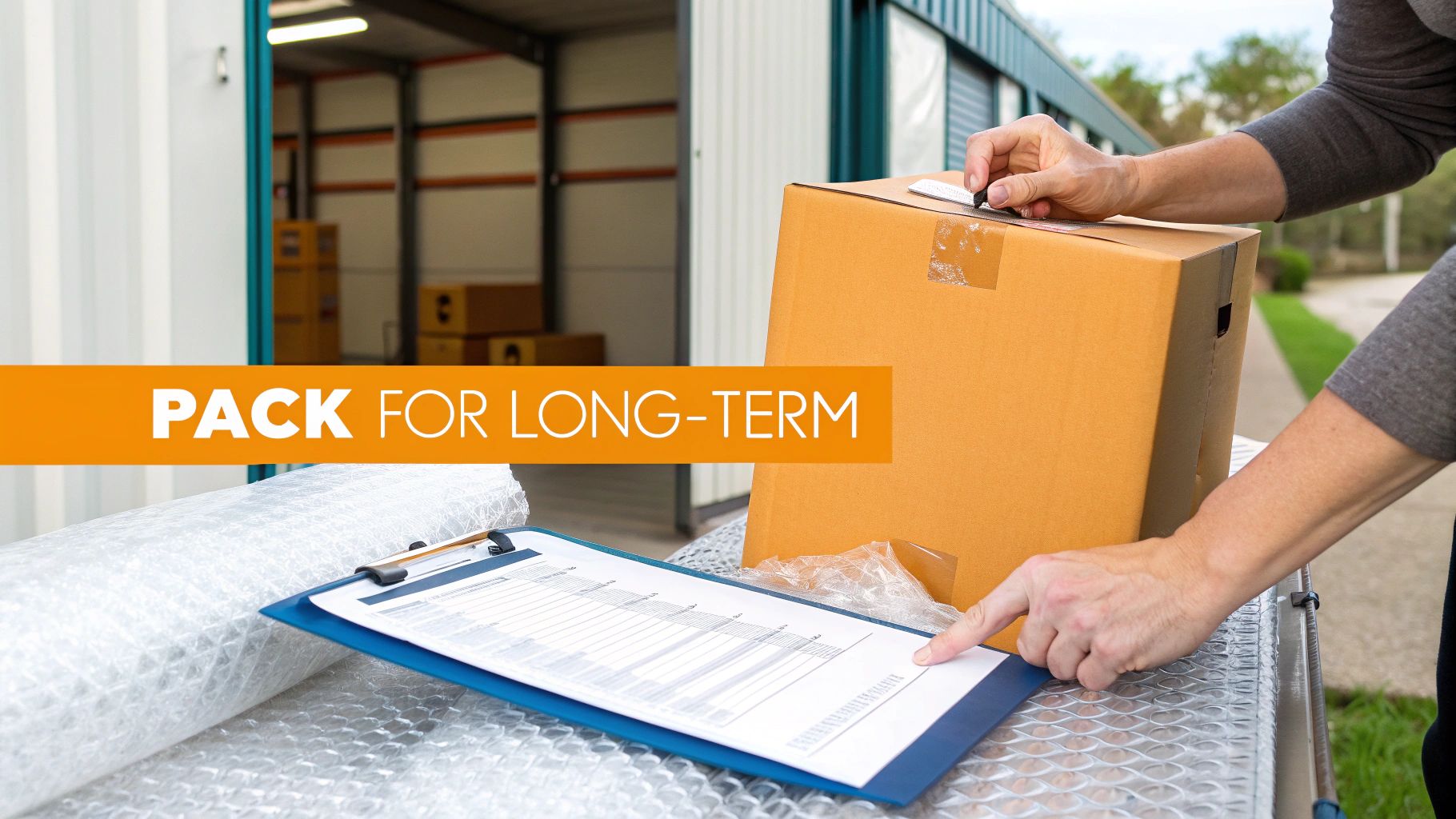
Getting your belongings ready for long-term storage is the single most important thing you can do to make sure they come out looking just as good as they did going in. Think of it like putting a classic car away for the winter. You wouldn’t just shove it in the garage and cross your fingers, would you? Of course not. You’d take specific steps to protect it, and that same level of care applies here.
This is your action plan for preserving your things. A bit of effort now is all it takes to prevent damage from dust, damp, pests, and the general passage of time. It’s the kind of expert advice that protects your investment for the long haul.
The Foundation: Clean and Protect
First things first: before anything even sees the inside of a box, it needs to be completely clean and bone-dry. Storing items with even a tiny bit of moisture or food residue is like rolling out the welcome mat for mould, mildew, and pests. This is especially true for bigger things like furniture and appliances.
- Appliances: Defrost, clean, and dry your fridges and freezers thoroughly. It's a great idea to leave the doors propped slightly ajar to let air circulate and stop any musty smells from developing.
- Furniture: Give all your wooden, plastic, and metal surfaces a good wipe-down. For anything with fabric, like sofas or mattresses, think about using protective plastic covers to shield them from dust and moisture.
- Electronics: Clean away any dust from vents and surfaces. If you still have the original packaging, use it! It was designed to provide the perfect, snug fit for protection.
Packing for long-term storage isn't just about putting things in boxes. It's about creating a safe, stable environment for each item, ensuring that time stands still for your belongings until you need them again.
Pack for Preservation, Not Just for Transit
Packing for storage is a totally different ball game than packing for a move. Your boxes are going to be sitting for months, or even years, so they need to be strong enough to avoid getting crushed and organised well enough to make life easy when you come back for something. Using sturdy, uniform boxes is a pro move because it makes stacking so much safer.
Investing in something like heavy-duty boxes for ultimate protection can make a massive difference in the long run.
Once you’ve got your materials sorted, follow these simple steps:
- Create an Inventory: Jot down a quick list of what’s in each box. Number your boxes and note the key contents on your list. Trust us, this will save you from having to tear everything apart looking for one specific item down the line.
- Pack Smartly: Put the heavier items at the bottom of the boxes and the lighter stuff on top. Don’t leave big empty gaps—fill them with packing paper or bubble wrap to stop things from shifting around.
- Label Clearly: Grab a marker and label each box on at least two sides with its number and a short description of what’s inside (e.g., "Box 14 – Kitchen – Pots & Pans").
- Plan Your Layout: When you start moving into the unit, place anything you think you might need to grab sooner near the front. And here’s a tip you’ll thank us for later: leave a little walkway down the middle of the unit. It makes getting to things at the back a breeze.
Finding Your Local Storage Solution in Nottingham and Derby
Now that we’ve covered the essentials of picking the right unit, let’s get to the most important part: finding a local provider you can trust. When you’re searching for "long term storage near me," you want more than just a space—you want a solution. For anyone living or working in the East Midlands, the answer is right on your doorstep.
At Orange Box Self Storage, we’re not some faceless national chain. We’re deeply rooted in the local community, with facilities strategically placed to serve you exactly where you are. We get that convenience is everything, which is why you’ll find us across Nottingham, Derby, Long Eaton, and Beeston. This isn't just about being nearby; it's about having the right solution in a place that actually makes sense for your life.
Your Local Orange Box Facilities
Each of our locations has been set up with the local community in mind, ensuring you get a storage solution that’s both practical and easy to get to.
- Nottingham & Beeston: Perfectly located for students at the University of Nottingham and families in the surrounding suburbs. These sites are kitted out with a great range of smaller units, ideal for stashing your things between terms or during a decluttering project.
- Derby & Long Eaton: These spots are a hub for local businesses and tradespeople. With fantastic access to major transport links, they’re perfect for storing inventory or keeping tools and equipment safe in our robust container options.
Choosing a local provider like Orange Box means you’re not just renting four walls and a door. You’re partnering with a team that actually understands the area and is dedicated to making life easier for our neighbours with secure, straightforward storage.
What Sets Orange Box Apart
Beyond our handy locations, we’re all about delivering the core features that give you total peace of mind for long-term storage. When you choose Orange Box, you’re not just getting a key; you’re getting a promise that we’ll look after what matters most to you.
Our facilities are built on a foundation of solid, no-nonsense reliability. That means state-of-the-art 24/7 CCTV surveillance, secure PIN-coded gate access, and a huge selection of unit sizes—including climate-controlled options for those extra-sensitive items. We’ve also made booking a breeze with an effortless online system that lets you reserve your unit in just a few clicks.
We offer everything from personal units for household bits and pieces to large-scale business and container storage in Derby. Whatever you need to store, we have the perfect fit. Our mission is simple: to deliver dependable, accessible, and fairly priced storage to the entire East Midlands community.
A Few Final Questions on Long Term Storage
Even after you've weighed up all the options, a couple of questions usually pop up right at the end. Getting clear, honest answers is the final step to choosing your unit with total confidence.
How Long Can I Actually Rent a Unit For?
Honestly? For as long as you need it. Whether that’s a single month or several years, you’re in control. Most places, including here at Orange Box Self Storage, run on flexible monthly agreements. But if you know you’re in it for the long haul—say, six or twelve months—you can often lock in a better rate. That flexibility is a lifesaver when you’re dealing with uncertain timelines.
Is Insurance for My Belongings Really Necessary?
Yes, absolutely. Think of it as non-negotiable. While any decent facility will have top-notch security, a good insurance policy is your personal safety net against the unexpected, like a fire or flood. Most storage providers will ask for proof of insurance, and many, including us, can help you sort out an affordable policy designed specifically for self-storage.
Consider storage insurance the final layer of your peace of mind. It’s a small price to pay to guarantee your valuables are protected, no matter what life throws at them.
What Can’t I Keep in Long Term Storage?
For safety and legal reasons, some things are strictly off-limits. These rules are in place to protect your belongings, our staff, and everyone else using the facility.
As a general rule, you can’t store:
- Perishable Goods: Anything that can spoil or attract pests, like food.
- Hazardous Materials: Flammable, explosive, or corrosive stuff like petrol, paint, or chemicals.
- Living Things: This one’s a given—no plants or animals.
- Illegal or Unregistered Items: Anything you’re not legally allowed to own, such as firearms or stolen goods.
If you’re ever unsure about a particular item, just have a quick chat with the facility manager. They’ll give you a straight answer.
Ready to get your belongings sorted with a local team you can trust? At Orange Box Self Storage, we keep things simple, clear, and stress-free. Book your unit online today and get that peace of mind you’ve been looking for.