Right, let's get straight to it. You want to know what self storage actually costs here in the UK.
As a rule of thumb, you can expect to pay around £2 per square foot per week, but honestly, that’s just a starting point. Think of it like a baseline price for a car—the final cost always depends on the model, the features, and where you buy it.
Your Quick Answer To UK Self Storage Costs
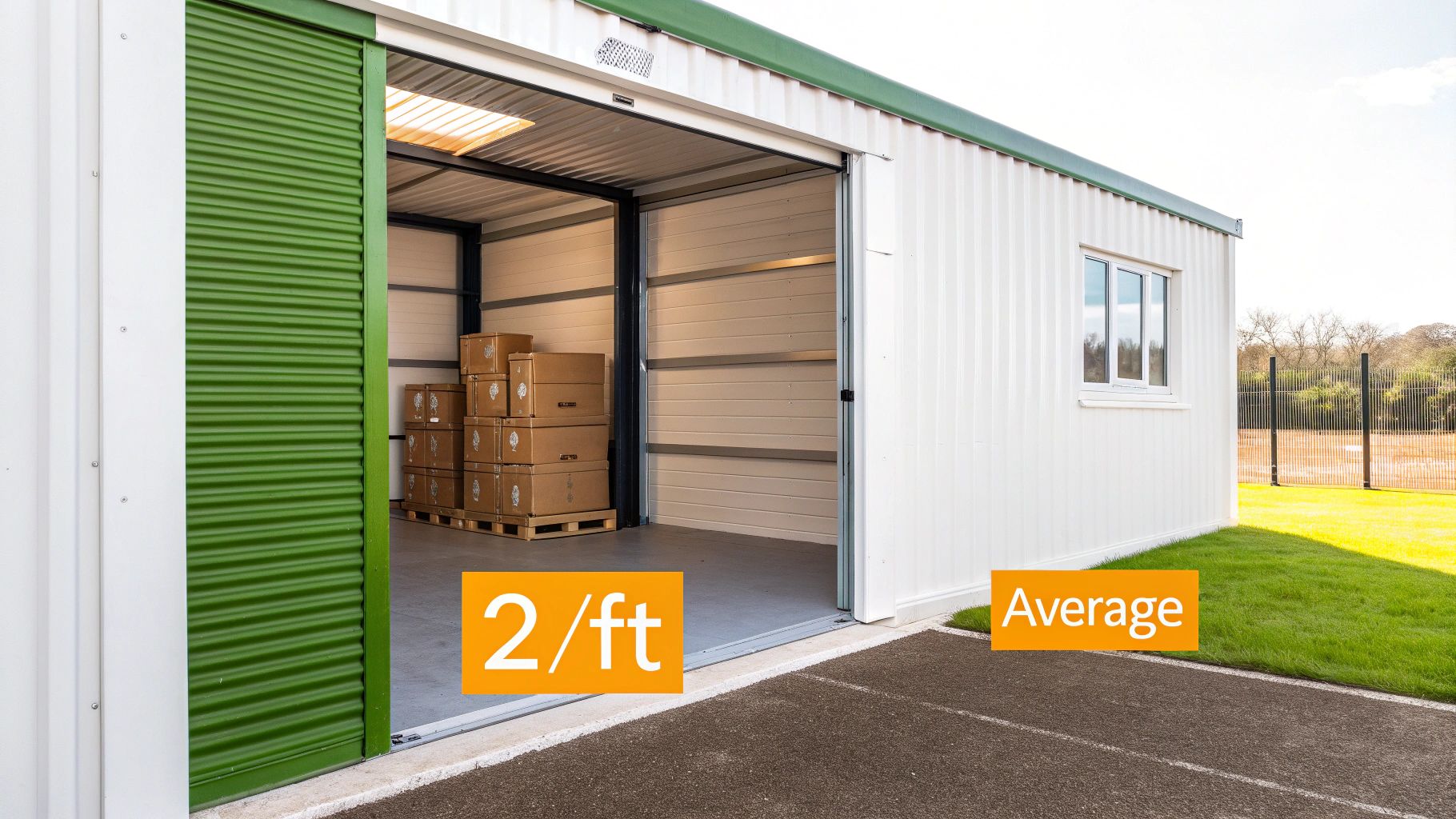
Getting your head around the price is the first step to finding a unit that fits both your budget and your stuff. While that average figure gives you a useful benchmark, what you’ll actually pay is shaped by a few key things we’ll break down in this guide.
The biggest factors influencing your final quote are the unit’s size, its location, and how long you need it for. It’s no surprise that a flat in London costs more than one in Leeds, and it's the exact same story for storage units. A spot in a city centre will always command a premium.
That’s why getting a precise answer to "how much does storage cost in the UK?" means we need to dig a little deeper into the details.
Understanding The Price Per Square Foot
The industry standard for pricing is calculated per square foot, which is a great way to compare costs fairly across different unit sizes. On a national level, the average rental cost lands at about £27–£30 per square foot annually, which breaks down to that handy £2 per week figure.
Of course, prices vary quite a bit by region. In premium markets like London, you’ll often see rental rates climb past £35 per square foot per year. You can get a better sense of these storage industry trends from the SSA UK report.
Key Takeaway: The "per square foot" price is your best tool for comparing value. A larger unit might have a lower cost per square foot, offering better value if you can actually fill the space.
To give you a clearer picture, the table below offers a practical breakdown of typical price ranges for the most common unit sizes. It’s a great way to get an immediate, ballpark estimate and sets the stage for understanding exactly what influences that final price tag.
Just remember, these are estimates. Introductory offers or long-term discounts can often bring your final bill down quite a bit.
Typical Self Storage Price Ranges in the UK
A quick overview of estimated weekly and monthly costs for common self storage unit sizes across the UK.
| Unit Size (sq ft) | Typical Use Case | Estimated Weekly Cost | Estimated Monthly Cost |
|---|---|---|---|
| 25 sq ft | Storing contents of a studio flat or garden shed | £15 – £25 | £60 – £100 |
| 50 sq ft | Storing contents of a 1-bedroom flat | £25 – £40 | £100 – £160 |
| 75 sq ft | Storing contents of a 2-bedroom flat | £35 – £55 | £140 – £220 |
| 100 sq ft | Storing contents of a 2-bedroom house | £45 – £70 | £180 – £280 |
| 150 sq ft | Storing contents of a 3-bedroom house | £60 – £90 | £240 – £360 |
This table should give you a solid idea of what to expect, but several other factors can nudge these prices up or down. Next, we’ll look at exactly what those are.
The Six Key Factors That Shape Storage Prices
Ever wondered why a storage unit in one part of town costs twice as much as a similar one just a few miles down the road? The price you’re quoted isn't just a random number. It’s a carefully calculated figure based on a handful of key ingredients that all influence the final cost.
Think of it like booking a hotel. A spacious suite in central London with a 24-hour concierge is naturally going to have a higher price tag than a standard room in a quiet suburban town. Self storage works in much the same way. Let’s break down the six most important factors that shape storage prices, so you know exactly where your money is going.
1. Unit Size: The Most Obvious Factor
This one’s pretty straightforward: the bigger the unit, the more you'll pay. Storage facilities price their space per square foot, so a larger footprint means a higher monthly bill. But it's not always a direct one-to-one increase. Sometimes, larger units offer better value per square foot, a bit like buying in bulk at the supermarket.
The real challenge is figuring out how much space you actually need. Renting a unit that’s too big means you’re paying for empty air, while cramming your things into one that’s too small will only lead to frustration. Getting it right from the start is crucial.
To sidestep this common mistake, it’s always a good idea to use a visual guide. You can explore a detailed storage unit size guide to help you match your belongings to the perfect space, ensuring you only pay for what you’ll use.
2. Location: Where You Store Matters Most
Just like the housing market, storage pricing is all about location, location, location. A unit in a busy city centre, where land is a premium and demand is high, will always cost more than one in a quieter suburban or rural area. The difference can be pretty stark, sometimes adding 30-50% or more to the price.
This price difference comes down to a few things:
- Property Values: Higher local property costs mean higher rental rates for storage units. It’s that simple.
- Demand: Densely populated urban areas have more people looking for storage, which naturally drives prices up.
- Accessibility: Facilities right off major motorways or near public transport links are super convenient, and they can charge more for it.
If you’re working with a tight budget, it’s worth looking at facilities just a short drive out of the city centre. The savings can be significant and often make the extra travel time more than worthwhile.
3. Rental Duration: How Long You Need It
The length of your contract plays a surprisingly big role in your monthly cost. Many facilities will offer some great discounts for long-term commitments, rewarding customers who plan to stay for six months, a year, or even longer. It’s a win-win: the facility gets a reliable customer, and you lock in a lower rate.
On the flip side, short-term or flexible month-to-month contracts usually come with a higher price tag. You’re paying for the convenience of being able to leave at short notice, and facilities price that flexibility into the cost. Always ask about discounts for longer rental periods if you know you’ll need storage for a while.
4. Level of Access: When You Can Get In
How and when you can get to your things also influences the price. Facilities that offer 24/7 access typically charge a bit more than those with standard business hours. That premium covers the extra security and staffing needed to keep the site open and safe around the clock.
If you only need to pop in and out during the day, you can save a few quid by choosing a facility with more restricted hours. But for businesses needing to grab stock at odd hours or anyone with an unpredictable schedule, the convenience of 24-hour access might be an investment that pays for itself.
5. Special Features: Climate Control and More
Not all storage units are made equal. Special features can add to the monthly cost, with climate control being one of the most common. These units maintain a steady temperature and humidity level, protecting sensitive items like wooden furniture, electronics, artwork, and important documents from damage caused by extreme heat, cold, or damp.
Important Note: Standard units are absolutely fine for most things, but if you're storing anything valuable, sentimental, or delicate, the extra cost of climate control is a small price to pay for total peace of mind.
Other features that might bump up the price include things like enhanced security systems, drive-up access for easy loading, or units that come with built-in shelving.
6. Insurance: Protecting Your Belongings
Finally, you’ll need to have insurance for your stored goods. It's a non-negotiable for most reputable storage facilities and is required as part of the rental agreement. You usually have two choices: you can either purchase a policy directly from the storage provider or check if your existing home insurance policy covers items stored off-site.
While it adds a small amount to your monthly outgoings, it’s an essential expense. It protects you against unforeseen events like fire, theft, or water damage, ensuring your possessions are covered, no matter what happens.
How Storage Costs Vary Across UK Cities
More than anything else, location dictates how much you’ll pay for storage in the UK. It’s the single biggest factor. Think of it like renting a flat: a place in central London will always have a premium price tag compared to a similar spot in Nottingham or Derby. Storage units follow the exact same logic.
This isn't just a small difference, either. The price gap can be massive, all driven by local property values, how many people live there, and the general demand for space. Getting your head around these regional price differences is the first step to setting a realistic budget.
Naturally, storing your stuff in a major city hub is going to cost more. The facilities in these prime locations are dealing with higher running costs for everything from rent and business rates to staff wages, and that gets passed on to the customer. It's simple supply and demand. On the flip side, if you look just outside a big city or in a smaller town, you'll often find prices drop quite a bit. If you don't need to get into your unit every day, a few extra miles in the car could lead to some serious savings.
Comparing Prices in Major Urban Centres
To put this into perspective, let's look at the average monthly cost for a standard 50 sq ft unit. This is a popular size, usually big enough for the contents of a one-bedroom flat. As you’ll see, a one-size-fits-all answer to storage costs just doesn't exist. London, no surprise, is at the top of the price scale, often costing 30-50% more than other big cities.
For example, a unit in Greater London could easily set you back over £200 a month, while you might find a similar space in a northern city for closer to £120. That's why getting quotes specific to your area is so important. If you’re looking for competitive storage in Leeds, for instance, you'd want to compare local providers rather than just looking at a national average.
This visual breaks down the main things that will influence your final quote.
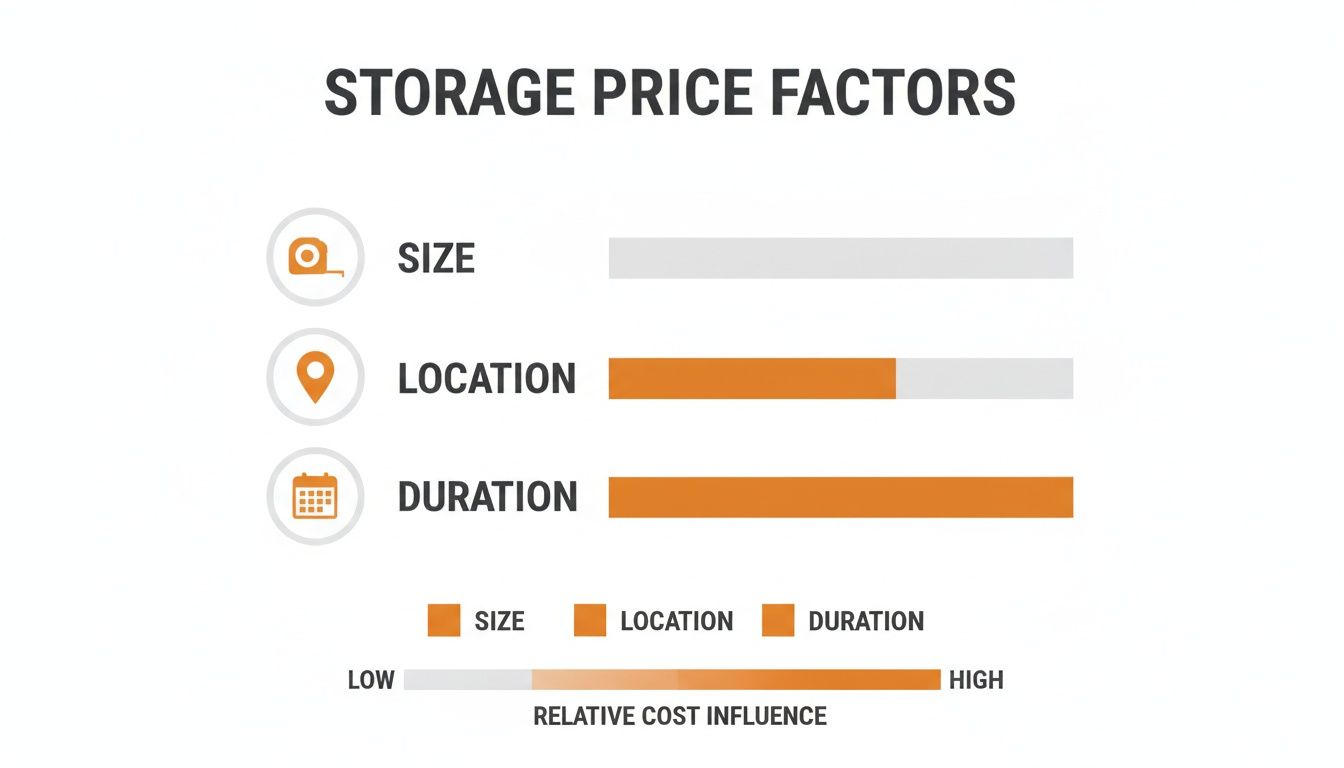
As the infographic shows, things like your unit size, where it’s located, and how long you need it for all play a big part in the final bill.
A City-by-City Price Snapshot
To give you a clearer idea, we’ve put together a table showing the typical price range for that popular 50 sq ft unit across several key UK cities. This lets you see how your local area stacks up and helps you recognise a good deal when you see one.
Just remember, these are average figures. You might find prices outside these ranges, especially if you snag an introductory offer or book for a longer period.
Expert Tip: Don't just look at the city centre. Often, storage facilities on the outskirts of town offer the same quality and security for a fraction of the price. The small inconvenience of a slightly longer drive can lead to big savings on your monthly bill.
This data gives you a solid baseline for what you can expect to pay, helping you sift through the options in your area with a bit more confidence.
Average Monthly Cost For A 50 Sq Ft Unit Across UK Cities
A comparative look at how self storage prices for a standard medium-sized unit vary between major cities in the UK.
| City | Average Monthly Cost (Low End) | Average Monthly Cost (High End) |
|---|---|---|
| London | £180 | £250+ |
| Manchester | £130 | £180 |
| Birmingham | £125 | £170 |
| Bristol | £140 | £190 |
| Leeds | £120 | £165 |
| Glasgow | £115 | £160 |
| Nottingham | £110 | £150 |
| Cardiff | £120 | £170 |
As you can see, the difference between storing in London versus Nottingham is pretty significant. Knowing these market rates empowers you to make a more informed decision, ensuring you find a solution that fits your budget just as well as it fits your belongings.
So, Why Do People Actually Rent Storage Units?
Figuring out how much storage costs is one thing, but understanding why people need it in the first place tells the real story. Self storage isn't just about hiding away old junk you can't bear to part with. It's a genuinely practical tool for navigating life's twists and turns, whether they’re planned or thrown at you out of the blue.
People from every walk of life end up needing that bit of extra space. Broadly, though, they fall into three main camps: regular folks dealing with home life, students trying to manage the academic year, and businesses looking for a smarter way to handle their operations. Let's look at the real-world situations that bring people to our doors.
Homeowners and Renters Navigating Big Life Changes
For most people, a storage unit acts as a bridge between one chapter and the next. These life events are easily the biggest reason people look for storage.
- Moving House: It’s a rare day when selling your old place and getting the keys to the new one lines up perfectly. A storage unit is a lifesaver for that awkward gap in between. It's also great for decluttering before viewings or when you're downsizing and need time to decide what to keep.
- Renovating and Redecorating: Ever tried painting a living room while dodging a sofa and three armchairs? It’s a nightmare. Sticking everything in a temporary unit keeps it safe, clean, and out of your hair until the dust settles.
- Making More Room to Breathe: Sometimes, you just need more space. A storage unit lets you hang onto sentimental items without them cluttering up the house, whether you’re making room for a new baby, setting up a home office, or just fancy a more minimalist vibe.
In fact, life events drive the whole industry. The numbers show that moving house accounts for roughly 50% of all storage rentals. Another 33% comes from people simply running out of room—like downsizing or needing a home office. The final 17% is a mix of business use and other personal reasons. If you're curious about these trends, you can find out more about why the self storage market is growing.
Students Needing a Home Base Between Terms
The university calendar brings its own unique storage headache, especially for students who live hours away or have come from overseas. Let's be honest, lugging all your worldly possessions home for the summer is a massive, expensive faff.
The Classic Student Dilemma: You've just finished your first year. Instead of hiring a van and trekking all your books, pots, pans, and winter coats back home for three months—only to drag it all back again in September—you can just pop it in a small, cheap storage unit near campus. Simple.
This is why student storage is so popular for:
- The Summer Break: A secure spot for everything over the long holiday.
- A Year Abroad: A safe home for your things while you're off studying overseas.
- Moving Digs: A handy stop-gap when you’re moving from halls into a shared house.
Businesses Looking for a More Flexible Way to Work
More and more businesses are catching on to self storage as a clever, scalable alternative to expensive commercial leases. It offers the kind of flexibility that a rigid, long-term contract just can't compete with.
For these businesses, a storage unit is more than just a cupboard; it's a strategic asset.
- E-commerce Sellers: If you sell online, you need somewhere to keep your stock. A storage unit acts as a mini-warehouse, letting you scale your inventory up or down without getting locked into a pricey commercial space.
- Tradespeople: Plumbers, electricians, and builders use units to keep their tools, equipment, and materials safe. It's a lot more secure than leaving thousands of pounds worth of gear in a van overnight.
- Archiving and Document Storage: Lots of businesses have to keep physical records for legal or tax reasons. A climate-controlled unit keeps files safe, dry, and organised, which frees up valuable office space.
At the end of the day, whether you're moving house, heading home from uni, or building an empire from your spare room, self storage is the practical answer to that one universal problem: you’ve just run out of space.
Smart Strategies To Lower Your Storage Bill
Finding the right storage isn’t just about getting enough space; it’s about finding it at the right price. Securing a great deal can make a huge difference to your monthly bill, and thankfully, you don’t need to be an expert negotiator to do it.
With a few clever strategies up your sleeve, you can cut down your costs without compromising on quality or security. These are the practical, insider tips that savvy renters use to get the best possible value for their money. Let’s dive into the actionable steps you can take to lower your storage bill.
Choose The Right Size From The Start
The single biggest mistake people make is renting a unit that’s way too big for their needs. It’s an easy trap to fall into—you look at your pile of stuff, panic a little, and end up paying for empty air every single month. Being realistic about what you actually need is the quickest way to save cash.
Before you even think about booking, take some time to properly size up your belongings. Make a quick list, measure your bulky furniture, and picture how things can be stacked. A little planning now can save you a surprising amount of money down the line.
Pro Tip: Think of it like a real-life game of Tetris. The goal is to fit everything together as efficiently as possible. When you start visualising how your items can be stacked vertically, you might just realise that 50 sq ft unit is perfect, and you don’t need that 75 sq ft one after all.
Perfect Your Packing Technique
How you pack is just as important as the size of the unit you choose. Smart packing doesn’t just keep your belongings safe; it magically creates more space, which could let you drop down to a smaller, cheaper unit. It’s all about making every square inch count.
Here are a few simple but incredibly effective packing tricks:
- Use Uniform Boxes: Sticking to same-sized boxes makes stacking them a breeze. They’ll be more stable and fit together without awkward gaps.
- Disassemble Furniture: Take apart anything you can—bed frames, tables, you name it. This shrinks their footprint dramatically.
- Fill Every Gap: Don’t let empty space go to waste inside boxes or drawers. Stuff them with smaller items, towels, or bedding to use every bit of volume.
Commit To a Longer Rental Period
If you know you’ll need storage for more than a few months, locking in a longer-term contract can unlock some serious savings. Storage facilities appreciate the security of a long-term customer and are often happy to offer a better monthly rate in return.
Always ask about prepayment discounts or special deals for contracts of six months or a year. The savings can be significant, often knocking 10-20% off the total cost. It’s a simple conversation that could save you hundreds.
Hunt For Introductory Offers and Discounts
The self storage market is pretty competitive, which is great news for you. Facilities frequently run promotions to attract new customers, so keep an eye out for deals like "first month free" or "50% off for the first three months." These offers can make a massive difference to your initial costs.
A key part of keeping your outgoings low is actively looking for these deals. You might be surprised by the opportunities for finding storage discounts that can help reduce your overall spend. It really does pay to shop around before you commit.
Your Final Checklist For Choosing The Right Unit
You’re now armed with all the details to make a smart, cost-effective decision. Before you finalise anything, it's worth running through one last check. This will give you total confidence that you've found the perfect unit for your needs and budget, leaving no room for nasty surprises.
Think of this as your final quality check before committing. It pulls together all the key lessons from this guide into a few straightforward questions. Getting the answers right means you’ve covered all the bases, from the physical space to the fine print in the contract.
The Essential Questions to Ask
Before you sign on the dotted line, take a moment to run through these crucial points with the facility manager. Getting clear answers now will save you a world of headaches later on.
- Size and Space: Have I measured my bulkiest items properly? Am I confident this is the smallest, most cost-effective unit I can comfortably use?
- Access Hours: Do the facility’s opening times genuinely work for my schedule? If I need 24/7 access, is it included or will it cost extra?
- Security Measures: What specific security features are in place? Look for essentials like CCTV, gated access, and individual unit alarms for real peace of mind.
- Contract Flexibility: What’s the notice period if my plans change? Are there penalties for ending the contract early, or can I switch to a different size unit without any fuss?
- The All-In Cost: What is the final monthly price, including VAT, mandatory insurance, and any admin fees? Make sure there are absolutely no hidden charges.
Final Check: Don’t forget to ask about any introductory offers or discounts for long-term rentals. A simple question could seriously reduce how much your storage costs in the UK over time.
Preparing For Your Move-In Day
Once you've picked your unit, the last step is getting your items packed safely and efficiently. A bit of organisation at this stage makes a huge difference, ensuring everything is protected and easy to find when you need it again.
To make packing a breeze, consider getting complete moving kits that come with all the essential supplies. Using uniform boxes will make stacking inside your unit much safer and more stable, letting you use every inch of space you're paying for. It's a small investment in organisation that pays off big time by protecting your valuables and simplifying the whole experience.
A Few Final Questions on Storage Costs
Alright, let's clear up a few common questions that pop up when you're trying to pin down the cost of self storage. Think of this as the final checklist to make sure you're moving forward with total confidence.
What's The Typical Cost For A Small Storage Unit?
For a small unit, say a 25 sq ft space—which is about the size of a large garden shed—you're typically looking at somewhere between £15 and £25 per week. That shakes out to about £60 to £100 a month.
This size is a lifesaver for students needing to store their uni gear over the summer, or anyone just looking to clear out a room or two at home. The final price tag will still nudge up or down depending on the facility's location and what kind of access you need, but it’s a solid figure to start budgeting with.
Is It Cheaper To Rent Storage Long Term?
In most cases, absolutely. Facilities love the reliability of a long-term customer and are usually happy to offer a better rate as a thank you. It’s a bit like buying in bulk—the longer you commit, the more you save each month.
You’ll often find discounts of 10-20% for contracts of six months or a year. If you know you're in it for the long haul, always ask about prepayment deals or long-term rates. It’s one of the easiest ways to cut down your overall spend.
Do I Really Need Storage Insurance?
The short answer is yes, you do. Any reputable storage facility will require it as part of the rental agreement, and honestly, it’s a crucial safety net for your belongings. It might add a small amount to your monthly bill, but it protects your valuables from the unexpected, like fire, theft, or water damage.
It's a tiny price to pay for complete peace of mind. To get a better handle on the specifics and what level of cover is right for you, it’s a good idea to read up on the essentials of insurance for contents in a storage unit.
Can I Run A Business From My Storage Unit?
You certainly can, and it's a strategy that’s really taking off. The business storage sector is booming, with over 680,000 UK businesses now using self-storage facilities. That’s a massive 27% of all storage renters!
What’s the appeal? It’s all about flexibility and saving money compared to traditional commercial leases. In fact, 24% of storage users are running their business directly from their unit, using it as a mini-warehouse for e-commerce stock or a secure base for tools and equipment. You can dig into more of these business storage trends from The Box Co.
Ready to find a secure, affordable storage solution that fits your needs? At Orange Box Self Storage, we offer a wide range of unit sizes with flexible contracts and transparent pricing. Get a free, no-obligation quote online in seconds and see how easy storage can be. https://orangebox-selfstorage.co.uk