Putting your belongings in a self-storage unit is a great way to free up space, but it’s just as important to make sure they’re financially protected. This is where contents insurance for self storage steps in. Think of it as a financial safety net for your goods, covering them against things like fire, flood, or theft while they’re stored away from home.
Why You Need Contents Insurance for Self Storage
Your storage unit is essentially a secure extension of your home—a safe spot for your furniture, electronics, business stock, or sentimental treasures. And while facilities like Orange Box Self Storage have top-notch physical security with 24/7 CCTV, gated access, and alarms, these measures are there to stop threats, not to pay you back if the unexpected happens.
That’s the key difference between security and insurance. The facility’s security protects the unit, but your insurance policy protects the value of what’s inside it. It’s your personal safeguard against a whole range of potential mishaps that are simply beyond anyone’s control.
It Is a Standard Requirement
Here in the UK, having insurance isn’t just a smart move; it’s almost always mandatory. While there’s no specific law forcing you to buy it, any reputable storage provider will make it a non-negotiable part of your rental agreement. This is standard practice across the UK's self-storage sector, an industry now worth around £1.08 billion annually. You’ll almost certainly be asked to show proof of adequate cover before they hand over the keys. You can explore the details of these industry standards to learn more about this requirement.
This isn’t some sneaky upsell or a box-ticking exercise. It’s a responsible step that ensures every customer has a clear way to recover financially if something goes wrong. Without it, you’d be on your own, facing the full cost of replacing everything.
Think of it like this: A bank vault has incredibly thick walls and complex locks (security), but the money inside is still insured against loss (financial protection). Your storage unit works on the same principle.
Ultimately, getting contents insurance for your storage unit is about more than just fulfilling a contractual obligation. It’s about peace of mind. Knowing the value of your stored goods is protected lets you use your space with confidence, assured that you’ve taken the right steps to look after your property.
How to Choose Your Self Storage Insurance Policy
Picking the right insurance for your self-storage unit doesn't have to be complicated. When you boil it down, you've really only got three routes to go down. Each one offers a different mix of convenience, cost, and coverage, so getting your head around them is the first step to making a smart choice.
Your decision will probably hinge on what your stuff is worth, your budget, and how much time you're willing to put into hunting down the best deal. Let's walk through each option so you can see which one feels right for you.
Comparing Your Self Storage Insurance Options
To give you a quick overview, let's break down the three main ways you can insure your belongings in a self-storage unit. Each path has its own set of trade-offs, and what works for one person might not be the best fit for another.
| Insurance Type | Pros | Cons | Best For |
|---|---|---|---|
| Home Insurance Extension | Simple to set up; no new policy needed. | Coverage is often very limited (10% of total value); might have time restrictions; claims can increase your home insurance premium. | Storing a handful of low-value items for a very short time. |
| Provider-Offered Insurance | Incredibly convenient and quick; sorted on-site when you rent the unit. | Almost always the most expensive option; coverage might be basic. | People who need immediate cover and prioritise convenience over cost. |
| Specialist Standalone Policy | Usually offers the best coverage at the lowest price; policies are designed specifically for storage risks. | Requires a bit more effort to research and compare quotes online. | Anyone storing valuable items or looking for the best long-term value. |
As you can see, taking a few minutes to shop around can make a huge difference, especially if you plan on storing your items for more than a month or two. Now, let's get into the details of each.
Option 1: Extend Your Home Contents Insurance
Your first port of call is often your existing home contents insurance. Many policies have a little-known feature called "off-premises" or "goods in storage" cover, which stretches a slice of your protection to items you keep outside your home.
But be warned, this convenience often comes with some serious strings attached.
- Coverage Limits: Most home insurance policies will only cover a tiny fraction of your total contents value for things in storage—often just 10%. So, if you're covered for £30,000 at home, you might only have a meagre £3,000 of cover for your entire storage unit.
- Time Restrictions: Some insurers put a clock on it, only covering your items in storage for a short period, like 30 or 60 days. That’s no good if you need longer-term storage.
- Premium Hikes: If you have to make a claim for something that happened at the storage unit, it could hit your main home insurance policy. That means you could be looking at higher premiums for years to come.
This route can work if you’re just stashing a few low-value bits and pieces for a month or so. But always, always ring your provider first to check the exact terms before you assume you're covered.
Option 2: Buy Insurance from the Storage Provider
Nearly every self-storage facility, including us here at Orange Box, will offer their own insurance plan. This is, without a doubt, the fastest and easiest way to get yourself covered. You handle all the paperwork right there when you sign the rental agreement and can lock up your unit knowing your belongings are protected from that very moment.
While it’s dead simple, it's often the priciest way to do it. You're essentially paying a premium for the convenience.
The real win here is the sheer simplicity and guaranteed acceptance. You don't have to shop around or bring in outside documents. Everything is done and dusted in one go, giving you instant peace of mind.
This is the perfect option for anyone who values speed and ease above everything else. If you're in a rush to move in and just want the insurance sorted, this is your most straightforward solution.
Option 3: Use a Specialist Standalone Policy
Your third option is to find a standalone policy from a specialist, third-party insurance provider. This approach takes a little more legwork—you'll need to do some research and compare a few quotes online—but it almost always gets you the most thorough cover for the best price.
Specialist insurers live and breathe contents insurance for self storage, so their policies are built from the ground up to handle the specific risks of a storage environment. That usually translates to better terms, higher cover limits, and much friendlier premiums.
The price difference can be staggering. Research in the UK consistently shows a massive gap between provider-offered plans and specialist online policies. One study found that people buying insurance directly from their storage facility paid, on average, three times more than they needed to. In one jaw-dropping example, a six-month policy for £1,000 of cover was quoted at over £100 by a storage company. A specialist offered the exact same protection for around £9—a saving of over 90%! You can read the full research on storage insurance pricing to see the numbers for yourself.
This little flowchart can help you figure out which path makes the most sense for your situation.
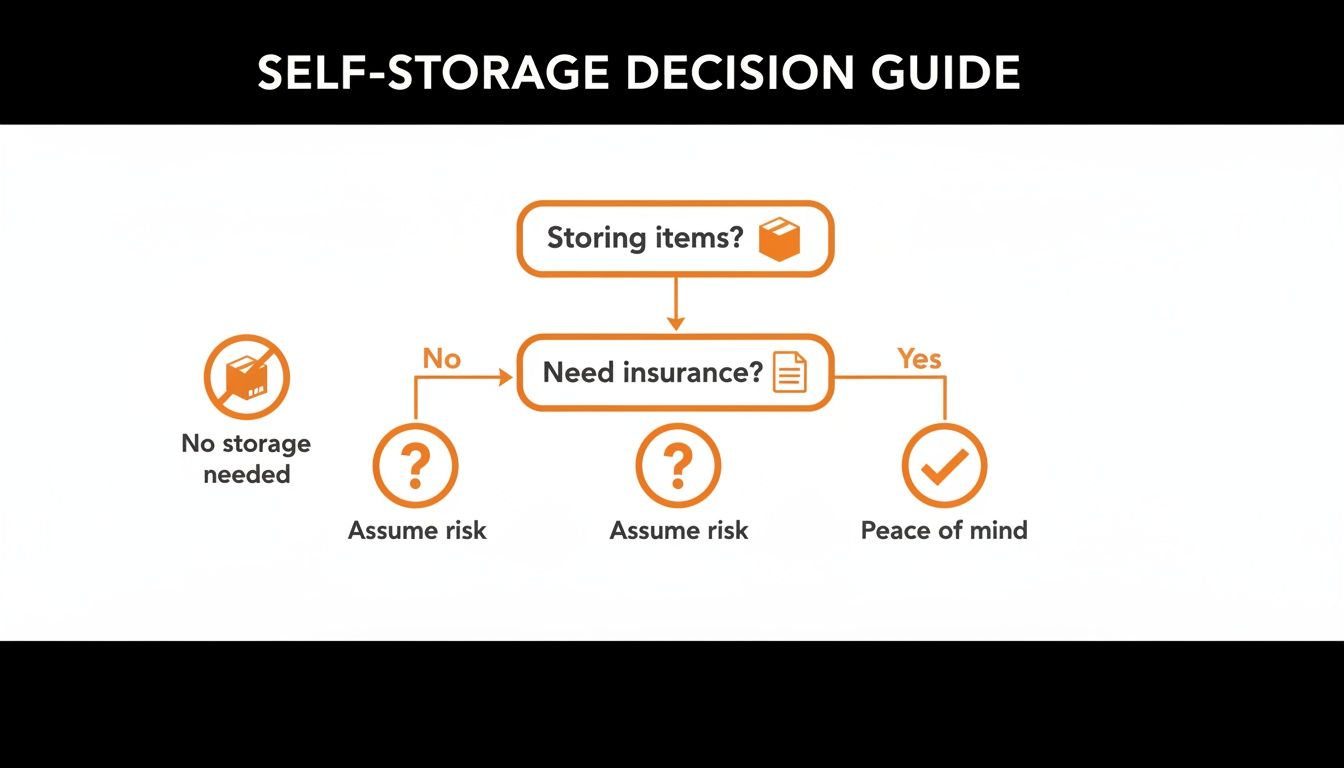
As the chart shows, getting insured is a crucial step towards feeling genuinely relaxed about leaving your belongings in storage. When you're weighing up the options, cost is a big piece of the puzzle. To get a better sense of the full picture, you can explore our guide on how much self-storage costs in the UK. Choosing a specialist policy often frees up more of your budget for the storage unit itself.
What Your Storage Insurance Actually Covers
Trying to make sense of an insurance policy can feel like wading through treacle. It’s often packed with jargon and clauses that are anything but clear. But when it comes to contents insurance for self storage, getting a handle on what you’re protected against—and what you’re not—is non-negotiable. Let’s break down the fine print into plain English, so you can feel confident you’ve got the right cover.
Most specialist storage insurance policies work on a 'new-for-old' basis. This is a great feature to have. It means that if one of your items gets damaged or destroyed, your payout should be enough to buy a brand-new equivalent today, not just what the item was worth second-hand. It’s a crucial detail that ensures you can actually replace what you’ve lost.
Standard Coverage for Common Risks
Think of your policy as a financial safety net for when the unexpected happens. While the exact details can vary from one insurer to another, most standard plans will protect your goods against damage caused by:
- Fire: This includes damage from flames, smoke, and soot, which can happen more often than people think.
- Flooding and Water Leaks: Covers damage from things like burst pipes, a leaky roof, or flooding from outside. It's surprising how many storage units face some form of water damage each year.
- Theft: This protects you if your unit is broken into. The key thing here is that the cover usually only kicks in if there are clear signs of forced entry. That’s why a top-quality padlock isn’t just a good idea—it’s essential.
- Vandalism and Malicious Damage: If someone intentionally damages your belongings inside the unit, your policy should cover the cost of repair or replacement.
- Impact from Vehicles: Protects you from damage caused if a vehicle accidentally collides with your storage unit.
Essentially, your insurance is there for sudden and unforeseen physical loss or damage. It’s the backup plan that springs into action when security measures, no matter how good, are beaten by an accident or a determined thief.
To get a broader picture of how this works, check out a complete guide to contents insurance for protecting valuables. It helps put these principles into a wider context.
Common Exclusions You Must Know
Knowing what isn't covered is just as important as knowing what is. Insurers are very specific about what they won’t pay for, and overlooking these exclusions can lead to a nasty shock if you ever need to make a claim.
Every policy will have a list of items that are completely excluded. These usually include:
- High-Value Items: Things like cash, securities, jewellery, and precious metals are almost never covered. They need specialist insurance and really shouldn’t be kept in a storage unit anyway.
- Perishable Goods: Anything that can spoil, like food or plants, is a no-go. It's guaranteed to degrade over time, so it's not insurable.
- Hazardous Materials: Flammable liquids, explosives, chemicals, and illegal substances are strictly forbidden and won't be covered by insurance.
- Living Things: This one’s straightforward—no animals or plants.
- Certain Vehicles: While you can store a car, it needs its own motor insurance. Your contents policy won't cover it.
The Importance of the Single Item Limit
Here’s a detail that catches a lot of people out: the single item limit. This is the absolute maximum an insurer will pay out for any one item, regardless of its true value, unless you’ve declared it separately.
Let’s say your policy has a single item limit of £1,500. If you have a £3,000 vintage guitar in your unit that gets destroyed in a fire, the insurer will only pay out £1,500—unless you’ve listed it specifically. To get its full value covered, you’d need to declare it as a high-value item when you take out the policy. This might nudge your premium up slightly, but it guarantees it’s fully protected.
Always check this limit and make a detailed inventory of any belongings that are worth more. A bit of honesty and accuracy at the start can save a world of disappointment later on.
How to Accurately Value Your Stored Items
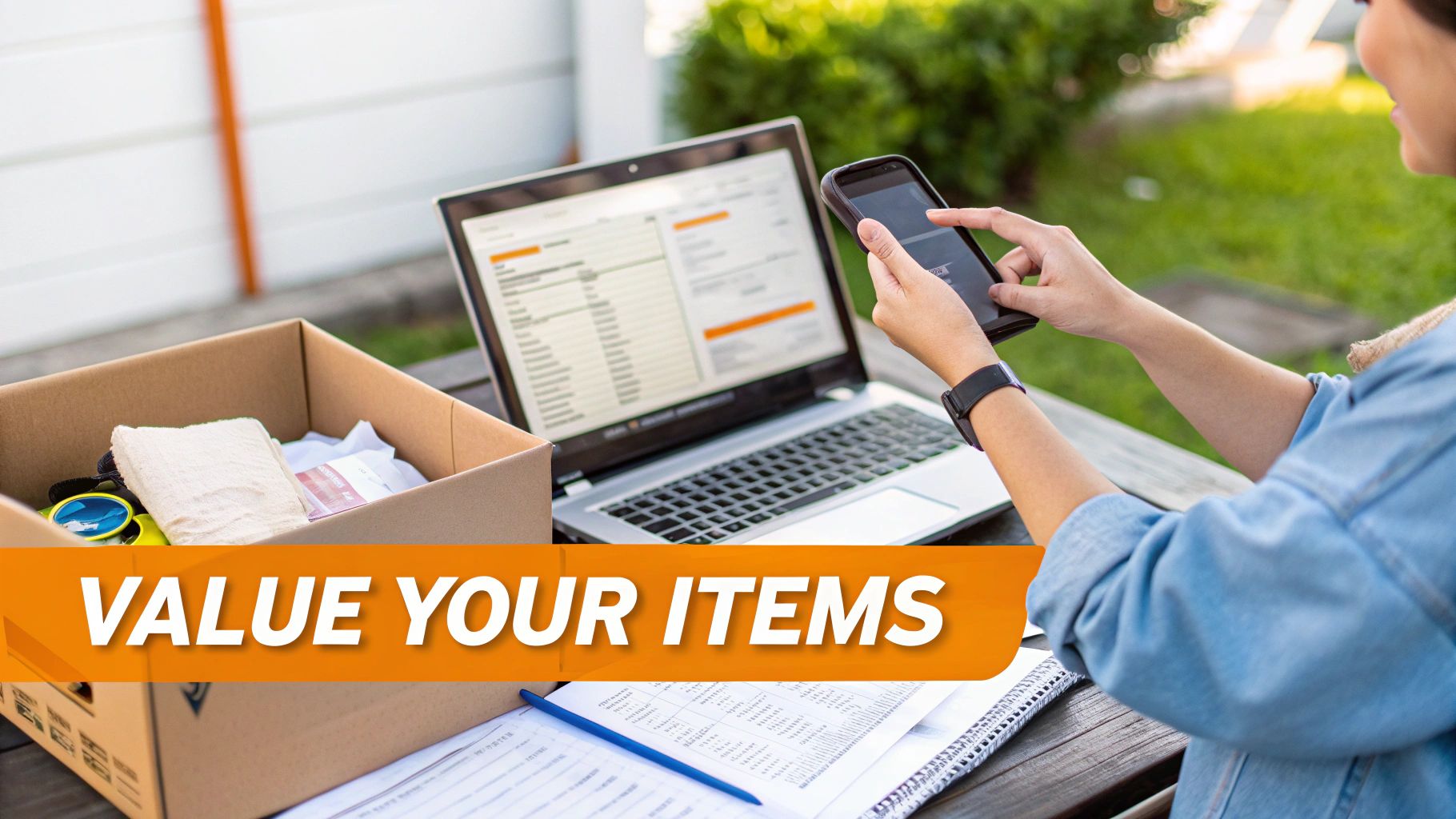
Getting the value right for your contents insurance for self storage is a bit of a balancing act. Aim too low, and you could be left seriously out of pocket if you ever need to claim. Go too high, and you're just paying for cover you don't actually need.
The trick is to work out the total ‘new-for-old’ replacement value of everything going into your storage unit. This isn’t about what the items are worth on Gumtree; it’s about what it would cost to walk into a shop and buy them all brand new today. This figure is the bedrock of your policy, so taking the time to nail it down will give you real peace of mind.
Create a Detailed Inventory
First things first: you need a comprehensive list of every single item you plan to store. I know, it sounds like a chore, but it’s absolutely non-negotiable. Trying to pluck a figure out of thin air is a surefire way to get it wrong.
The best approach is to be methodical. Go through your home room by room and jot down everything you’re packing up. Don’t just focus on the big-ticket items—all those books, kitchen gadgets, and clothes can add up to a surprisingly large sum.
An accurate inventory does more than just help you get the right insurance cover. It’s also an invaluable record if you ever need to make a claim, proving exactly what you had in the unit. It takes the guesswork out of a stressful situation.
To get a clear picture of what you own and make any future claims straightforward, it's worth following a proper guide to creating a home inventory for insurance. This systematic process will make the whole valuation much smoother.
Research the Replacement Cost
Once you have your list, it's time to do a bit of detective work. For each item, you need to find out what it would cost to buy a new, equivalent version right now. Don't rely on the price you paid years ago, as costs for things like electronics and furniture can change dramatically over time.
A quick online search is usually the easiest way to do this. Just pop onto retailer websites to check the current prices for similar models. For any unique pieces or antiques, you might need to get a professional appraisal for a truly accurate valuation.
Here’s a simple way to tackle it:
- List the Item: Write down the item, including the brand or model if you can (e.g., "Samsung 42-inch Smart TV").
- Find the Current Price: Search online for what a new, comparable model costs today.
- Record the Value: Add this price to your inventory spreadsheet.
- Total Everything Up: Once you're done, simply add up all the values to get your final replacement cost.
Remember, the goal here is to figure out the total cost to replace everything in your unit from scratch.
Document Everything Thoroughly
Your inventory list is the heart of your valuation, but a bit of visual proof makes your case even stronger. Before sealing those boxes, take a few photos or a quick video of your belongings, especially anything of high value.
It's a good idea to keep a digital folder with copies of your:
- Inventory Spreadsheet: The complete list of items and their new-for-old values.
- Photographs/Videos: Clear images that show your belongings exist and what condition they're in.
- Receipts and Appraisals: Any original purchase receipts or professional valuations you have for expensive items.
This documentation acts as undeniable proof of what you own and what it's worth. It’s a small bit of effort that can make a massive difference if you ever need to make a claim. As a bonus, it helps you stay organised, so you know exactly what’s in storage and how much space it will all take up.
And to make sure you pick the right size unit for everything on your list, have a look at our handy storage unit size guide.
Getting Covered and Making a Claim: A No-Nonsense Guide
Knowing you need contents insurance for self storage is the easy part. Actually wading through the process of buying a policy and, if the worst happens, making a claim can feel like a whole other challenge. This is your straightforward roadmap, breaking everything down into simple, manageable steps.
My goal here is to make sure you feel confident and prepared, turning a potentially confusing task into a clear plan. Whether you're getting covered for the first time or dealing with the stress of an incident, this guide will help you handle it smoothly.
Let’s start with how to get your policy sorted.
How to Buy Your Self Storage Insurance
Getting the right insurance policy doesn't have to be complicated. It really boils down to four key steps. Follow these, and you’ll get the cover you need without paying more than you have to.
-
Get Your Numbers Straight
As we've already touched on, this is the most critical step. You need a detailed inventory list and a solid calculation of the 'new-for-old' replacement value of every single thing you're storing. Don't just pull a number out of thin air—an accurate valuation is the bedrock of a good policy. -
Shop Around for Quotes
Whatever you do, don't just accept the first quote you're offered, especially the one from the storage facility itself. Take 15 minutes to hop online and compare specialist third-party insurance providers. You’ll almost certainly find better, more comprehensive cover for a fraction of the cost. -
Read the Small Print (Seriously)
Before you hand over any money, read the policy wording. Pay special attention to the single item limit, the list of exclusions, and the excess (that's the amount you have to pay towards any claim). Make sure you’re crystal clear on what is and isn’t covered. -
Keep Proof of Your Cover
Once you’ve bought the policy, your insurer will email you a policy document or certificate of insurance. The storage facility will need to see this as proof of cover, so have it ready. It’s also a good idea to keep a digital copy for your own records.
Taking these steps methodically will not only save you money but also ensure you have a policy that genuinely protects your belongings. A little diligence now prevents major headaches later.
How to Make an Insurance Claim
Nobody wants to be in a position where they have to make an insurance claim. But if the worst happens, knowing the right steps can reduce a lot of the stress and speed things up. If you discover your belongings have been damaged or stolen, here’s what you need to do immediately.
Step 1: Tell the Right People, Straight Away
Your first moves are the most important. The moment you discover a problem, you need to get the incident officially logged.
- Tell the Storage Facility: Let the on-site manager at Orange Box Self Storage know right away. They can secure the unit, check CCTV footage, and give you an incident report, which your insurer will definitely ask for.
- Call the Police (If It's Theft): If your unit has been broken into, you must report it to the police and get a crime reference number. Insurers simply will not process a theft claim without one.
Step 2: Contact Your Insurer—Don't Delay
Next, get on the phone with your insurance provider as soon as you possibly can. Most insurers have a time limit for reporting claims, often just a few days after you discover the incident. Have your policy number ready when you call to make things quicker. They’ll walk you through the next steps and send you a claim form.
Step 3: Document Everything
This is where that detailed inventory and all those photos you took will become your best friends. Give your insurer a complete list of every item that was damaged or stolen, along with their replacement values.
Make sure you include any evidence you have, such as:
- The crime reference number from the police.
- Photos or videos showing the damage or any signs of forced entry.
- Your original inventory list and any receipts you have for high-value items.
Being organised and providing clear, thorough documentation is the single best way to get your claim processed quickly and fairly. It cuts out any guesswork and gives the insurer everything they need to validate your loss.
Proactive Steps to Protect Your Stored Belongings
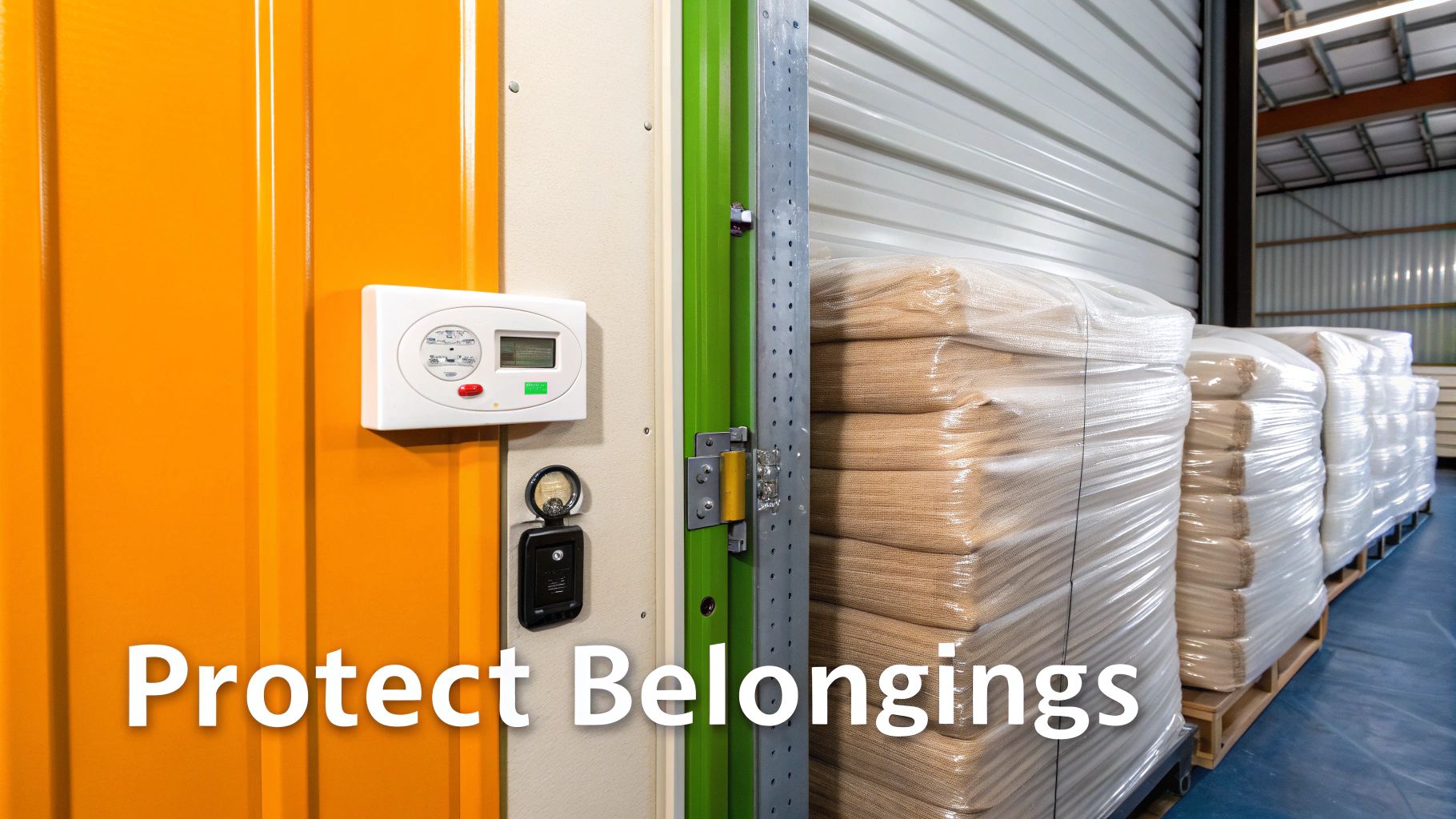
While having the right contents insurance for self storage is your financial safety net, the best claim is the one you never have to make. Smart storage habits are your first line of defence against damage and loss. They don’t just protect your belongings; they make it far less likely you’ll ever need to ring your insurer in the first place.
Think of it like locking your front door. You still have home insurance, but you don't leave the door wide open. Applying that same common-sense approach to your storage unit can save you a world of trouble.
Choose the Right Environment
The type of unit you rent plays a massive role in protecting your items, especially from the slow, creeping damage caused by the environment. For anything sensitive to heat or damp, a standard unit might not cut it.
Things like wooden furniture, electronics, artwork, and important documents can be permanently ruined by humidity and sharp temperature swings. This is where a specialised environment makes all the difference. To protect your most sensitive goods, you can learn more about climate-controlled storage units. Making this choice upfront is one of the best investments you can make in the long-term safety of your valuables.
Choosing the right unit is like picking the right coat for the weather. You wouldn’t wear a light jacket in a blizzard, and you shouldn’t store delicate electronics in a unit exposed to harsh temperature swings.
Secure Your Unit Physically
Your personal security measures add a vital layer of protection. While Orange Box Self Storage provides robust site security, that final lock on your unit door is your responsibility—and it’s a critical one.
- Invest in a High-Quality Padlock: Don't skimp here. A cheap, flimsy lock is an open invitation. A high-quality, closed-shackle or disc padlock is much tougher for thieves to cut or pick. It’s a small spend that offers a huge upgrade in security.
- Keep Your Key Safe: Treat your storage key with the same care as your house key. Never leave it in an obvious place and be strict about who has access to it.
Remember, most insurance policies will only cover theft if there are clear signs of forced entry. A strong lock isn't just a deterrent; it's a key part of ensuring your insurance is valid when you need it most.
Pack and Organise for Safety
How you pack and arrange your items can prevent a surprising amount of damage. Just throwing things in haphazardly is a recipe for disaster.
Proper packing means using sturdy, uniform-sized boxes that you can stack safely. Wrap fragile items well in bubble wrap or packing paper, and clearly label every box with its contents and which way is up. This simple step helps prevent things from being crushed, dropped, or broken.
Strategic organisation inside the unit is also key. Always create a central walkway so you can get to items at the back without climbing over a mountain of boxes. Stack heavier boxes at the bottom and lighter ones on top to prevent collapses. It’s also wise to leave a small gap between your belongings and the unit walls to encourage airflow, which helps stop moisture from building up.
Frequently Asked Questions About Storage Insurance
When you're looking at contents insurance for self storage, a few questions always pop up. It's completely normal. To give you total confidence, we've pulled together some clear, no-nonsense answers to the things we get asked most by our customers here in the UK.
This should help clear up any final uncertainties, so you know exactly what you need and why. Let's get into the details so you can make a decision you're happy with.
Is Insurance Necessary If the Facility Has CCTV?
Yes, it absolutely is. This is probably the most important thing to grasp. A storage facility’s security measures—like our 24/7 CCTV, alarms, and secure gate access—are there to keep intruders out and watch over the property. They protect the building, but they don't financially cover you for the loss of your personal belongings inside your unit.
Think of it like this: CCTV might help the police identify a thief, but it can’t write you a cheque to replace your stolen laptop. Insurance is your personal financial safety net. It’s what steps in to cover the replacement cost of your items if something like a theft, fire, or flood happens.
Can I Adjust My Cover Level?
You sure can. Most specialist insurance providers offer flexible policies because they know your needs can change. If you bring more things into your storage unit or take out a few valuable items, just give your insurer a call to adjust your total cover amount.
Keeping your cover level accurate is vital. If you add more valuable goods without telling your insurer, you could be underinsured. In a claim, that might mean you only get a fraction of what your items are worth. On the flip side, if you remove things, you can lower your cover and probably knock a bit off your premium.
What Happens If I Don’t Get Insurance?
Going without insurance leads to two big problems. Firstly, you’ll almost certainly be breaking your rental agreement. Nearly all reputable UK storage facilities, including us, make insurance a mandatory part of the contract. Ignoring this could mean your access is restricted or your agreement is terminated altogether.
But the bigger issue is this: if you choose not to insure your belongings, you are personally taking on 100% of the financial risk. If your things are stolen, ruined by a leak, or lost in a fire, you won't get a penny in compensation. You'll be left to cover the full cost of replacing everything out of your own pocket.
Is My Home Insurance Policy Enough?
It’s highly unlikely. While some home contents policies include a bit of "off-premises" cover, it’s usually very limited. Often, it will only protect a tiny fraction of your items' total value (typically around 10%) and might only be valid for a short time, like 30 days.
Relying solely on your home insurance is a gamble. A specialist contents insurance for self storage policy is built for the specific risks of a storage environment, offering far more suitable and solid protection. Always read the small print on your home policy before you assume you're covered—you’ll probably be surprised by what isn’t included.
Ready to secure your belongings with a trusted storage solution? At Orange Box Self Storage, we provide secure, clean, and accessible units to keep your items safe. Find your perfect space and book online in seconds at https://orangebox-selfstorage.co.uk.