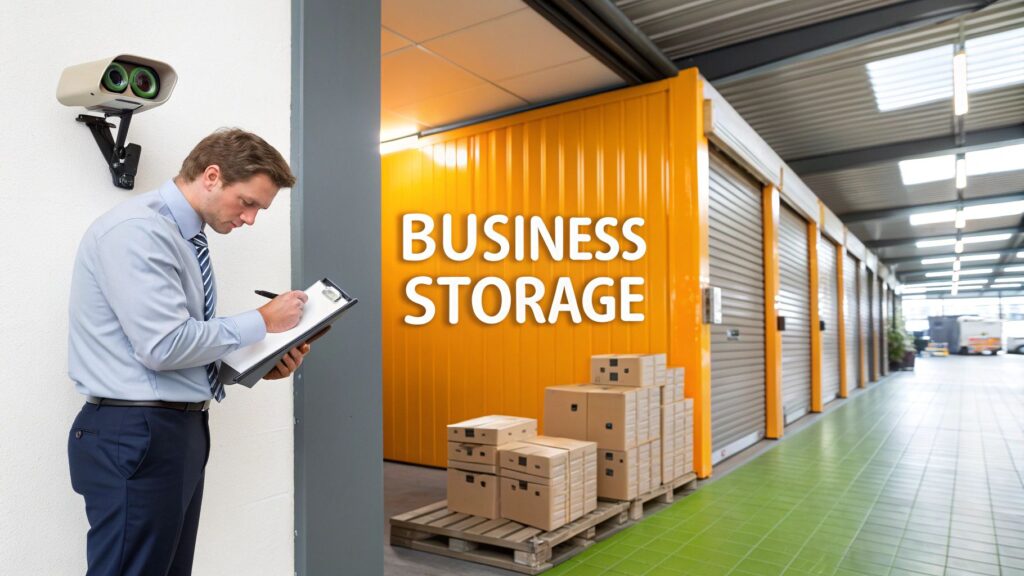
When you type "business storage near me" into a search engine, you're not just looking for a spare room. You're making a savvy business move. It’s a sign that you need more agility and cost-efficiency than a traditional commercial lease can offer—a local hub that moves and grows with your business.
Why Smart Companies Search for Business Storage Near Me
In today's competitive market, being nimble and efficient is everything. For many small and medium-sized businesses, the days of being locked into rigid, expensive commercial leases are numbered. Instead, they’re discovering that a local self-storage unit is a powerful operational tool that fuels growth instead of draining the bank account.

Common Business Scenarios
Think about these real-world examples we see all the time:
- E-commerce Brands: An online retailer in Derby hits a busy season, and suddenly their garage is overflowing with stock. A nearby storage unit gives them a secure, scalable way to manage inventory without the massive commitment of a full warehouse.
- Local Tradespeople: A Nottingham-based electrician needs a central, secure spot to store valuable tools and materials. A drive-up unit offers dead-easy access between jobs, protecting thousands of pounds worth of equipment from theft far better than a van parked overnight.
- Professional Services: A law firm can use a climate-controlled unit to archive sensitive client documents. This frees up expensive city-centre office space for what it's actually for—meeting clients.
The Strategic Value of "Near Me"
That little phrase, "near me," is more important than you might think. There's a reason you typed it. Understanding the importance of Local SEO shows why geographical closeness is a huge deal for businesses looking for storage.
Being able to quickly pop over to grab inventory, tools, or documents saves a massive amount of time and fuel. Those savings go straight to your bottom line.
This shift towards flexible solutions is bigger than you'd imagine. A remarkable 27% of all self-storage renters are now using units for business purposes, from managing stock to storing equipment. In fact, over 680,000 UK businesses are choosing storage to save 40-60% compared to traditional warehouses.
Choosing a local provider like Orange Box Self Storage means your unit becomes a true extension of your business. It’s not just about storage; it’s about building a smarter, more responsive business from the ground up.
Pinpointing Your Exact Storage Needs
Before you even start thinking about prices or unit sizes, let's get one thing straight: the most important step is figuring out exactly what you need. Getting this right from the start is the difference between making a smart business move and getting stuck with a frustrating, recurring cost. It saves you from overpaying for features you don't use and ensures your stock or documents are properly looked after.
The best place to begin is with a detailed inventory. And I mean everything. Don't just list the big items; think about the boxes of old files, the surplus stock hiding in the back, those marketing banners, and even the seasonal displays. What you need from a storage unit will be completely different depending on the kind of business you run.
Defining Your Storage Profile
Let me give you a couple of real-world examples we see all the time:
- The E-commerce Retailer: This business lives and breathes by its stock. They need constant, easy access to pick and pack orders, which means a ground-floor unit with drive-up access is a must. They need to be able to load and unload stock every day without any fuss.
- The Law Firm: On the other hand, a law firm might just need a secure place to archive old client files. They might only need to pop in a few times a year, so a less accessible upper-floor unit could be a savvy, cost-effective choice. But because they're storing sensitive paper records, climate control is non-negotiable to stop damp from ruining everything.
Your business will fit somewhere on this spectrum. Take a moment to ask yourself a few key questions to build a clear picture of what you actually require operationally.
By clearly defining what you're storing and how you'll use the space, you can avoid paying for premium features like 24/7 access when you only need standard business hours, or a ground-floor unit when an upper-level space would suffice.
Creating Your Practical Checklist
To find the perfect fit, you need to go beyond a simple list of items. Your checklist should really dig into the function of the storage unit as an extension of your business.
- Frequency of Access: Honestly, how often will you or your team need to get in there? Is it a daily thing for inventory, a weekly top-up for tools and equipment, or just a quarterly visit for archived files?
- Item Sensitivity: Are you storing anything that could be damaged by big swings in temperature or humidity? Think about electronics, wooden furniture, important documents, or even certain fabrics. These all demand a climate-controlled environment.
- Logistical Needs: Here’s a big one—will you need to have deliveries sent directly to the facility? Finding a provider who can sign for your packages is a massive time-saver and means you never miss an important delivery.
Thinking through these points makes your search so much more targeted and effective. You can learn more about how different features support various business needs in our complete guide to self-storage for businesses. This kind of clarity helps partners like us at Orange Box Self Storage match you with a unit that doesn’t just hold your things, but actively supports your day-to-day workflow.
Choosing the Right Unit Size and Type
One of the costliest mistakes a business can make is getting the size of their storage unit wrong. It’s an easy trap to fall into. You either end up paying for space you’ll never use, or worse, you run out of room on moving day. Getting this right from the start is a massive win for both your budget and your peace of mind.
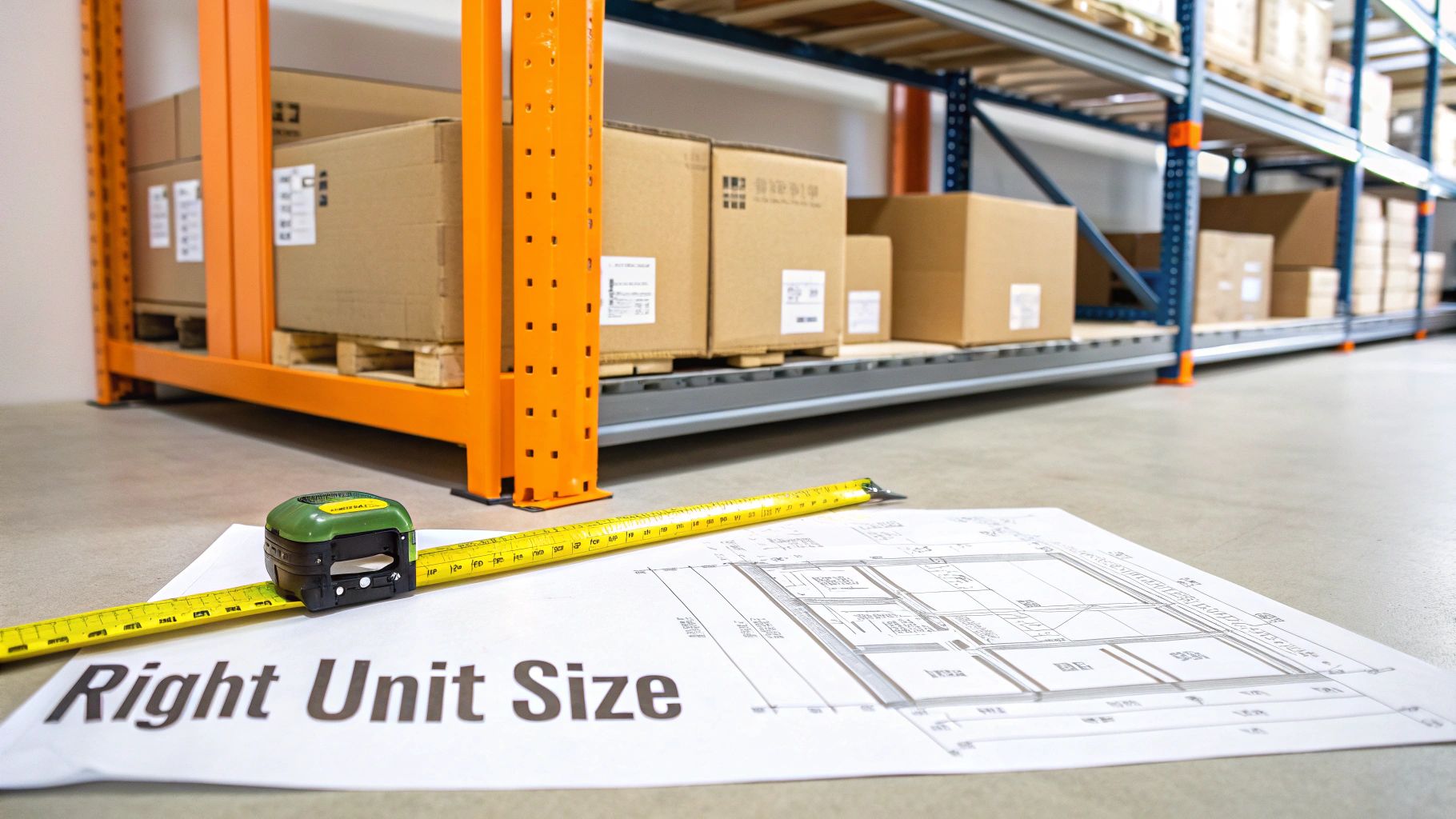
It can be tough to visualise space just from numbers on a screen, so let's put it into practical terms. A standard UK pallet is about 100cm x 120cm. So, a 100 sq ft unit—roughly the size of a single garage—can easily hold 8-10 pallets on the floor. That still leaves you plenty of room to stack vertically and create a clear walkway.
If you’re still unsure, here’s a pro tip: grab some masking tape and mark out the unit's dimensions on your warehouse or office floor. This little trick lets you physically place your boxes, equipment, or stock inside the lines to see exactly how everything fits before you commit.
Standard Drive-Up vs Climate-Controlled Units
Beyond the dimensions, the type of unit you choose is critical for protecting your business assets. The choice usually boils down to two main options, and they serve very different purposes.
-
Standard Drive-Up Units: These are the real workhorses of business storage. The convenience is unbeatable—you can drive your van right up to the door for quick loading and unloading. This makes them perfect for tradespeople storing tools and materials, construction gear, or any durable stock that isn’t bothered by the British weather.
-
Climate-Controlled Units: For anything sensitive, this is a non-negotiable. These units keep the temperature and humidity at a stable level all year round, shielding your assets from the damaging effects of damp and fluctuating temperatures.
Think of climate control as an insurance policy for your most valuable stock. It prevents rust on electronics, stops paper documents from yellowing or growing mould, and keeps wooden furniture from warping.
Matching the Unit to Your Inventory
To make the right call, you have to look closely at what you’re actually storing. If it’s all metal tools, gardening supplies, or well-packaged durable goods, a standard unit will do the job just fine.
However, if your business deals with any of the following, investing in climate control is a must.
- Electronics: Computers, servers, and AV equipment have delicate internal components. Moisture and extreme temperatures can cause permanent damage.
- Documents & Archives: For law firms, accountants, or any business with important paperwork, humidity is the ultimate enemy. It can destroy records in just a few months.
- Pharmaceuticals & Cosmetics: These products often have strict temperature guidelines to maintain their stability and effectiveness.
- Wooden or Leather Furniture: Showroom pieces and office furniture can easily crack, warp, or split when exposed to changing conditions.
At Orange Box Self Storage, we offer a complete range of both drive-up and climate-controlled units. We know that every business is different. Our team is always on hand to help you figure out the best fit, and you can get a great visual idea by checking out our online storage unit size guide. Making an informed choice here means your assets aren't just stored—they're properly protected.
What to Look for in Security and Access
When you're storing valuable business assets—whether it's high-value stock or sensitive client documents—security isn't just another feature. It's the whole point. You need the peace of mind that comes from knowing your items are protected, and that’s non-negotiable.
But top-tier security has to be balanced with practical, easy access that actually fits the way your business operates.
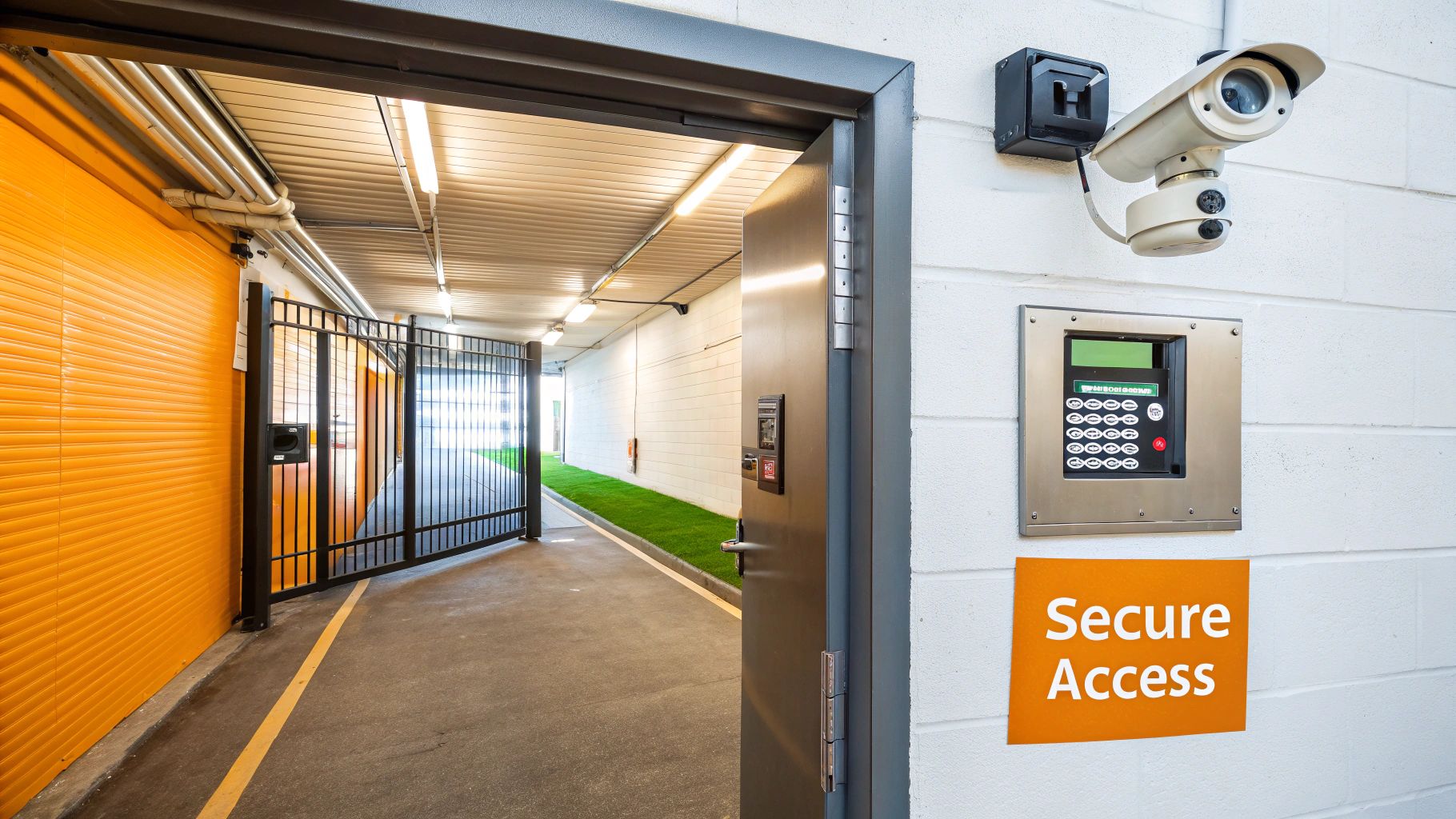
A genuinely secure facility is all about layers of protection. It starts with something as simple as a strong, well-maintained perimeter fence and works its way inwards. High-definition, 24/7 CCTV is the baseline standard these days, but it’s crucial the cameras cover more than just the main gate. They should be watching internal corridors and loading areas, too.
Essential Security Layers
The best facilities never rely on a single security measure. They build a multi-layered system designed to deter potential issues before they start and provide a clear audit trail if anything ever happens. When you’re walking around a potential site, keep an eye out for these key elements.
- Controlled Access Systems: Look for facilities that use individual PIN-code entry. This not only ensures only authorised people can get on-site but also creates a digital log of who is on the property and when.
- Individual Unit Alarms: While site-wide security is vital, an alarm on your specific unit adds another critical layer of defence. It gives you an immediate alert if your space is ever tampered with.
- Comprehensive Lighting: A well-lit facility is a deterrent in itself. Pay attention to the lighting in corridors, driveways, and loading bays to make sure you and your team feel safe, no matter what time you're there.
This multi-faceted approach is standard at dedicated business providers like Orange Box Self Storage, where we've designed our facilities with security in mind from day one.
Accessibility That Works for Your Business
Security is only half the equation. If you can't get to your stock or tools when you need them, the storage unit quickly becomes more of a hindrance than a help. Your search for "business storage near me" should prioritise facilities that understand business doesn't always happen between nine and five.
The ability to access your unit outside of standard office hours can be a game-changer for tradespeople starting their day early or e-commerce businesses packing orders late into the evening.
Look for extended access hours as a minimum. True 24/7 access offers the ultimate flexibility, letting you respond to urgent demands without being restricted by the facility's clock.
That convenience should also extend to the physical layout. Wide corridors for moving bulky items and accessible loading bays make deliveries and collections efficient and hassle-free. It's this combination of robust security and practical accessibility that transforms a storage unit from a simple box into a vital operational hub for your company.
To help you see the difference, here’s a quick comparison of what you might find.
Essential Features Comparison
| Feature | Basic Storage Offering | Orange Box Self Storage Standard |
|---|---|---|
| Access Control | Key or basic padlock access. | Individual PIN-code entry with a full digital log. |
| Surveillance | CCTV at entrances/exits only. | Comprehensive 24/7 HD CCTV covering all key areas. |
| Unit Security | Padlock provided by the customer. | Individually alarmed units for targeted protection. |
| Lighting | Basic lighting, often limited to certain hours. | Bright, motion-activated lighting across the entire facility. |
| Access Hours | Standard office hours (e.g., 9 am – 5 pm). | Flexible extended hours and 24/7 access options. |
| On-site Support | Limited staff presence. | On-site team available to assist with logistics and security. |
Choosing a facility that excels in both security and accessibility ensures your business storage works for you, not against you.
Navigating Contracts, Pricing, and Insurance
The small print on a storage agreement can be the difference between a great business decision and a real headache. It’s crucial to get your head around the financial side of things before you sign on the dotted line, starting with the price itself. You'll see plenty of low introductory offers designed to draw you in, but always ask what the price will be after that initial period. You don't want any nasty surprises on your invoice a few months down the road.
Look for a provider that’s completely transparent with their pricing. This means they’re upfront about every potential cost, from one-off admin fees to security deposits. A good, reputable company won’t try to hide extra charges in confusing legal jargon.
The Advantage of Flexible Contracts
One of the biggest things that sets modern self-storage apart from traditional commercial leases is the contract. Old-school leases often trap businesses in rigid, multi-year commitments that just don’t work for a company that’s growing or has seasonal ups and downs. For an e-commerce brand hitting its peak season or a tradesperson with fluctuating project work, that kind of inflexibility is a serious financial burden.
This is where the flexibility of a monthly contract really shines.
A rolling month-to-month agreement gives your business incredible agility. You can scale your storage space up during a busy quarter or downsize during a quieter period, making sure you only ever pay for what you actually need.
This is the model we use at Orange Box Self Storage because it puts you in the driver's seat. It’s a modern approach for businesses that need to adapt on the fly without being penalised by a long-term, restrictive lease.
Securing Your Assets with the Right Insurance
While a secure facility protects your goods from the outside world, the right insurance protects them from the unexpected. It’s a common mistake to assume the facility’s own insurance covers what’s inside your unit—it almost never does. Their policy covers the building, but your stock, equipment, and documents are your responsibility.
Most professional storage providers will actually require you to have insurance in place before you can move in. They often offer specialised policies designed specifically for stored goods, which can be the simplest way to get covered.
Here’s what you need to get straight:
- Coverage Value: Make sure the policy covers the full replacement value of everything you plan to store. Don’t just guess; create a detailed inventory to get an accurate figure.
- What’s Covered: Check which events are included. A standard policy should cover you for things like fire, theft, and flood damage.
- Exclusions: Pay close attention to any items that aren't covered. This might affect what you decide to keep in the unit.
Taking a bit of time to get this right gives you essential peace of mind. For a deeper look at what’s involved, you can learn more about arranging insurance for contents in a storage unit in our detailed guide. It’s the final step to ensuring your valuable business assets are fully protected from day one.
Time to Make a Move: Your Action Plan for Finding Local Storage
You’ve done the hard work of figuring out exactly what your business needs from a storage unit. Now you’re in the final stretch, turning all that research into a confident decision. It's all about making sure you've covered every last detail before you sign on the dotted line.
The last few steps are really just practical due diligence. Start by digging into online reviews for facilities around the Nottingham or Derby area. Don't just glance at the star ratings; read what people are actually saying. You'll learn a lot about how a provider handles problems and what other local businesses think of their security and access.
Your Final Checklist
Before you reserve a unit, there are a couple of final, crucial checks to tick off.
Nothing beats a quick site visit. Is the facility as secure and well-maintained as it looks online? Are the corridors clean and brightly lit? This is your chance to confirm that what you've seen online matches reality.
It’s also a good idea to have a move-in plan ready. A bit of organisation now will make the whole process smoother. Think about what you'll need most often and plan to put those items—like essential stock or tools—right at the front for easy access.
This simple graphic highlights the key financial steps you'll be taking.
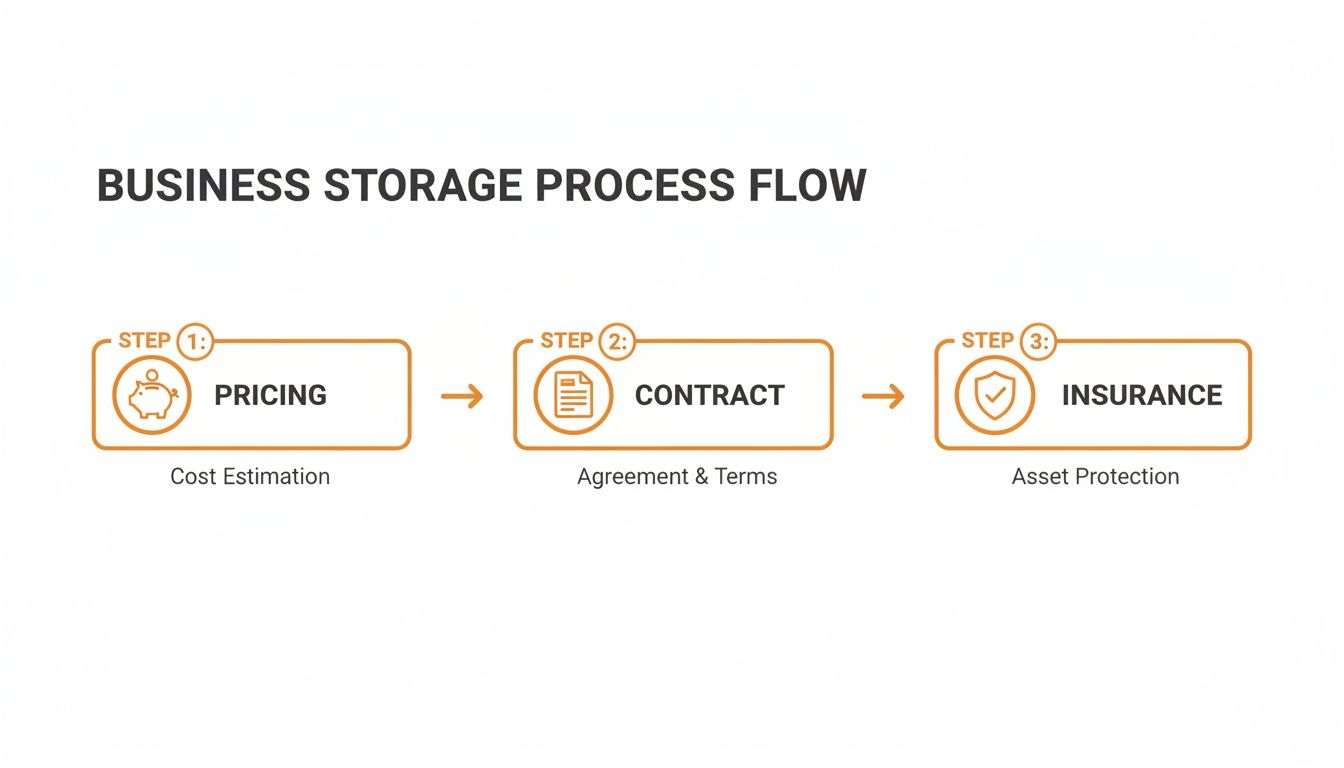
As you can see, getting the pricing, contract terms, and insurance right are the three pillars of a smart financial decision. Each one deserves your full attention.
Final Tip: When you’re visiting a site, try out the access system for yourself. Is it easy to use? Does it feel genuinely secure? There’s no better way to know if it'll work for your day-to-day business operations than to experience it first-hand.
Once you’re happy with everything, the last thing to do is lock in your unit. At Orange Box Self Storage, we've made this part incredibly simple. Our online reservation system lets you pick your unit, sort out the paperwork, and set up your access—all from your office or home in just a few minutes.
Your search for "business storage near me" is about to become a secured, hassle-free solution.
A Few Final Questions About Business Storage
Even with a plan in place, a few questions always pop up. Here are some quick, straightforward answers to the common queries we hear from businesses looking for storage.
What Kinds of Businesses Typically Use Self Storage?
You'd be surprised at the variety. We see everyone from e-commerce retailers storing inventory and tradespeople securing tools, to professional firms archiving documents. Even larger companies use our space for overflow stock or equipment.
The sheer flexibility of self-storage makes it a great fit for almost any industry that needs scalable space without being tied down by a long-term commercial lease.
For online businesses in particular, the operational benefits are huge. As you grow and start thinking about refining your logistics, it’s also smart to look into choosing the best fulfillment warehouse locations near you to complement your local storage strategy.
Do I Need Special Insurance for My Business Goods?
Yes, getting the right insurance is absolutely crucial, and it's nearly always required. While the facility’s own insurance covers the building, everything inside your unit is your responsibility.
Most reputable storage providers offer specialised insurance policies designed specifically for stored items, which is often the easiest and most comprehensive route to take.
Always double-check that your insurance policy covers the full replacement value of your inventory, equipment, and documents. Underinsuring your assets is a business risk that's just not worth taking.
How Flexible Are the Rental Contracts?
This is where self-storage really shines compared to traditional commercial property. The vast majority of modern facilities, including ours, operate on flexible, monthly contracts.
This setup allows your business to scale storage up or down as needed, whether you’re dealing with seasonal demand, big inventory shifts, or just steady growth. It means you only pay for the space you need, exactly when you need it, without getting locked into a restrictive, long-term commitment.
Ready to find the perfect, flexible storage solution for your business? At Orange Box Self Storage, we make it simple to secure the space you need with transparent pricing and flexible terms. Get a quote and reserve your unit online in minutes at https://orangebox-selfstorage.co.uk.