


A standard 20ft storage container provides about 33.1 cubic metres, with internal dimensions of roughly 5.90m long, 2.35m wide and 2.39m high, so it can hold the contents of a typical one- to three-bedroom household when packed efficiently. The right choice depends on both volume and shape, because the door opening is usually about 2.34m wide by 2.28m high, meaning awkward furniture may be harder to load than boxes.
You might be clearing a Beeston flat before a renovation, moving between rented homes, storing university belongings over the holiday, or keeping tools and stock away from a crowded garage. In each case, box counts alone can mislead you. A tall wardrobe, long sofa, bicycle or pallet of stock can use space differently from neatly stacked cartons.
The practical method is simple. Estimate the total volume, measure the largest and most awkward items, leave a route to anything you may need, protect goods that react to damp or temperature changes, and confirm loading arrangements before booking. Ask Orange Box Self Storage about vehicle access, pallet handling, security, climate protection, contract flexibility and online booking. The examples below are planning estimates, not guarantees. Packing method and item dimensions can change the result.
For broader planning advice, this complete guide to portable storage can help you compare container-based options with other approaches.
1. Household Furniture and Home Furnishings
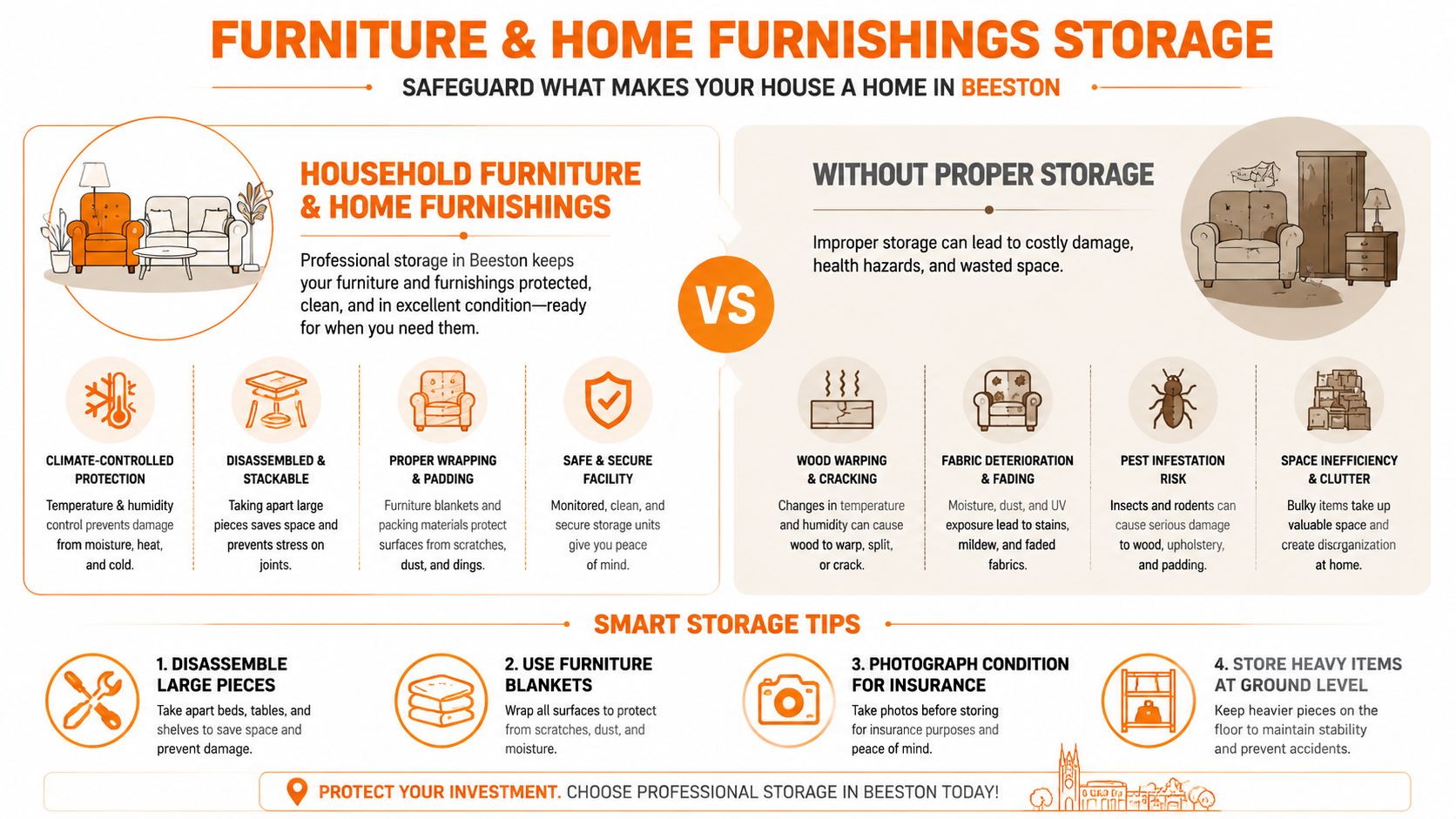
Furniture is where storage estimates become less predictable. A small home may have fewer boxes but still require substantial space because sofas, wardrobes, dining tables and bed frames don't compress easily. A dismantled double bed and flat-packed shelving can fit efficiently, while an assembled wardrobe may block the loading route and waste vertical space.
A 20ft container is commonly marketed as suitable for the contents of a two- or three-bedroom home. The sector often describes it as 160 square feet, although its true floor area is closer to 150 square feet, with a benchmark capacity of about 33.1m³ according to the UK self-storage industry census. The difference between floor area and cubic capacity matters when you're stacking furniture upwards.
A Beeston homeowner renovating a kitchen might store a dining table, six chairs, a sofa, sideboards, lamps and packed kitchenware. A landlord may need a smaller unit for furniture between tenancies, while a family downsizing may need the larger container because sofas and beds remain the limiting items.
Pack furniture around a retrieval route
Start with a plan rather than placing the largest item nearest the door.
- Disassemble where possible: Remove table legs, bed slats and shelving panels. Keep fixings in labelled bags attached to the relevant furniture.
- Protect surfaces: Use furniture blankets and moving pads. Don't rely on loose plastic wrapping around wood, because trapped moisture can create problems.
- Load heavy items low: Put cabinets, boxed books and solid furniture on the floor, then place lighter cartons above them.
- Record condition: Photograph furniture before loading and check what insurance applies through the storage provider.
Practical rule: Measure the door opening, not just the container interior. A large item must pass through the narrower entrance before the internal dimensions matter.
Leave frequently needed boxes near the front, but don't create an unstable tower. For delicate wooden furniture, electronics or upholstered pieces, ask whether a climate-protected unit is more appropriate than a standard container.
2. Document and Business Records Storage
Business records need a different storage layout from household furniture. The challenge isn't only fitting archive boxes inside a unit. You also need to identify a particular client file, contract or project record without unloading everything in front of it.
A Beeston accountancy practice might retain tax files and returns, a construction firm may archive drawings and safety records, and a legal practice may need controlled access to contracts and case documents. Retailers also use off-site space for supplier agreements and inventory paperwork. Healthcare organisations must apply their own data-protection procedures before placing patient administration records into storage.
For documents, a compact indoor unit may be more practical than a large container if access and environmental protection matter more than raw capacity. A 20ft container has substantial capacity, but filling it wall to wall with archive boxes can make retrieval slow and increase the risk of damaged cartons.
Build an archive system before moving boxes
Use a consistent structure that someone else can understand.
- Choose suitable cartons: Use strong archive boxes, with acid-free materials where appropriate for long-term records.
- Label every side: Put the business name, record category, date range and box reference on the top and at least one side.
- Keep a master index: Store a digital inventory separately, with the box location and retention information.
- Create an access aisle: Arrange shelving or stable rows so staff can reach individual boxes without moving a full stack.
- Protect confidential data: Confirm who can enter the unit, how access is logged and what insurance conditions apply.
Climate protection deserves particular attention during damp British winters. Ask Orange Box Self Storage whether the available unit is climate protected, and whether the facility's security controls match the sensitivity of the records. CCTV, restricted entry and a clear visitor process can support good internal controls, but they don't replace your own privacy and retention policies.
A small laptop bag, a few textbook cartons or a short-term project archive may need only a compact locker. Larger firms should estimate linear shelving space as well as box volume, because an oversized unit with no system can be less useful than a smaller, organised one.
3. Seasonal Decorations and Holiday Items
Seasonal goods usually need storage for most of the year, but they're often awkward, fragile and badly packaged. Christmas trees, artificial wreaths, lights, baubles, garden ornaments and shop-window props can occupy a surprising amount of space when left in their original shapes.
A household with one artificial tree, several labelled tubs and a few garden decorations may suit a compact unit. A retailer, hotel or events company with display panels, themed props and seasonal merchandise may need a larger room or container. The correct size depends less on the number of decorations than on whether they nest together and whether packaging has been retained.
Use bins, photographs and zones
Store each season as a separate zone. Christmas items can go together, Halloween displays in another area, and garden decorations near the front if they're needed first.
- Use rigid plastic bins: They resist crushing better than thin cardboard and make stacking easier.
- Label the outside clearly: Add a short contents list and a photograph of the open bin.
- Protect fragile pieces: Wrap ornaments individually and use dividers to stop them knocking together.
- Keep a seasonal register: A simple digital list prevents duplicate purchases and makes collection quicker.
- Avoid overloaded stacks: Heavy boxes at the bottom protect delicate decorations above them.
An eight-foot artificial tree may need its own vertical position, even if the rest of the collection fits into cartons. Measure its bag or box and check the unit's usable height. Also consider the route from the vehicle to the door, especially if you're carrying fragile items in poor weather.
Climate protection can help with fabrics, painted displays and electrical decorations, but it isn't a substitute for dry packing. Let lights and ornaments cool or dry before sealing them, and don't store fuel, chemicals or other prohibited materials with decorative goods.
4. Student Academic Materials and Textbooks
A student's storage needs often look modest until books, bedding, clothing, a desk chair, kitchen items and sports equipment are grouped together. A compact locker may handle cartons and bags, while a larger unit becomes useful when housemates combine belongings or when someone needs to store furniture as well.
Students near the University of Nottingham may need storage between accommodation contracts, study abroad periods and term-time moves. One student might store textbooks, a laptop bag, winter clothing and a few boxes. Another may add a bicycle, musical instrument, mini-fridge or project materials, making the shape of the load more important than the number of cartons.
Keep the unit affordable and easy to empty
Pack by ownership and retrieval priority. Label each box with the student's name, room or category, and keep electronics in protective cases rather than loose among clothing.
- Use uniform boxes: Similar cartons stack safely and make better use of a small locker.
- Share carefully: Housemates can split a larger unit, but each person needs a marked zone and inventory.
- Book early: Demand can become stronger around university holiday and moving periods, so check availability before the end of term.
- Check access hours: Students may need evening or weekend access, not only daytime entry.
- Confirm insurance: Valuable laptops, cameras and instruments may need cover beyond a standard policy.
Students should also ask about the loading route, trolley availability, vehicle access and the notice period for ending the rental. A unit near the collection point may be worth choosing if several visits are likely, while a more remote option may work for belongings that won't be touched during the break.
Orange Box Self Storage provides storage units for students, so compare the available size, contract terms and access arrangements with your actual move dates.
5. Tools, Equipment and Contractor Materials
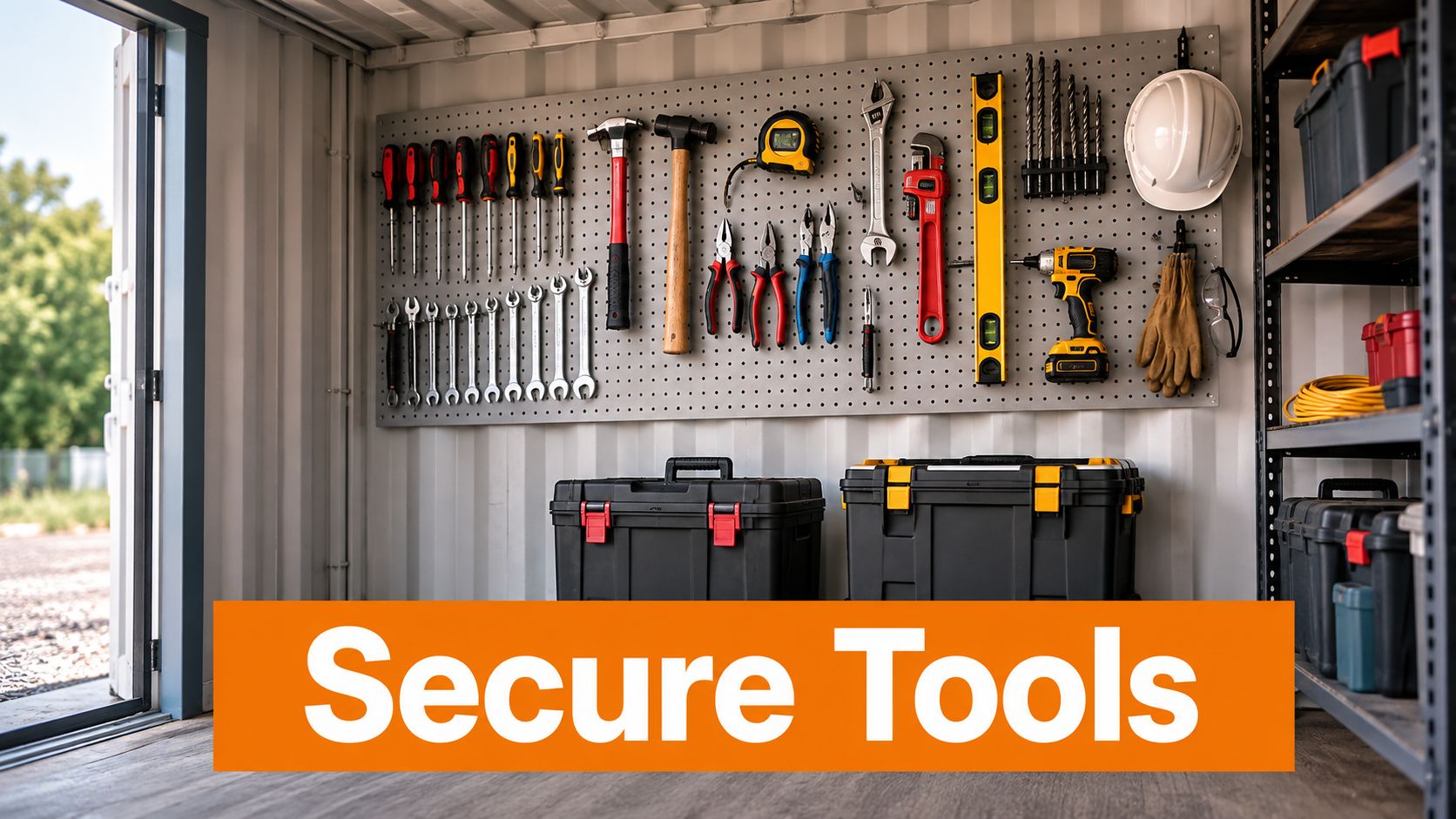
Tradespeople need storage that supports daily work, not just long-term concealment. A plumber may store pipe stock, copper fittings and diagnostic equipment. An electrician may need cable supplies and testing tools, while a painter or builder may have ladders, scaffolding, power tools and protective equipment.
A compact unit can suit a mobile toolkit and boxed consumables. A ground-level container is more practical for bulky equipment, long materials and repeated vehicle loading. The container's maximum payload can be around 28,000kg, but weight is rarely the main constraint for a normal trade load. Volume, door aperture and the ability to manoeuvre equipment usually matter more, as explained in the container specifications guide.
Design the space as a working store
A contractor should be able to find a drill, fitting or replacement part quickly. Use shelving, labelled bins and a clear centre route rather than stacking everything from floor to ceiling.
- Create equipment zones: Keep power tools together, consumables in another area, and job-specific materials in marked sections.
- Use photographs: Record serial numbers and condition for insurance and theft reporting.
- Keep heavy gear low: Compressors, tool chests and dense materials should remain at floor level.
- Check vehicle access: Confirm whether a van can reach the container and whether loading takes place directly at the door.
- Ask about pallet handling: Businesses receiving bulk materials need to know whether pallets can be delivered, moved or collected.
A tradesperson working across Beeston and nearby sites may value flexible access more than internal finish. Ask about gate hours, access controls, CCTV, lock requirements and whether the site permits work inside the container. Storage space isn't automatically a workshop, so don't assume repairs, drilling, charging or decanting materials are allowed.
For a fuller look at the practical issues affecting contractors, see container storage for tradespeople. The same questions apply when comparing a Beeston container with an indoor business unit.
6. Vintage Clothing Collections and Fashion Inventory
Clothing uses less floor space than furniture, but poor packing can damage garments and make stock control difficult. A vintage dealer may have rails of dresses, coats and suits, while an online seller may store folded items in labelled boxes. A personal collection can fit in a compact unit, but business inventory needs room for sorting, photographing and picking orders.
The best layout depends on the garment type. Hanging rails suit bridal wear, bespoke jackets and delicate dresses. Folded stock works better in breathable boxes with acid-free tissue paper where appropriate. Don't pack valuable fabrics tightly against an exterior wall or leave them in damp cardboard.
Separate storage from stock handling
A Beeston Vinted or eBay seller may need shelves for sold, unsold and awaiting-cleaning items. A vintage boutique may organise by season, size, style and condition. Both need a walkway and a reliable digital inventory.
- Use garment bags: Choose breathable covers rather than sealing natural fabrics in airtight plastic.
- Add item records: Photograph each piece and note size, fabric, condition and storage location.
- Use stable rails: Leave enough room to remove one garment without pulling down a full row.
- Protect against pests: Cedar blocks or lavender sachets can support moth prevention, but inspect stock regularly.
- Ask about climate control: Temperature and humidity protection may be important for vintage, silk, leather and formalwear.
A climate-protected unit can reduce environmental risk, but the garments still need to be clean and fully dry before storage. Ask whether the facility offers climate-controlled storage units and clarify the insurance rules for high-value collections.
For vehicle practicality, rails and garment boxes are usually manageable in a van. Pallets are less suitable for hanging inventory unless the stock arrives boxed. Confirm whether deliveries are accepted and whether staff can receive them on your behalf.
7. Moving and Relocation Transition Storage
Moving between homes in Beeston can leave you with boxes, furniture and changing deadlines. Completion may be delayed, a tenancy may overlap, or renovation work may run late. A storage unit creates a temporary holding point, so you can move items without making every decision on moving day.
A compact unit can suit a renter with cartons, clothing and smaller furniture. A family between properties may need a 20ft container for sofas, beds, dining furniture, appliances and boxes. The shipping container size guide gives a standard 20ft container about 33.1m³ of internal volume, enough for a typical one- to three-bedroom household when packed efficiently.
Pack around access, not just capacity
Begin with an inventory and group boxes by room. Label documents, medication, work equipment and basic kitchen items clearly. Load these near the door, because a full unit works like a cupboard: the items at the back may be difficult to reach.
- Measure large items: Check sofas, wardrobes and appliances against the unit entrance and internal height.
- Dismantle carefully: Keep screws, brackets and instructions in labelled bags attached to the relevant furniture.
- Build stable layers: Place bulky furniture first, solid cartons above it, and fragile goods where they will not be crushed.
- Keep a walkway: Leave enough space to reach priority boxes without unloading the whole unit.
- Check vehicle access: Ask whether the removal lorry, van or trailer can reach the door and whether unloading is at ground level.
Reserve the unit and removal service before the moving date. Confirm access hours, booking requirements, cancellation terms and whether you can visit without advance notice. If completion timing remains uncertain, a flexible agreement may avoid paying for a rushed second move.
Outdoor furniture, garden tools or a shed may need separate handling. If you are thinking about moving your shed, plan its route and lifting requirements early. Dry garden equipment before storage, keep it away from upholstered furniture, and protect valuable items from condensation.
8. Hobby Equipment and Sports Gear Storage
Sports and hobby equipment often has long, narrow or irregular shapes. A cyclist may need space for bikes, spare wheels and repair equipment. A golfer may store clubs, a trolley and practice gear, while a musician may need room for instruments, amplifiers and recording equipment.
A compact locker can handle boxed camping equipment, seasonal clothing or a few golf bags. A larger unit becomes useful when bicycles, skis, camping furniture, model railway boards or instruments are included. The key question isn't only whether everything fits. It's whether you can remove one item without disturbing the rest.
Store equipment by activity and season
Use wall-mounted racks or freestanding shelving where permitted, and keep a central route through the unit. Store cases and protective covers with the equipment they belong to.
- Prepare items first: Dry tents, clean bikes and service sports equipment before packing them away.
- Protect delicate goods: Use padded cases for instruments, cameras and model collections.
- Separate restricted materials: Keep batteries, fuel and chemicals away from ordinary stored goods, subject to the facility's rules.
- Record expensive items: Maintain photographs, serial numbers and insurance documentation.
- Schedule checks: Inspect equipment before each season so flat tyres, corrosion or mould don't go unnoticed.
A musician should ask specifically about climate protection and humidity management. A cyclist should ask about door width, vehicle access and whether racks can be installed. A camper should confirm the rules for gas bottles, fuel, food and other items that may be prohibited.
Sports equipment may load easily into a van, but long items such as kayaks, skis or dismantled tents can still create a door and aisle problem. Measure the packed length, not just the equipment's advertised dimensions.
Beeston Storage: 8-Item Comparison
| Item | Implementation complexity | Resource requirements | Expected outcomes | Ideal use cases | Key advantages |
|---|---|---|---|---|---|
| Household Furniture and Home Furnishings | Medium, disassembly, wrapping, stacking | Medium–large units (50–100+ sq ft), climate control recommended | Preserved furniture, reclaimed home space, moderate ongoing cost | Downsizing, renovations, between moves | Protects furniture; flexible rentals; supports home staging |
| Document and Business Records Storage | Medium, cataloging and indexing required | Small–medium units, climate control, shelving, 24/7 CCTV/access control | Compliant, organized archives with secure retrieval | SMEs, accountants, legal practices, construction firms | Regulatory compliance; frees office space; secure records |
| Seasonal Decorations and Holiday Items | Low, boxing, labeling, organized shelving | Small units (10–25 sq ft), shelving; climate control beneficial | Reduced household clutter; easy seasonal access; recurring cost | Homeowners, retailers, event companies, hotels | Frees space; protects delicate items; short-term flexibility |
| Student Academic Materials and Textbooks | Low, basic packing and labeling | Locker-style units (5–10 sq ft), 24/7 access, low-cost monthly contracts | Cost savings vs shipping; reduced accommodation clutter | University students, exchange students, graduate researchers | Affordable; flexible terms; campus-convenient access |
| Tools, Equipment, and Contractor Materials | High, inventorying, organization, security setup | Weatherproof containers, heavy-duty shelving, strong locks, CCTV | Theft/environment protection; improved project logistics; business expense | Tradespeople, contractors, small construction firms | Secures tools; reduces transport; enables on-site readiness |
| Vintage Clothing Collections and Fashion Inventory | Medium, hanging systems, cataloging, pest prevention | Climate-controlled units, hanging rails, shelving, low humidity | Preserved garments; accurate inventory; improved fulfillment | Boutiques, online retailers, stylists, fashion students | Protects fabrics; extends garment life; better inventory control |
| Moving and Relocation Transition Storage | Medium, packing, timing coordination, access planning | Large units (100–500 sq ft), short-term flexible contracts, packing services | Smooth property transitions; fewer removals; ongoing rental cost risk | Homeowners between properties, renters, renovators, expats | Bridges timing gaps; secures belongings; avoids multiple moves |
| Hobby Equipment and Sports Gear Storage | Low–medium, mounting, seasonal maintenance | Compact–medium units (10–50 sq ft), climate control for sensitive gear, racks | Protected equipment; freed garage/house space; travel to access | Skiers, cyclists, musicians, campers, golfers | Extends equipment life; organized storage; protects valuables |
Choose Your Beeston Storage Size With Confidence
Start by grouping everything into practical categories: furniture, cartons, documents, clothing, tools, stock, sports gear and fragile items. This prevents a mixed pile from hiding the primary storage requirement. Then estimate the number of boxes and list every bulky item separately.
Measure the largest pieces, including their packaging. Check sofa length, wardrobe height, bed-frame sections, shelving, bicycles and any palletised goods. A standard 20ft container offers about 5.90m of internal length, 2.35m of width and 2.39m of height, but the entrance is typically about 2.34m wide and 2.28m high, as set out in UK container storage guidance. An item can fit inside on paper and still fail at the door.
Use these questions before reserving:
- What needs regular retrieval: Keep those goods near the entrance and allow a usable route.
- What is heavy: Put dense boxes and equipment at ground level, and check whether shelving is suitable.
- What is sensitive: Ask about climate protection for documents, electronics, vintage fabrics, instruments and wooden furniture.
- What arrives on pallets: Confirm pallet delivery, forklift availability, unloading responsibility and vehicle access.
- What vehicle will you use: Check whether a car, van, trailer or removal lorry can reach the loading point.
- How long will storage last: Ask about minimum rental periods, notice requirements and contract flexibility.
- How is the site protected: Confirm CCTV, access controls, entry records and lock arrangements.
- How will you book and manage the account: Online booking can make short-term changes easier, but confirm the exact process with the provider.
A slightly smaller, well-organised unit can be more useful than the largest available space. Efficient stacking saves room, but overpacking creates unstable piles, blocks access and makes every visit harder. Conversely, choosing a container that's too small may force a second move or leave fragile goods pressed against unsuitable surfaces.
Orange Box Self Storage offers compact lockers, personal and business units, student storage and container storage in Beeston. Before committing, compare the provider's size guidance with your measurements, then confirm the exact internal dimensions, door opening, availability, loading access, insurance and climate arrangements.
The most reliable decision comes from combining volume with item shape. If you can describe your largest items, approximate box count, preferred access frequency and vehicle type, the storage team can help you test the plan before you arrive.
For furniture, student belongings, trade equipment, documents and business stock in Beeston, Orange Box Self Storage offers flexible unit options, container storage, climate-protected spaces, CCTV, access controls and online booking. Visit Orange Box Self Storage with your item list and measurements to check suitable sizes and arrange storage around your move or operating schedule.