

If you're standing in a spare room in Ilkeston wondering how it filled up so quickly, you're not alone. It usually starts with something ordinary. A move that overlaps by a few weeks. A child coming home from uni. A stockroom that spills into the office. A van full of tools that no longer feels safe left overnight.
The tricky part isn't deciding that you need storage. It's choosing the right kind of space so you don't pay for protection you don't need, or save money up front and then regret the access or conditions later. Around Furnace Road, that choice usually comes down to one practical question. Do you need an indoor unit or an outdoor container?
Finding Your Space in Ilkeston
A lot of storage decisions in Ilkeston start on a busy afternoon, not at a tidy planning meeting. One customer is between house moves and needs a few weeks of breathing room. Another is clearing a spare room before a child comes back from university. A local trader has stock in the office, tools in the van, and no good system for either.
At the Furnace Road facility, the first useful question is usually not “How much space do I need?” It is “What am I storing, and how often will I need it?” That answer shapes everything else. Furniture and boxed household items call for one kind of setup. Tools, stock, and equipment that move in and out through the week call for another.
If you are looking specifically at storage in Ilkeston, the local advantage is practical. You can choose a unit close enough to use properly, rather than paying for space that becomes inconvenient after the first week.
A few simple checks save a lot of hassle. Measure the largest item, not just the boxes around it. Be honest about access. If you are likely to visit every few days, convenience matters as much as floor area. If your items are going in for a longer hold, protection and layout usually matter more.
At Orange Box Self Storage in Ilkeston, we see the same pattern again and again. Customers who choose well tend to match the space to the job, not just the price. That usually means balancing three things. What needs storing, how often it will be accessed, and how quickly you want to load and unload.
Practical rule: Choose around your weekly routine. Occasional access suits one setup. Frequent loading, bulky items, and working stock suit another.
Indoor Units vs Outdoor Containers The Core Choice
The easiest way to think about it is this. An indoor unit is like having a private room inside a secure building. An outdoor container is more like having your own lockable garage on site.
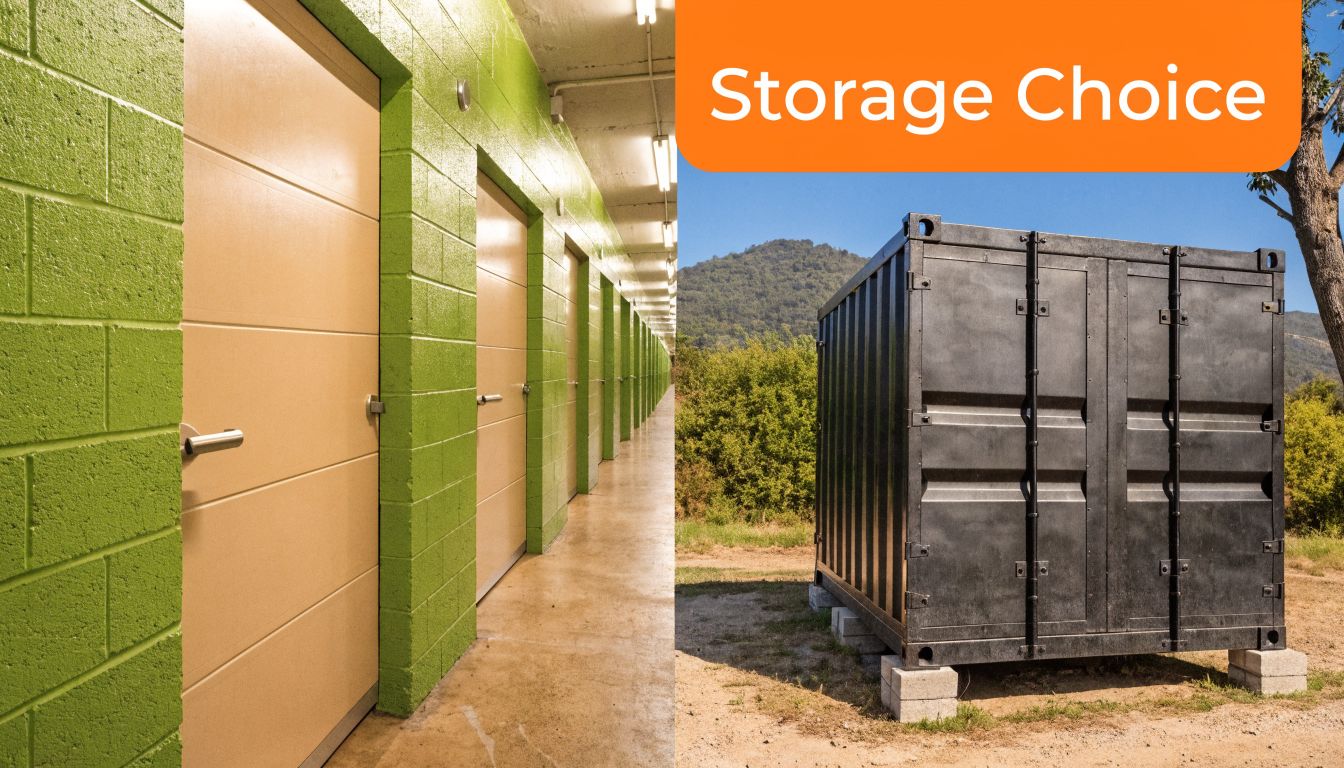
What indoor units do well
Indoor units suit items that benefit from a more stable environment and a cleaner internal setting. They work well for household belongings, documents, books, electronics, soft furnishings, and the kind of furniture you’d rather not keep shifting in and out of a container.
The feel is different from outdoor storage. You park, unload, and move your goods into the building rather than backing directly up to the unit. That adds a step, but it also gives you a more controlled environment. For many customers, that’s a worthwhile trade.
What containers do well
Containers win on convenience for bulky, heavy, or frequently moved items. If you’re a tradesperson carrying equipment, or a retailer rotating stock in and out, drive-up access saves effort. You can pull up close, load quickly, and get back on the road.
That’s the main reason containers often suit working storage rather than archive-style storage. If your routine involves ladders, toolboxes, stock cages, or awkward long items, direct access matters every single visit.
A closer look at the difference between indoor storage and container storage helps when you’re deciding between protection and convenience.
The trade-off that matters
Most mistakes happen when people choose by price alone. A lower-cost container can be perfect for durable goods, but it may not be the right home for paperwork, delicate household items, or anything sensitive to changing conditions. The reverse is true as well. An indoor room can be ideal for protection, but it’s not always the most efficient setup if you’re constantly loading heavy business gear.
If you touch the contents every day, prioritise access. If you want to put items away and know they’re protected, prioritise conditions.
Use that as your first filter. It narrows the choice fast and saves a lot of second-guessing later.
A Closer Look at Personal and Student Storage
For personal and student use, indoor storage is usually the cleaner fit. The reason isn’t complicated. Individuals and students often store mixed belongings rather than rugged equipment. That might mean clothes, books, bedding, kitchen items, family keepsakes, small furniture, paperwork, or electronics.
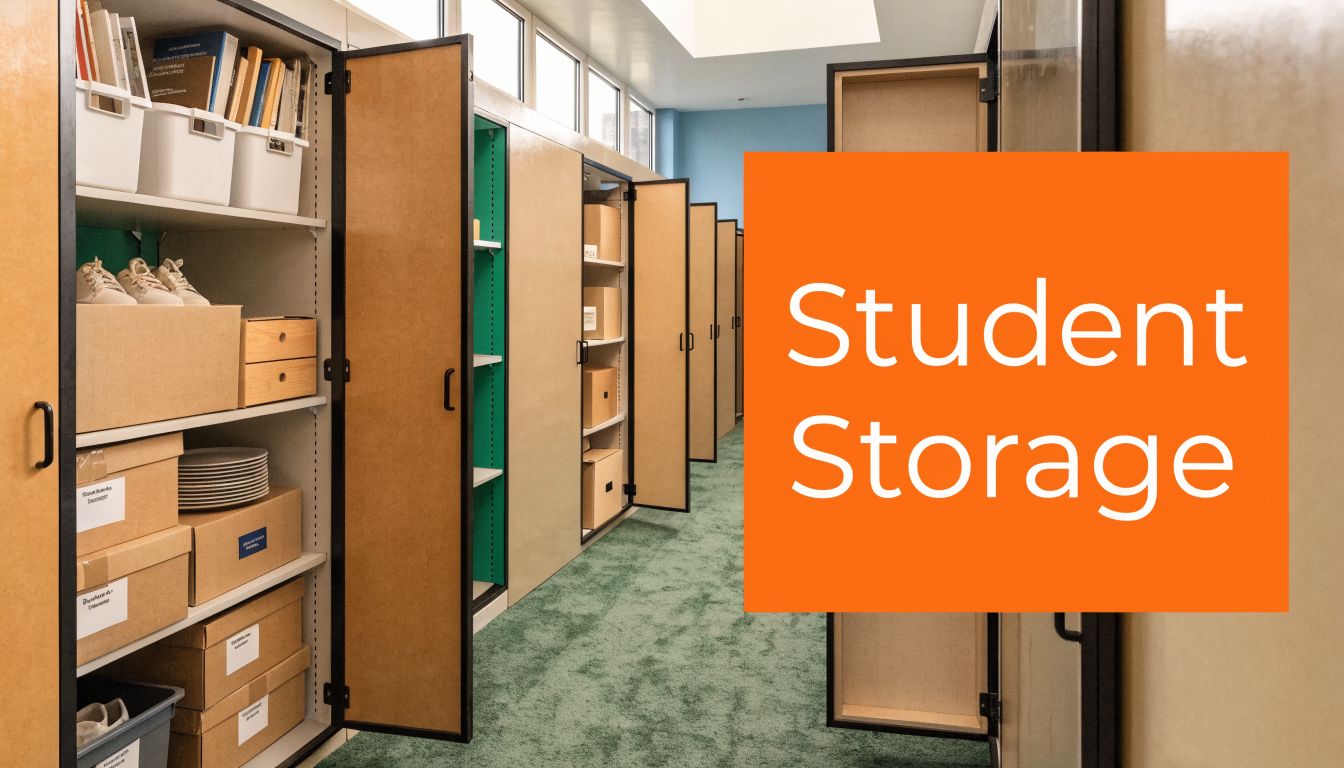
What tends to fit in a small personal unit
A small unit is often enough for overflow rather than a full house move. In practice, that might be:
- Student break storage: boxes of books, clothes, a desk chair, bedding, and kitchen basics
- Seasonal household items: decorations, suitcases, fans, heaters, sports kit
- Paper and media storage: archive boxes, folders, photo albums, small shelves
This is the kind of space people underestimate. If you pack properly and stack evenly, a compact unit can clear a surprising amount from a box room or hallway cupboard.
Medium and larger units for life in transition
A medium unit starts to make sense during a move, renovation, separation, or inherited-house clear-out. Such units typically hold chairs, mattresses, sideboards, boxed kitchenware, and bikes. The key is not just whether the unit can hold them, but whether you can arrange them sensibly and still reach what you need.
Larger indoor units are better when the contents need to stay organised. If you’re storing furniture while doing building work at home, it helps to leave yourself a walkway and keep fragile items away from the loading edge. People who pack wall-to-wall on day one often have a rougher time when they need one specific box later.
Why climate control matters for home and student items
For sensitive belongings, stable conditions make a real difference. Orange Box Self Storage states that its indoor units maintain 18-24°C, which is suited to household items, documents, and student belongings that can be damaged by poor storage conditions. That’s particularly relevant if you’re storing wood furniture, paperwork, electronics, or anything fabric-based that you don’t want exposed to avoidable swings in temperature.
You can see more on student storage options in Ilkeston if your main concern is term-time and holiday storage.
A simple packing rule: Put the items you’ll need first near the door, not the items you packed first. People often do the opposite.
What works and what doesn’t
Here’s what usually works well in an indoor personal unit:
- Uniform boxes: easier stacking, less wasted height
- Covered soft furnishings: helps keep sofas and mattresses clean during moves
- Labelled zones: kitchen, bedroom, paperwork, uni items
What doesn’t work well:
- Loose bags piled high: they slump, snag, and waste space
- Heavy boxes at shoulder height: difficult to move safely later
- No inventory list: fine on move-in day, frustrating after three months
Security is another reason indoor units appeal to households and students. At the Ilkeston facility, customers value controlled access, 24/7 CCTV, and the more enclosed feel that comes with storing inside a managed building. For anyone putting away personal belongings for a few weeks or a few months, that peace of mind usually matters as much as square footage.
Solutions for Ilkeston Businesses and Tradespeople
Business storage in Ilkeston tends to split into two camps. One group needs order. The other needs speed.
Retailers, online sellers, office teams, and service firms often lean toward indoor space because they’re storing stock that needs to stay tidy, records that need to stay readable, or equipment that’s easier to manage in a controlled environment. Tradespeople, by contrast, usually care most about pulling up, opening the door, and getting moving.
Where containers make business life easier
For plumbers, electricians, decorators, outdoor specialists, and general contractors, container storage is often the practical answer. Tools are heavy. Materials are awkward. Early starts matter. If you’ve got reels, ladders, fixings, saws, boxes of consumables, or bulky kit, drive-up access saves repeated handling.
Orange Box Self Storage reports that 68% of commercial customers say 24/7 drive-up access improves inventory management efficiency. That tracks with what businesses need in real use. If you’re collecting gear before dawn or unloading after a long job, you don’t want extra internal transfers.
Where indoor business storage earns its keep
Not every commercial item belongs in a container. Some businesses need cleaner organisation more than fast loading. A retailer with archived paperwork, boxed promotional materials, or more delicate stock often benefits from indoor space. The same goes for companies holding samples, printed materials, or equipment they want separated by category rather than stacked around access needs.
A common setup is to keep working stock or durable goods in a container, while placing more sensitive items indoors. That split approach makes sense when your business has two very different storage jobs.
Keep your storage layout matched to your working week. Frequently used kit near the front. Dead stock higher up or further back. Admin items separate from saleable stock.
Good fits by business type
Some business examples fit naturally:
- Tradespeople: containers for tools, fixings, consumables, and bulky equipment
- Retail and e-commerce: indoor units for organised stock, packaging supplies, and archived documents
- Local service businesses: a mix of both when paperwork and field equipment need different conditions
One practical point matters more than is commonly thought. Don’t choose a unit based only on what fits today. Choose around how your team will retrieve items on a rushed Tuesday morning. A neat stack that takes twenty minutes to unpack every time isn’t efficient storage. It’s delayed work.
For businesses comparing the types of Orange Box Self Storage storage in Ikestson, that’s usually the deciding factor. If access speed affects your day, containers pull ahead. If condition, categorisation, and internal organisation matter more, indoor storage usually earns the extra care.
Comparing Your Ilkeston Storage Options at a Glance
A quick side-by-side view makes the decision easier than a long features list. The big split is still indoor versus container, but the purpose changes how each one performs.
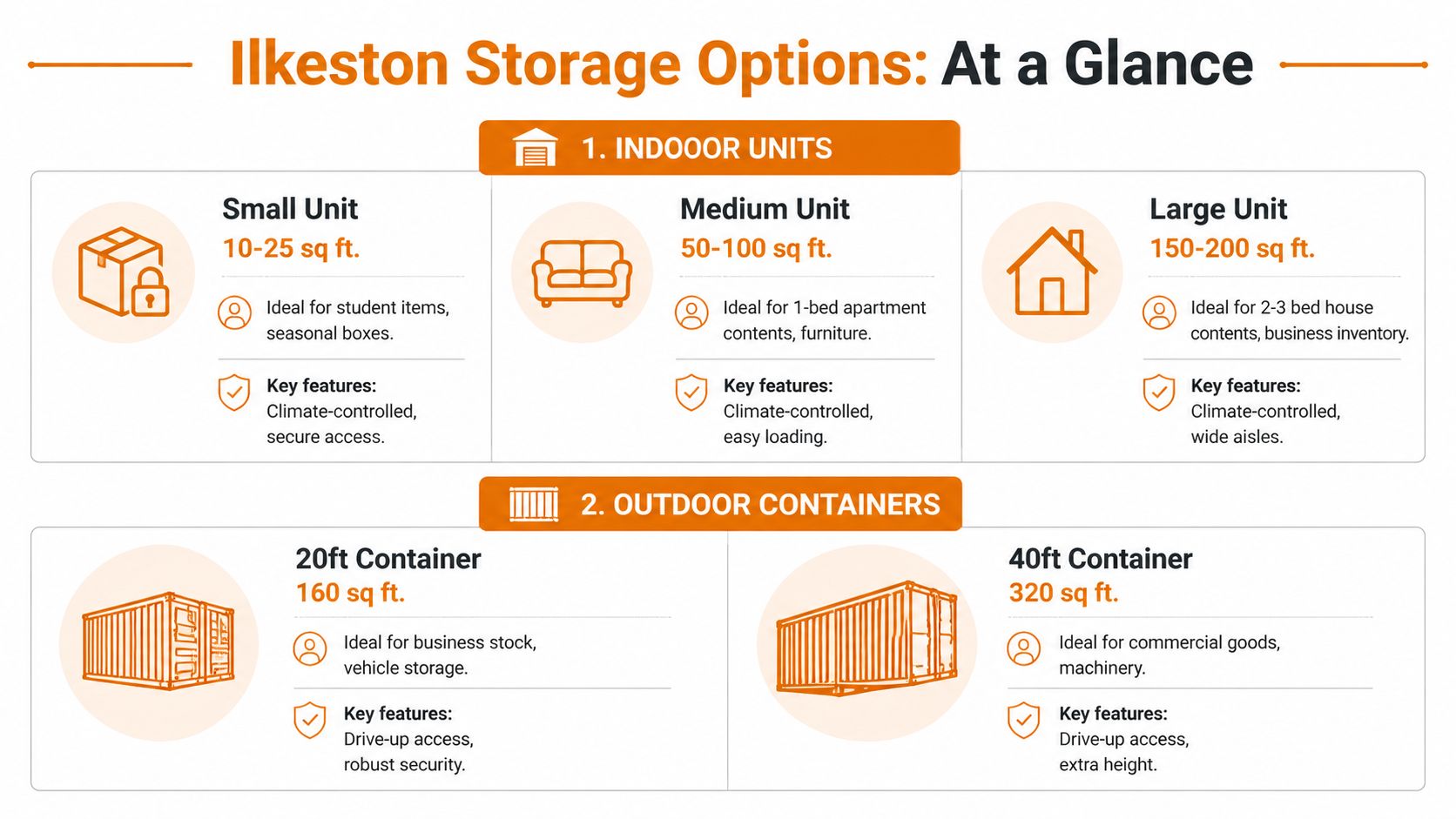
The short version
If your items are personal, mixed, or sensitive, start with an indoor unit. If your items are rugged, heavy, or handled often, start with a container. That rule won’t solve every case, but it gets most Ilkeston customers close to the right answer quickly.
Price is part of that choice. Indoor units start at £40-£60 weekly, while comparable container storage starts at £12-£18 weekly, based on Orange Box Self Storage pricing guidance. That difference is real, but the lower price only helps if the storage type suits what you're putting in it.
Orange Box Self Storage Ilkeston Storage Comparison
| Storage Type | Ideal For | Access Type | Climate Control | Price Guide |
|---|---|---|---|---|
| Indoor personal storage | Household boxes, furniture, paperwork, keepsakes | Internal building access | Yes | £40-£60 weekly |
| Indoor student storage | Holiday storage, books, clothes, bedding, small furniture | Internal building access | Yes | £40-£60 weekly |
| Indoor business storage | Organised stock, archived documents, delicate business items | Internal building access | Yes | £40-£60 weekly |
| Outdoor container storage | Tools, bulky stock, durable materials, frequent loading | Drive-up access | No indoor climate control | £12-£18 weekly |
A few decision shortcuts
Use these if you’re still between two options:
- Choose indoor if: you’d worry about documents, fabrics, wood furniture, or electronics in a more basic environment.
- Choose container if: you need to reverse up, unload quickly, and leave without carrying items through a building.
- Consider a mixed approach if: your business has both sensitive records and hard-wearing stock.
Indoor space costs more because it solves a different problem. It isn’t just storage volume. It’s storage conditions.
The practical mistake is comparing unlike-for-like. A container isn’t a cheaper indoor room. It’s a different tool. Once you treat the options that way, the decision tends to become much clearer.
Booking Your Unit and Gaining Access
Once you know which storage type fits, the booking process should feel straightforward. Storage users don’t need a long checklist. They need to know what to prepare, what access will look like, and what happens on move-in day.
Before you book
Have three things clear before you reserve a unit:
-
What you’re storing
Write a rough list. Not for admin reasons. For sizing. Furniture, archive boxes, stock, and tools all stack differently. -
How often you’ll visit
Weekly access points you toward convenience. Occasional access points you toward protection and organisation. -
How you’ll move items in
A van load of boxed household goods is different from long ladders, palletised stock, or a room full of mismatched furniture.
That short prep usually prevents the two most common errors: booking too small, or booking the right size in the wrong format.
What access tends to involve
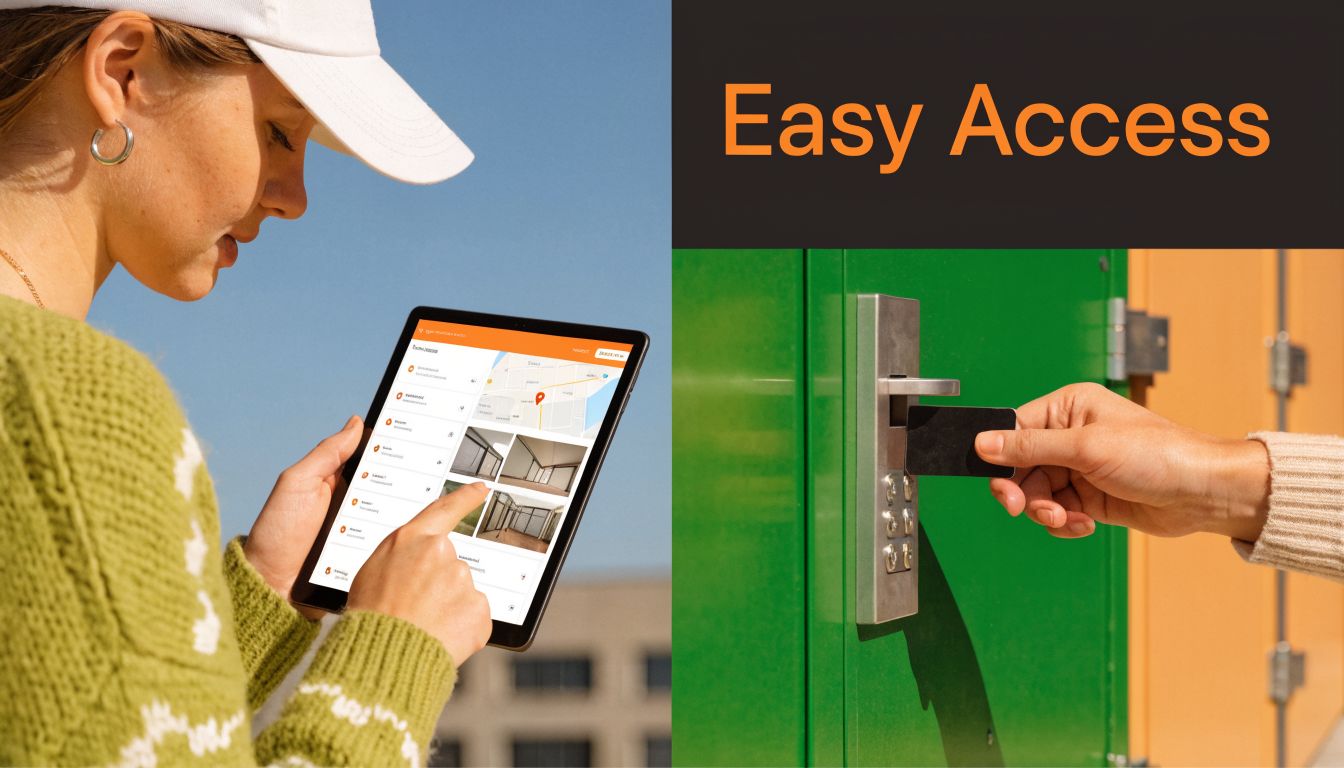
On indoor storage sites, access usually means entering the facility securely, reaching your unit, and locking your individual space. With containers, the process is more direct because you can drive up to the door. The details vary by site setup, but customers should expect controlled entry, clear instructions, and a defined process for securing their own unit.
If you’re interested in how commercial properties handle controlled entry more broadly, this overview of installing access control systems is useful background. It gives context for why managed entry points matter in storage environments, warehouses, and shared-use facilities.
Move-in day goes better with a simple plan
A smooth move-in usually comes down to basic discipline:
- Bring the right lock: confirm the unit’s lock requirements before arrival
- Load by priority: put near-term items at the front
- Leave a narrow access path: especially for longer stays
- Use sturdy boxes where possible: they stack better and protect contents
Don’t fill the unit like a skip. Fill it like a stockroom. Even for personal storage, that mindset saves time and frustration.
For the Ilkeston branch, access expectations differ by storage type. Indoor users should plan around the facility’s standard access arrangements. Container users often choose that route precisely because it suits early starts, late finishes, and faster vehicle-side loading. If you’re unsure which setup fits your routine, ask that question before you book rather than after move-in.
The right unit feels boring once you’re using it. That’s a good sign. It means access is easy, the layout works, and you’re not fighting the space every time you visit.
If you’re ready to choose a unit that fits your home, student, or business needs in Ilkeston, Orange Box Self Storage is a practical place to start. Match the space to how you’ll use it, and the whole storage process gets simpler from day one.