
You're probably reading this because space has run out before your plans have. The spare room is now a nursery, the garage is full of stock instead of a car, or you're trying to move house in Slough and every box seems to be in the wrong place at the wrong time.
That's usually when people start searching for storage units slough and comparing prices. The mistake is stopping at the first quote. A cheap weekly rate can become an expensive choice if the unit is the wrong size, access is awkward, or the contract locks you in longer than you need. A slightly higher price can be better value if it gives you easier loading, better protection, and the freedom to scale up or down.
I've seen people save money by taking a better-shaped unit instead of a bigger one. I've also seen people pay twice, first for the wrong space, then again to fix the problem. If you want to avoid that, focus on value, not just the headline figure.
Why You Might Need a Storage Unit in Slough
A lot of storage decisions start with a temporary problem that doesn't feel temporary. A family in a Cippenham semi starts decorating one room and ends up living around packed boxes for months. A business on the Trading Estate takes delivery of more stock than expected and suddenly the office looks like a warehouse. A student goes home for summer and doesn't want to drag everything back and forth.
In Slough, that pressure is normal. Space is tight, homes need to do more than one job, and businesses often need room to flex quickly. Slough's position near London and the M4 adds to that demand, and UK self-storage industry coverage notes that facilities in logistics hubs like Slough offer units from 35 to 160 sq ft to meet varied local demand.
Storage is often an extension of your home or business
The most useful way to think about self-storage is this. It's not somewhere to dump things you've forgotten about. It's extra working space that happens to sit offsite.
For households, that might mean furniture during a move, seasonal items, hobby gear, or the contents of a room while building work is going on. For businesses, it might mean archive boxes, spare equipment, promotional materials, or online retail stock that no longer fits neatly in a back room.
Practical rule: If your home or workplace is becoming harder to use because of the items in it, storage usually solves a space problem before it becomes a stress problem.
Why Slough residents use storage so often
The local demand isn't just one type of customer. It's broad. Students want short stays. Families want breathing room during moves. Tradespeople need secure access to tools and materials. Small firms need somewhere to hold stock without committing to industrial premises.
That's why a good provider should offer flexibility first, not just square footage. If you're weighing up your reasons, this breakdown of common uses for self-storage is a practical starting point because it helps match the problem you have with the kind of unit and contract that fits.
What works is choosing storage for a clear purpose. What doesn't work is hiring a unit because life feels cluttered, then realising later you've paid for space you can't use efficiently.
Choosing Your Ideal Storage Unit Size
It is common to think in terms of sofas, bikes, archive boxes, wardrobes, and “everything from the second bedroom” rather than square feet. That's the right way to do it.
The easiest sizing mistake is booking based on floor area alone. The smarter approach is to think about volume, stacking, and access. A unit that fits your belongings tightly on paper might still be wrong if you need to reach things regularly.
Start with what you're storing
A reliable local benchmark comes from Admiral's Yard business storage guidance, which states that a 75 sq ft unit can typically hold the contents of a two-bedroom house or around 150 to 200 medium storage boxes. That's a useful reference point because it gives both homeowners and businesses something concrete to measure against.
Here's a practical guide.
| Unit Size (sq ft) | Typical Dimensions | What It Holds | Ideal For |
|---|---|---|---|
| Small | Around 5ft x 10ft x 7ft | Around 60 to 65 boxes | Seasonal items, student storage, archive boxes |
| 35 | Varies by site | Contents from a small room, boxed household goods, tools | Light personal use, overflow business items |
| 50 | Varies by site | Furniture from a small flat or regular business stock overflow | One-bed flat contents, trades kit |
| 75 | Around 10ft x 7.5ft x 7ft | Two-bedroom house contents or 150 to 200 medium boxes | Home moves, larger business storage |
| 125 to 500+ | Varies by site | Bulk stock, furniture sets, business equipment | SMEs, retailers, larger home projects |
| 1,000 | Warehouse-style space | Large-scale commercial storage | Long-term business operations |
How to avoid paying for the wrong size
People usually overestimate bulky items and underestimate boxes. A sofa looks massive when it's in your lounge, but stacked cartons and loose bags often cause the actual sprawl. That's why I always suggest grouping items into these categories before you ask for a quote:
- Stackable items: boxes, archive files, storage tubs
- Awkward items: sofas, mattresses, desks, bikes
- Sensitive items: documents, electronics, wooden furniture
- High-access items: anything you'll need regularly
If most of your load is boxed and stackable, you can often use space far more efficiently. If it's furniture-heavy, you may need more room than you first think, especially if you want a walkway.
A unit that is full on day one but impossible to use on day ten is too small.
Use access needs to make the final call
There's a big difference between “store and leave” and “store and visit”. If you're moving house and won't touch the contents for weeks, a snug fit can work. If you're a business owner collecting stock every few days, leave room to move.
A proper self-storage unit size guide is worth checking before you commit, but the short version is simple. Don't just ask what fits. Ask what fits well enough to use.
That's where value starts. Not with the biggest unit, and not with the cheapest one. With the one that matches the way you will store and retrieve your things.
Understanding Storage Costs and Contracts in Slough
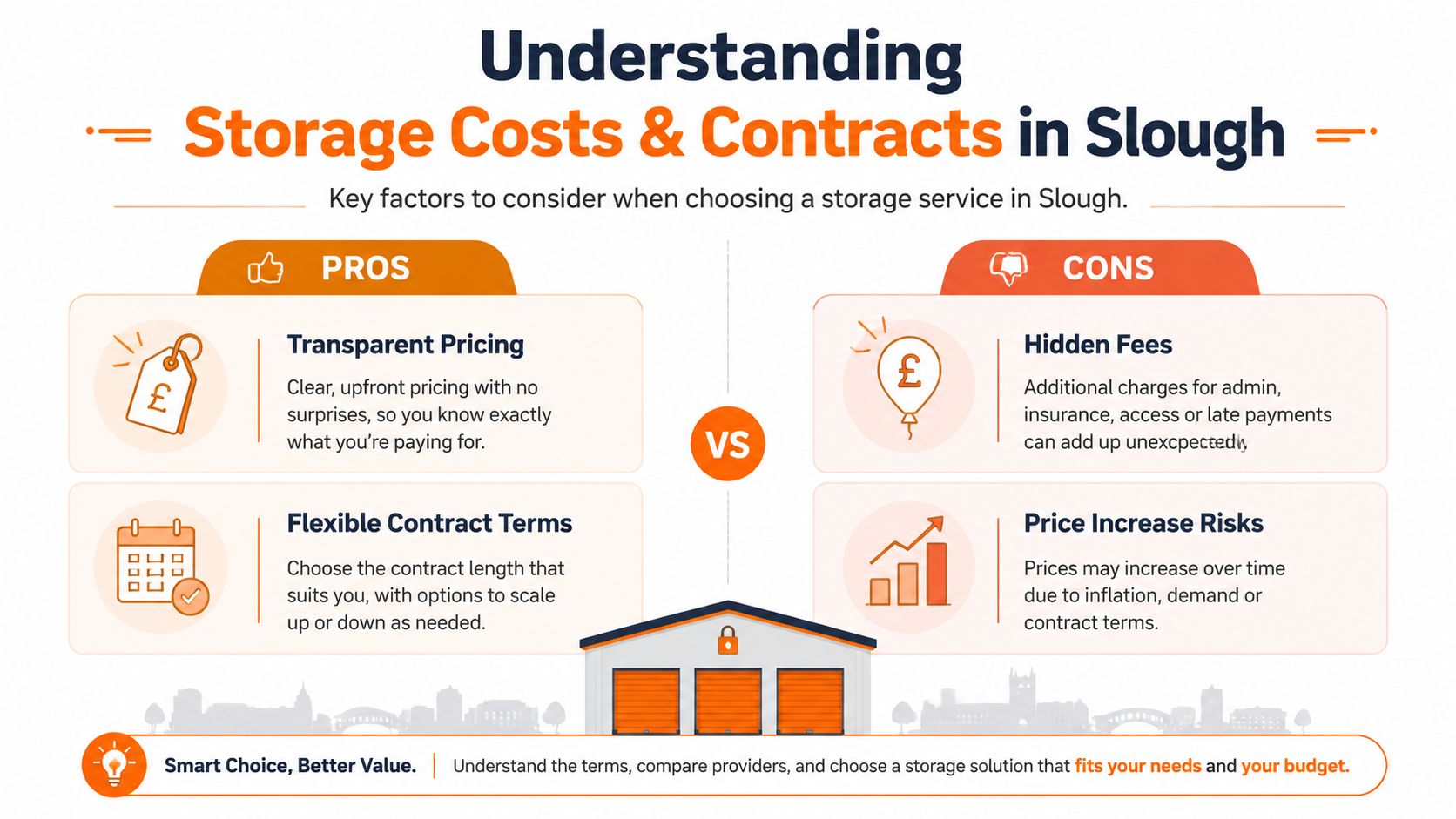
The first quote you see is rarely the full story. In Slough, price varies for obvious reasons like size, but also for less obvious ones such as access level, contract style, and whether the unit includes features that protect more valuable contents.
UK South East pricing guidance from Safestore notes that storage prices have been rising, and that flexible month-to-month rentals can save 15 to 20% compared to annual contracts. For anyone searching for storage units slough on a budget, that matters because the cheaper-looking deal isn't always the lower-cost option over the time you need.
What actually affects the bill
Storage pricing usually comes down to a handful of factors:
- Unit size: More space costs more, but oversizing is one of the most common ways people waste money.
- Location within the facility: Ground-level units or easier loading access can carry a premium because they save time and effort.
- Special features: Humidity control, enhanced security, or business-friendly handling services can push up the rate.
- Contract flexibility: The more adaptable the agreement, the easier it is to avoid paying for time you don't need.
The hidden-cost questions worth asking
A sensible customer doesn't ask only “what's the weekly rate?” Ask what the final monthly spend looks like once everything required is included.
Here are the questions I'd ask before signing:
- Is the quoted price introductory or ongoing? Some deals look strong at the start and become less attractive after the opening period.
- Is insurance required? Some sites include options, others expect you to arrange cover.
- Are there deposits or admin charges? These change the actual move-in cost.
- What notice do I need to give? Flexibility has value, especially if your move or project shifts.
- Can I change unit size easily? That can save money if your storage needs shrink after the first month.
Budget check: The best quote is the one you still like after you've asked about notice, insurance, access, and any move-in fees.
A lot of customers do well with clear guidance on self-storage unit cost because it helps compare like with like. That's the key point. Compare total value, not isolated prices. A unit that protects your items properly, lets you access them without hassle, and doesn't trap you in the wrong contract often works out better than a lower headline rate.
Essential Security and Access Features to Look For
People say they need storage for “stuff”, but that's not really what they mean. They mean furniture they still want in good condition, tools they need for work on Monday, or records and equipment they can't afford to replace. Security and protection should be at the top of the checklist, not buried under price.
The features that matter most
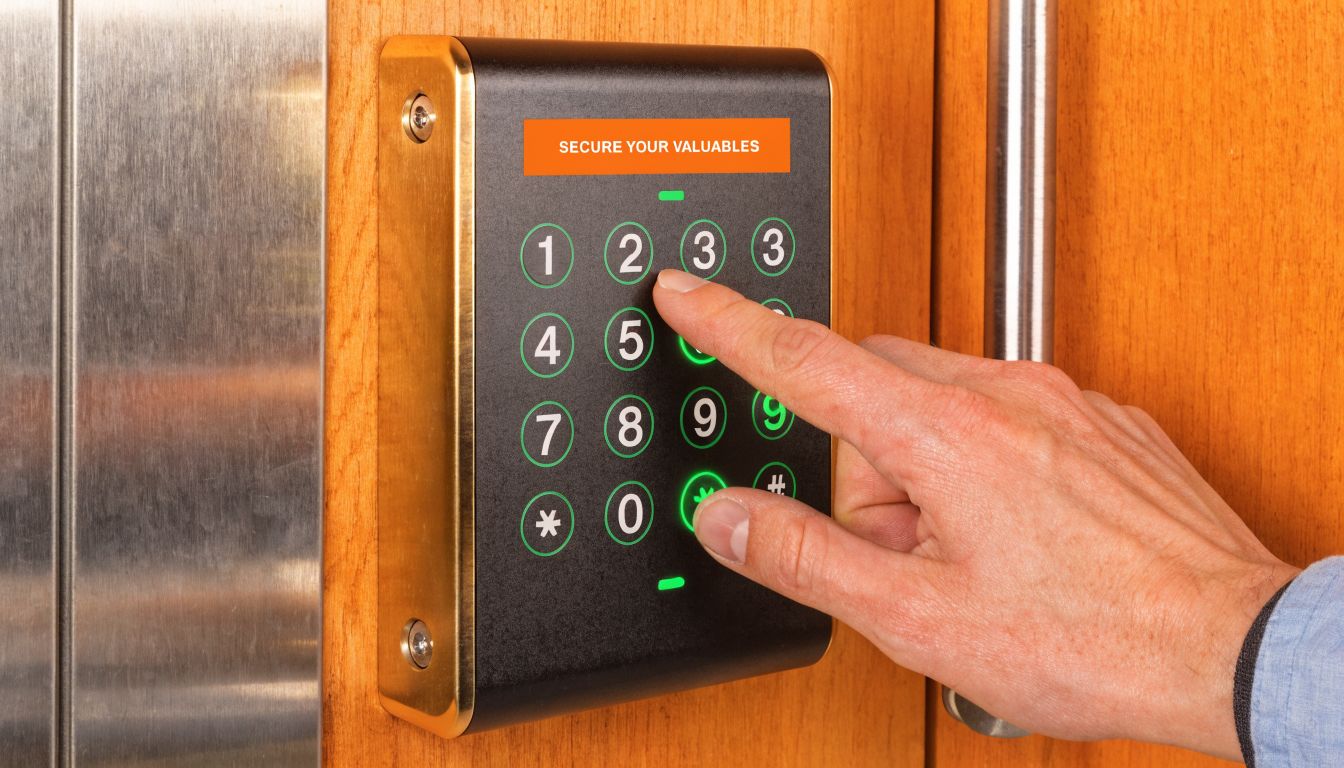
A modern storage site should make it hard for the wrong person to get in, and easy for the right person to get in when they need to. Look for these basics:
- 24/7 CCTV monitoring: Useful both as a deterrent and for incident review.
- Controlled entry points: Keypad, fob, or coded access is a strong sign that the site takes perimeter security seriously.
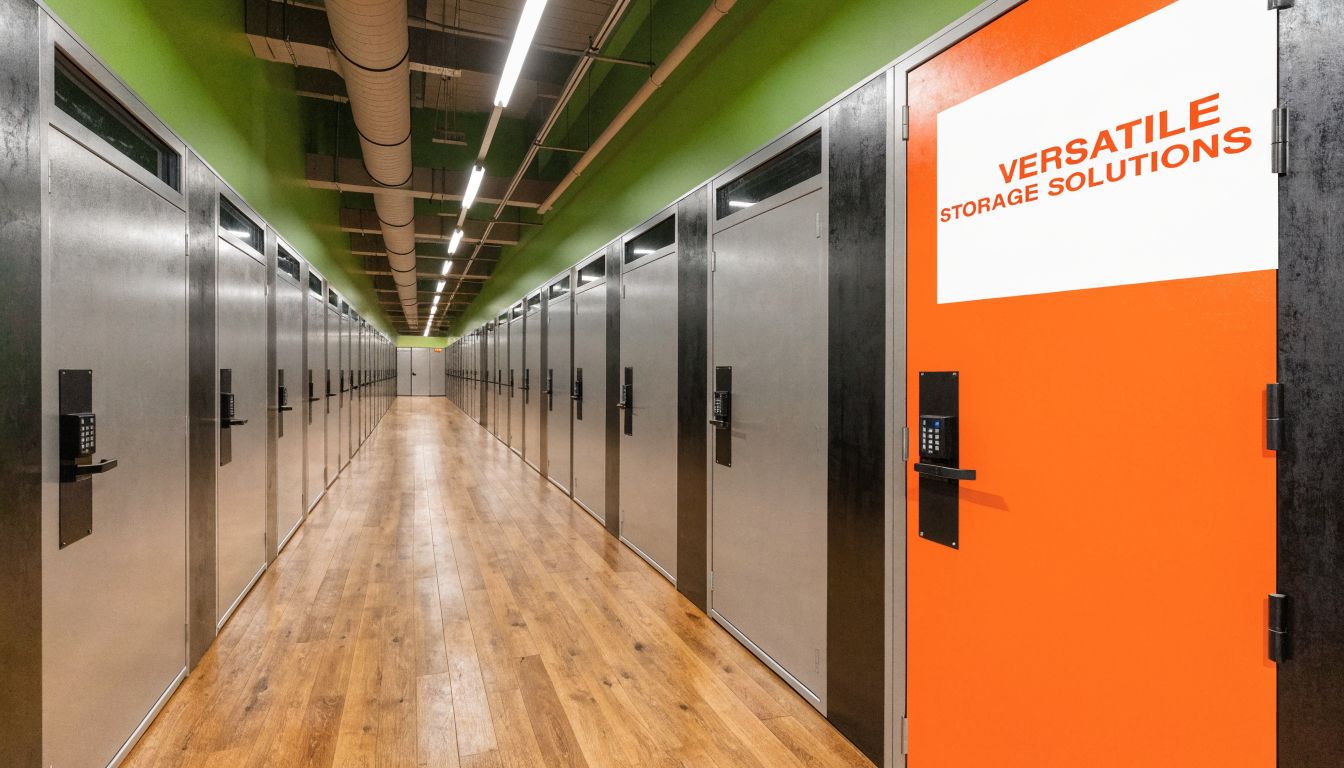
- Individually secured units: Your unit should feel separate and controlled, not like shared warehouse space.
- Good lighting and tidy layouts: A well-run site usually looks well-run. Poor housekeeping often tells you something about standards behind the scenes.
If you want a plain-English overview of the options, this guide to types of access control systems is useful because it explains the differences between common entry methods without the jargon.
Don't ignore environmental protection
Security isn't only about theft. It's also about damage. For sensitive stock, paper records, tools, electronics, wooden furniture, or anything that hates damp, environmental control matters.
Space Station's Slough facility information highlights humidity-controlled units, and that feature is worth paying attention to. Humidity control helps prevent mould, rust, and material deterioration, which is exactly what causes quiet, expensive damage in storage.
If you'd be annoyed to find it damp, warped, rusty, or musty later, don't put it in a basic unit without asking how the environment is managed.
Access hours are part of the value
A secure unit isn't much use if access doesn't fit your routine. A tradesperson leaving early for site wants convenient entry. A retailer handling deliveries needs practical loading arrangements. A homeowner in the middle of a move wants wide access windows so delays don't turn into another week's rent.
What works is balance. Strong security, sensible access, and the right environmental protection. What doesn't work is chasing the lowest price, then discovering you've stored valuable items in a unit that's awkward to reach and poorly suited to what you put inside.
Storage Solutions for Every Need in Slough
The reason storage works well in Slough is that the demand is mixed. One day it's a student clearing a room for summer. The next it's a growing online seller trying to stop stock taking over the dining table. The unit type might be similar. The way it's used isn't.
For students
Students usually want one thing above all else. Simplicity. They need somewhere secure for books, clothes, bedding, kitchen gear, and a few personal items while they go home or move between addresses.
What works for students is keeping everything boxed, labelled, and easy to collect in one trip. What doesn't work is paying for a unit big enough for furniture they don't have. Smaller spaces often make more sense when the aim is a short, practical stopgap.
For homeowners and renters
A house move is rarely as neat as the estate agent brochure suggests. Completion dates shift. Decorating takes longer. Family members change plans. Storage becomes the buffer that keeps your home from turning into a maze of cardboard and furniture covers.
For homeowners, the best setup is usually a unit that holds large items cleanly with enough room to retrieve essentials. If you're renovating, think of storage as a temporary spare room you don't need to walk around every day.
The best home-move storage setups separate “need soon” items from “don't touch until settled” items before anything goes into the van.
For business owners
Small businesses often come to storage when success creates the problem. More orders mean more packaging, more stock, more returns, and more seasonal overflow. Office space is expensive to use as a mini warehouse, and it's usually poor at it.
Business users benefit from organised shelving, clear stock zones, and a unit chosen for access as much as capacity. If staff need to visit often, convenience matters more than squeezing every last box into the footprint. A cheaper but awkward unit can waste time every week.
For tradespeople
Tradespeople need a different kind of reliability. Tools, fittings, spare materials, and job-specific kit need to be secure, sheltered, and easy to load early in the day. A unit that saves repeated trips home often pays for itself in convenience alone.
Ground-level access, strong security, and sensible opening hours matter most in these situations. What doesn't work is packing a trades unit like a loft. If the right drill, fitting, or box of fixings can't be found quickly, the space is costing you time.
One local market, different priorities
The same storage site can serve a family between moves, a student leaving for break, a retailer with overflow stock, and a contractor protecting expensive tools. The smart choice comes from matching the unit to the job.
That's why storage units slough shouldn't be compared by price alone. Students value short-term ease. Families value flexibility. Businesses value efficiency. Tradespeople value secure access. Good value looks different for each of them.
Pro Tips for Packing and Moving into Your Unit
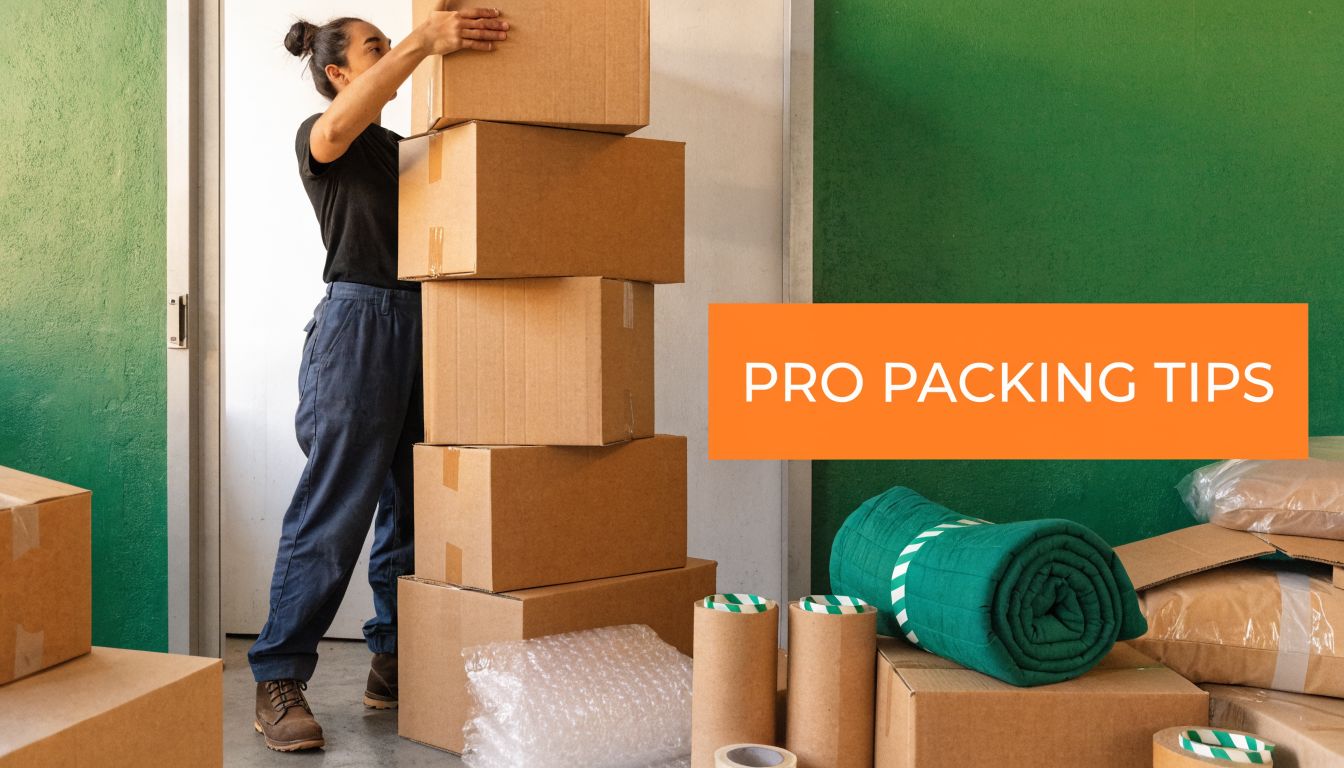
Most storage problems don't start in the unit. They start when people pack in a hurry, use random boxes, and load the space without a plan. Then they need one item from the back and have to unpack half the unit to reach it.
Pack for retrieval, not just for transport
The move-in job gets much easier if you prepare with a simple system:
- Use uniform boxes where possible: They stack better, waste less space, and are far less likely to topple.
- Label more than the top: Mark at least two sides so you can identify boxes once stacked.
- Create a quick inventory: Even a phone note is enough if it tells you what's in each box group.
- Keep heavy items low: Books, tools, and dense kitchen items belong at the bottom.
- Leave a central walkway: A narrow path saves a lot of frustration later.
Protect the awkward items properly
Furniture and appliances need preparation, not just lifting. Clean and dry everything before it goes in. Fridges and freezers should be fully defrosted and aired. Sofas and mattresses need breathable covers rather than plastic wrapped too tightly for long periods.
Wooden furniture benefits from padding between surfaces. Glass should be protected and stored upright if appropriate. Loose furniture screws and fittings should go in labelled bags taped to the item they belong to.
Manager's habit: Load the unit in zones. Back wall for long-stay items, middle for medium-priority goods, front for things you might need next week.
Make the space work harder
Vertical space is often underused. Strong, stackable boxes make a big difference. Shelving can help business users and anyone storing archive boxes or regularly accessed items, provided the unit rules allow it and the setup is stable.
Try not to store loose bags unless there's no alternative. They slump, split, and create dead space. Boxes, tubs, and consistent stacking patterns almost always give better value because you're using the unit you're paying for more efficiently.
A well-packed unit feels calm the moment the shutter closes. That usually means you've saved yourself time, hassle, and possibly the cost of upsizing later.
Frequently Asked Questions about Slough Storage
A lot of the last-minute questions people ask aren't really about space. They're about avoiding surprises. That's sensible. Storage is straightforward when you know what to check before move-in.
How many storage options are there near Slough
The market is broad. Compare the Storage's Slough postcode listings indicate there are over 100 facilities within a 20-mile radius, with options starting from £1.15 per day. That gives local residents and businesses plenty of room to compare access, price, contract terms, and features rather than settling for the first site they find.
What items are usually prohibited
Rules vary by operator, but most facilities won't allow anything dangerous, perishable, illegal, or likely to cause nuisance or damage. That usually includes hazardous chemicals, flammable materials, explosives, stolen goods, and items that can rot or attract pests.
If you're unsure about a specific item, ask before move-in. Guessing is a bad idea, especially with fuels, paints, gas bottles, or anything electrical that has been poorly drained or prepared.
Do I need insurance
Often, some form of cover is required or strongly recommended, but the details differ from site to site. Some providers offer their own protection options. Others expect customers to arrange cover separately.
The practical point is this. Don't treat insurance as a footnote. Check what's covered, what isn't, and whether the declared value of your contents is realistic.
What notice period should I expect
Notice periods depend on the contract. Flexible agreements are common, but the exact terms still matter. Ask for the notice requirement in writing, along with any timing rules around billing dates and move-out procedures.
If your schedule is uncertain, flexibility often has more value than a slightly lower advertised rate. That matters during house moves, renovations, or changing business demand.
Is the cheapest unit the best deal
Usually not. The cheapest unit can become poor value if access is limited, the size is wrong, or you end up paying for time you don't need because the contract is rigid.
Look at the whole arrangement:
- The total move-in cost
- The flexibility of the agreement
- The ease of access
- The level of protection for your contents
- How well the unit size matches your actual load
That's the real comparison. Not just the first number on the page.
If you want a provider that keeps things simple, Orange Box Self Storage is worth a look. They offer flexible contracts, a wide range of unit sizes, and secure storage options for households, students, businesses, and tradespeople. If you're comparing storage units in Slough and want a clearer idea of what good value looks like, they're a solid place to start.