
Think of short term self storage as your very own spare room, available exactly when you need it. It’s the perfect, flexible answer for those in-between moments in life, like moving house, decluttering before a sale, or if you're a student needing a spot for your things over the summer. It gives you that extra space without tying you down to a long-term contract.
When Short Term Self Storage Becomes Essential
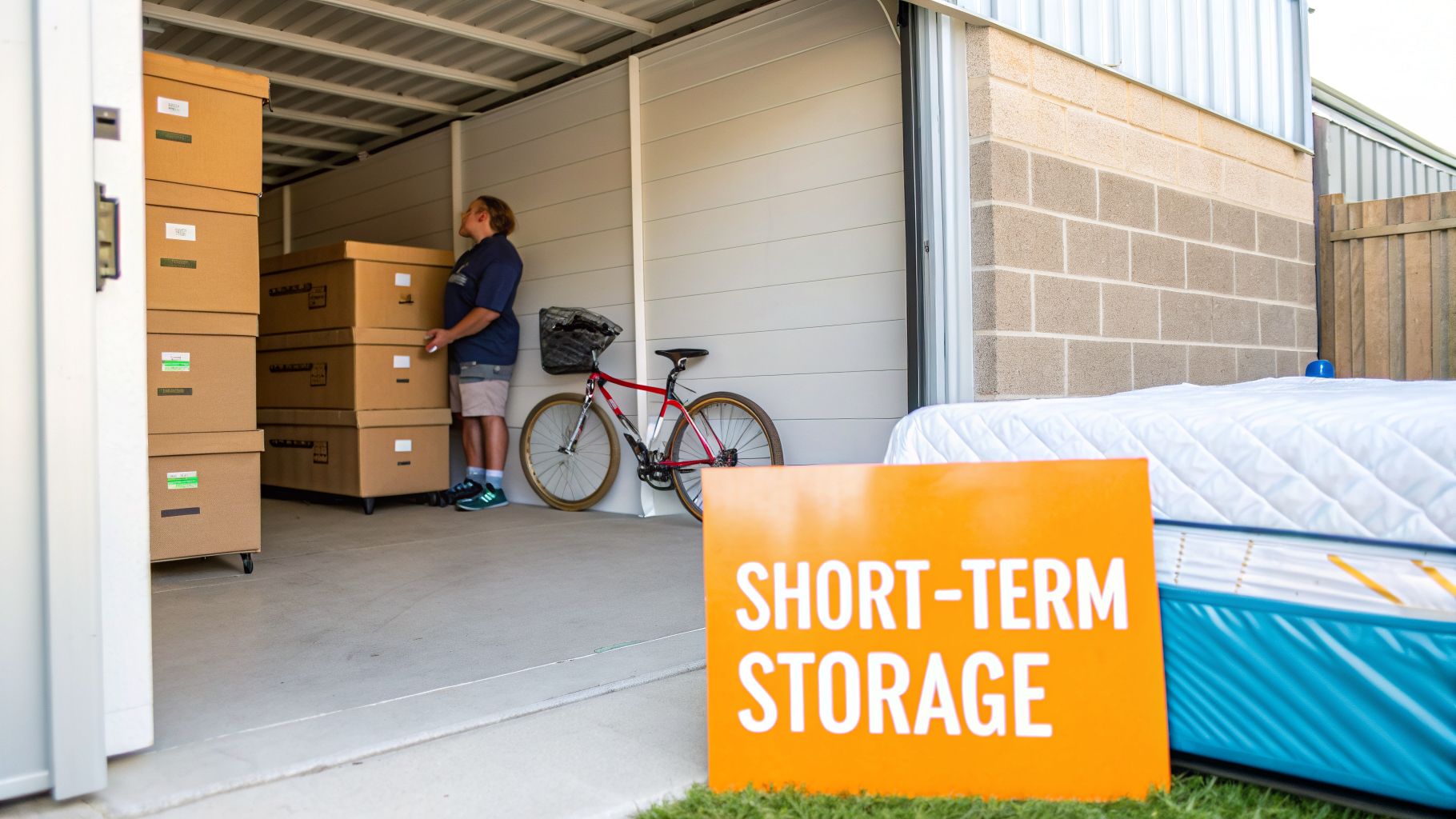
Life has a way of throwing curveballs that temporarily shrink your available space. Imagine you’re finally starting that long-awaited home renovation. Instead of shoving all your furniture into one room under dusty sheets, you could simply move it into a clean, secure unit for a month or two. That’s the real beauty of short term self storage—it solves immediate space problems with total flexibility.
It's like having a temporary garage or a walk-in wardrobe just down the road. You rent only the space you need, for as long as you need it, and that's it. No lengthy, complicated contracts, which makes it ideal for situations with a clear, but not always fixed, end date.
To help you see if it's the right fit, here’s a quick look at some common scenarios where short-term storage really shines.
Common Scenarios for Short Term Storage
| Your Situation | Why Short Term Storage Is the Ideal Solution | Typical Rental Duration |
|---|---|---|
| Moving House | It provides a secure stopover for belongings when there's a gap between your sale and move-in dates. | 1-3 months |
| Renovating or Decorating | It protects your furniture from dust, paint, and damage while the work is being done. | 1-2 months |
| Decluttering for a Home Sale | A clutter-free home sells faster. It helps you stage your property effectively by storing excess items. | 2-4 months |
| Student Summer Storage | Instead of hauling everything home, you can keep your things in a small, affordable unit near campus. | 2-3 months |
As you can see, the common thread is a temporary need for a bit of extra room, making a flexible solution a must-have.
Why It's So Popular
The need for temporary storage often pops up without much warning. Whether you’ve planned for it or it’s a last-minute scramble, having a flexible option can make a stressful situation a lot more manageable. The main driver is usually change—a new home, a growing family, or a new business venture.
Short term self storage is a perfect match for a whole host of life events:
- Moving House: Got a gap between selling your old place and getting the keys to the new one? A storage unit provides a safe haven for your belongings.
- Renovating or Decorating: Keep your furniture and possessions safe from dust, paint splatters, and accidental damage by moving them off-site until the job is done.
- Decluttering to Sell Your Home: A tidy, spacious-looking home is far more appealing to buyers. Staging your property is much easier when you can store extra furniture and personal items out of the way.
- Student Summer Storage: Why go through the hassle of dragging everything home for the summer? Students can keep their belongings in a small, budget-friendly unit close to their university.
Short-term storage is all about convenience and giving you back control. It lets you navigate life’s big changes without being weighed down by your possessions, giving you the breathing room to focus on what comes next.
The demand for this kind of flexibility is a big part of modern life. In the UK, lifestyle shifts and life events are major drivers. While about 50% of self-storage demand is linked to moving house, around 33% comes from people simply running out of space or from small businesses needing flexible inventory management. In fact, projections show that the number of people in the UK using self-storage is expected to more than double between 2018 and 2026. You can explore more on the UK's growing storage market trends to see what’s behind this shift.
More Than Just a Box for Your Things
It’s not just for personal use, either. Short term self storage can be a real lifeline for businesses. A pop-up shop might need somewhere to store seasonal stock for a few months, or a tradesperson could use a unit to securely hold tools and materials for a specific project. This is a far more practical solution than taking on the cost and long-term commitment of a commercial warehouse.
Whether you're in Nottingham, Derby, Long Eaton, or Beeston, the core idea is the same. It’s about creating space in your life, right when you need it most.
Choosing the Right Storage Unit and Size
Picking a storage unit shouldn't be a guessing game. If you choose one that’s too big, you’re just paying for air. If it's too small, you'll be tearing your hair out trying to make everything fit mid-pack. To get it right for your short term self storage needs, you need to get a real feel for the space and know what your options are.
Think of it like packing for a holiday. You wouldn’t drag a huge suitcase along for a weekend away, but you also can't cram two weeks' worth of outfits into a tiny carry-on. The key is to match the unit to what you’re actually storing.
How to Visualise Common Storage Unit Sizes
It’s tough to estimate volume just from square footage, so let’s put these numbers into perspective with some real-world comparisons. A small difference in dimensions can have a massive impact on what you can fit inside.
Here are some of the most common sizes and what they can realistically hold:
- 25 sq ft Unit: Picture a large walk-in wardrobe. This is the perfect size for the contents of a studio flat – think a double bed, a small sofa, a chest of drawers, and about 15-20 boxes. It’s also a fantastic choice for students who need somewhere to keep their things over the summer.
- 50 sq ft Unit: This is roughly the size of a standard garden shed. It can easily hold everything from a one-bedroom flat, including bigger items like a dining table, a fridge, a washing machine, and other furniture, along with plenty of boxes.
- 100 sq ft Unit: Now you’re in single garage territory. This space is ideal for the contents of a typical two-bedroom house, giving you enough room for multiple sofas, beds, wardrobes, and all your boxed-up belongings.
- 150 sq ft Unit: This is about the size of a standard single-car garage. You’d generally look at a unit this big for a three-bedroom family home. It provides ample room for bulky furniture, garden equipment, and a large number of boxes without a tight squeeze.
For an even clearer idea of what might work for you, our detailed self-storage unit size guide has more visuals and comparisons to help you nail down the perfect fit.
Internal Units vs Container Storage
Beyond just the size, you’ll also need to decide on the type of unit. This choice really comes down to what you’re storing and how you plan to access it. The UK self-storage market has grown to an impressive 64.3 million square feet, which means there's a huge variety of options out there. This includes both secure indoor units and tough outdoor containers for different needs. You can learn more about the UK's self-storage industry trends to see just how the market is shaped.
Let's break down the two main options you'll come across.
1. Internal Storage Units
These units are located inside a large, secure building. They offer a stable, controlled environment, completely shielded from whatever the British weather decides to do outside.
- Best for: Delicate items that don't react well to temperature changes or damp. Think wooden furniture that could warp, electronics that could be damaged by condensation, important documents, or soft furnishings that might get musty.
- Access: You’ll typically use a secure entry point to get into the main building, then head down a well-lit corridor to your individual unit.
2. Drive-Up Container Storage
These are sturdy, weatherproof steel containers—much like shipping containers—located at ground level, so you can drive right up to them.
- Best for: Bulky, hardy items where convenience is king. This is your go-to for garden furniture, large tools, commercial stock, or the contents of a garage. Being able to park right at the door makes loading and unloading heavy things a breeze.
- Access: Just as the name implies, you drive your car or van straight to your unit’s door for maximum convenience.
Key Takeaway: The choice is pretty straightforward. If your items are sensitive and need protecting from the elements, an internal unit is the way to go. If you're storing durable, heavy goods and want the easiest possible access, a drive-up container is your best bet.
Ultimately, making the right call starts with taking a quick inventory of your belongings. Be honest about their value and how vulnerable they are. This little bit of prep work will ensure your items come out of short term self storage in the exact same condition they went in, and you'll know you've picked the most practical and cost-effective space for your needs.
Understanding Your Storage Costs and Contract
One of the best things about short term self storage is how straightforward the pricing is. You can plan your budget without having to worry about surprise fees or complicated charges showing up on your bill. It all comes down to the rolling monthly contract, a system designed to give you maximum flexibility when life gets a bit unpredictable.
Think of it like a gym membership, but for your stuff. You pay for one month at a time and are free to cancel the arrangement as soon as you no longer need the space. This pay-as-you-go model is ideal for temporary situations because you’re never locked into a long-term commitment.
What Your Rental Fee Covers
Your monthly rental fee gets you exclusive use of your own clean, secure storage unit. But it’s a good idea to know what else might be involved so you have a complete picture of the costs from the get-go.
Here are a few other things to factor in:
- A Security Deposit: This is a one-off, refundable payment. You’ll get it back when you move out, as long as the unit is left in good condition.
- A High-Security Padlock: Every unit needs a solid lock. You can either bring your own or buy one from the facility to make sure it meets the right security standards.
- Storage Insurance: This is essential for protecting your belongings against the unexpected. All reputable facilities will offer specialised, affordable insurance policies to give you total peace of mind.
The image below breaks down the two main kinds of storage you’ll find, each with its own advantages.
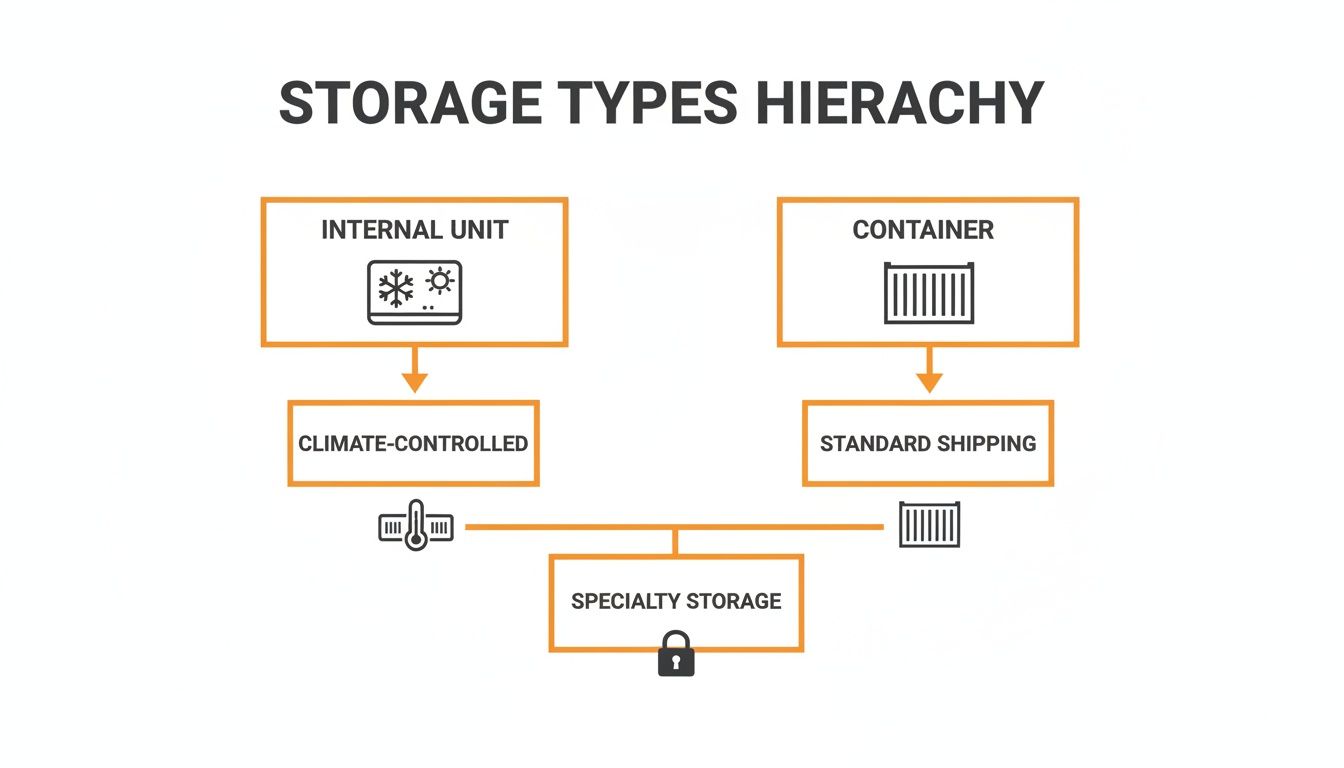
Choosing between an internal unit and a container usually boils down to whether you prioritise protection from the elements or ultimate convenience for access.
The Power of Flexibility
The real magic of a short-term contract is how it adapts to you. Life rarely sticks to a perfect schedule. A home renovation might wrap up weeks early, or a house sale could get delayed at the last minute. With a flexible contract, these changes aren't a source of stress.
The biggest benefit of a short-term agreement is being in control. When you're done, you simply give the required notice—usually just a week or two—and you can end your rental. You only pay for the time you actually need, which is a massive advantage over more rigid setups.
This is the main difference when compared to long-term storage agreements. While renting for six months or a year might bag you a discount, it locks you into a fixed term. That’s great if you’re travelling the world or need a permanent spot for business stock, but it’s not so ideal for the fluid nature of moving house, decorating, or decluttering. To get a clearer idea of what you might pay, you can learn more about how to calculate your specific self-storage unit cost with our handy guide.
By understanding the simple, clear-cut nature of short-term rental agreements, you can make a smart financial choice. You get the space you need, with the freedom to adapt as things change, ensuring you get great value without any nasty surprises.
Packing Your Belongings for Secure Storage
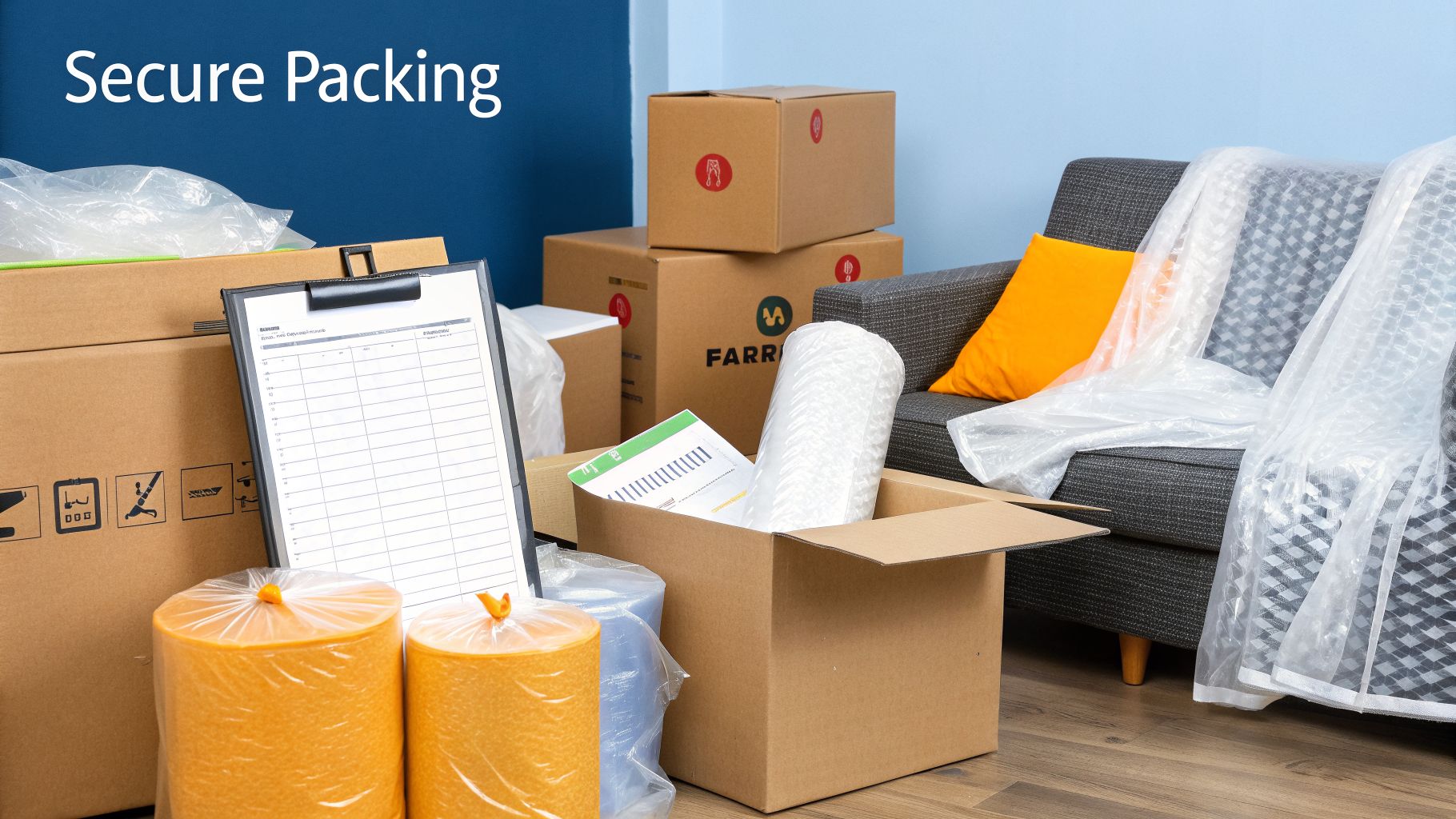
Packing for a move is a sprint, but packing for storage is a different game entirely. When you’re just getting things from A to B, the goal is speed. But for short term self storage, you need to think about protecting your belongings from dust, temperature shifts, and the simple fact they’ll be sitting still for weeks or months.
Proper packing isn't just about preventing damage; it makes your entire storage experience smoother. A well-organised unit means you can actually find what you need without having to empty every single box. It’s the difference between a chaotic pile and an accessible, organised space.
Start with a Solid Foundation
The secret to a stable, secure unit starts with the boxes themselves. We’ve all been tempted to grab a random assortment of free boxes from the local supermarket, but this is one of the most common mistakes we see. Mismatched boxes just don’t stack well, leading to wobbly towers that can easily collapse and damage your valuables.
Instead, it’s worth investing in good-quality, uniform packing boxes. They’re designed to lock together snugly, letting you build solid, sturdy stacks that make the most of your vertical space. Think of it as building with LEGO bricks instead of a pile of mismatched rocks—the uniform shape creates stability.
Preparing Your Items for Their Stay
Different belongings need different kinds of preparation. Taking a few extra minutes to correctly pack furniture, appliances, and fragile items will save you a world of headache and potential cost later on.
- Furniture: Wrap bigger pieces like sofas, tables, and mattresses in protective furniture covers or even just old blankets. This shields them from dust and stops them from getting scratched. Where you can, disassemble items like bed frames and dining tables to save space, and keep all the screws in a labelled bag taped securely to the main piece.
- Appliances: Make sure any appliances like fridges, freezers, or washing machines are completely cleaned, dried, and defrosted. Even a tiny bit of leftover moisture can lead to mould and mildew. Tape the doors shut for transit, but prop them slightly ajar in the unit to let the air circulate.
- Fragile Items: Always wrap each delicate item individually in bubble wrap or packing paper before you box it up. Fill any gaps with packing peanuts or crumpled paper to stop things from shifting around. Finally, mark these boxes clearly as "FRAGILE" on every visible side.
For a more detailed guide on getting organised, check out our post on tips for packing when moving house, as many of the same core ideas apply here too.
A simple inventory list is your best friend. Before sealing a box, jot down its main contents in a notebook or spreadsheet and give each box a number. This five-minute job will save you hours of searching later when you desperately need to find that one specific thing.
The Finishing Touch: Smart Labelling
Once your boxes are packed, labelling is the final, crucial step. Don't just scribble "Kitchen" on the top and call it a day. For a system that actually works, label every box on at least two sides with its general contents and the room it belongs to.
This simple habit turns a storage unit from a frustrating mystery maze into an organised library. When you need to retrieve a specific box, you’ll be able to spot it in minutes, not hours, making your short-term storage experience completely stress-free.
How We Keep Your Belongings Safe: Security and Access Explained
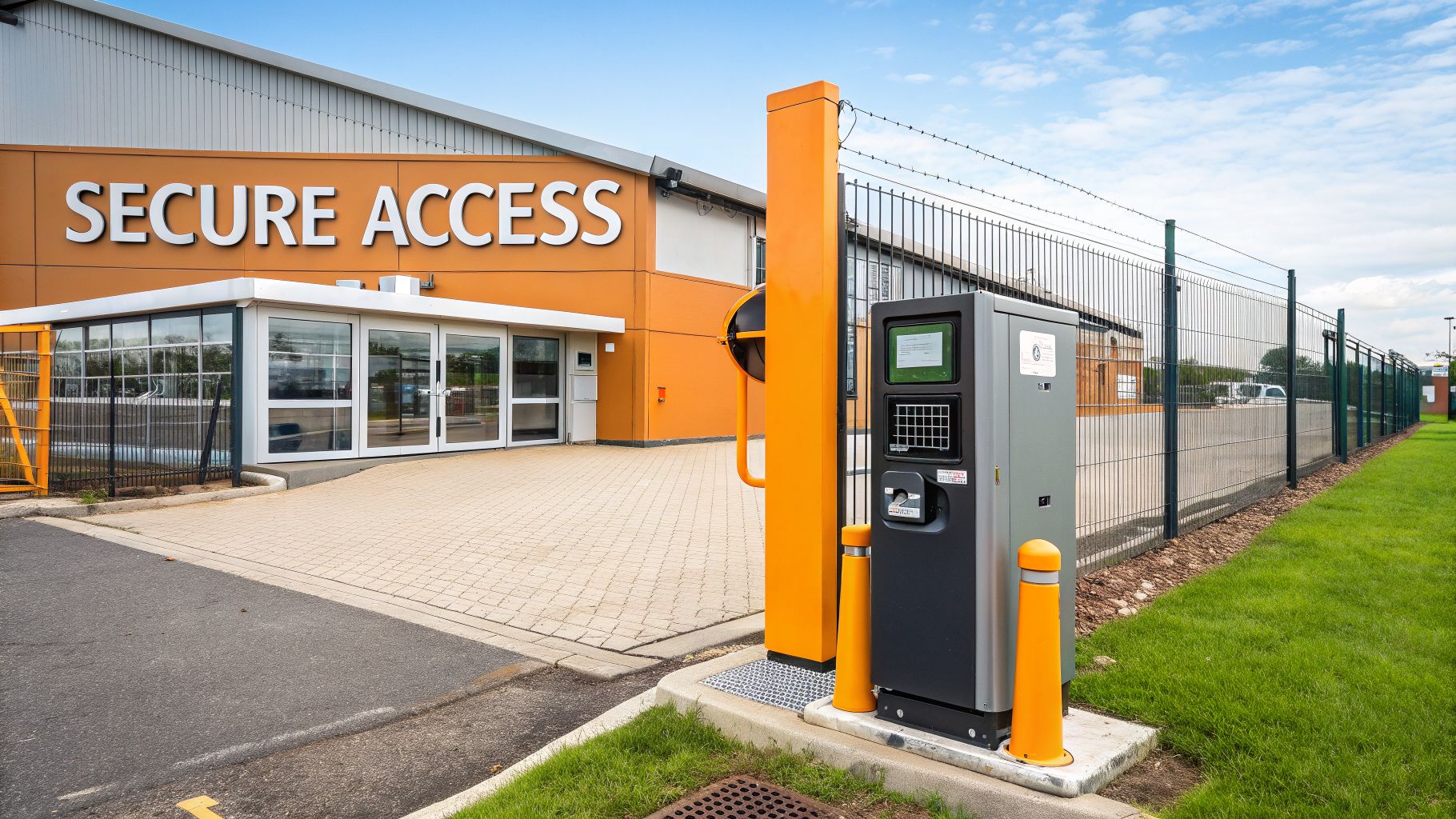
Trusting someone else with your belongings is a big step. When you’re using short term self storage, you need to know, without a doubt, that your items are safe and sound. That’s why modern storage facilities are built with layers of security that work together, giving you genuine peace of mind.
These systems go far beyond a simple padlock on a door. They start at the property line and extend all the way to your individual unit. To make sure your things are properly protected, it’s always smart to choose a facility that invests in comprehensive security systems for businesses, including the latest surveillance and access controls. This multi-layered approach is what separates a basic lock-up from a truly secure facility.
Essential Security Features Checklist
When you visit a potential storage site, keep an eye out for these key features. Each one adds another layer of protection, creating a tough barrier against anyone who isn't supposed to be there.
| Security Feature | Why It Matters for Your Peace of Mind | Availability at Our Facilities |
|---|---|---|
| 24/7 CCTV Surveillance | High-definition cameras monitor key areas, deterring intruders and providing a clear record of all on-site activity. | ✔️ |
| Secure Perimeter Fencing | A strong, well-kept fence is the first line of defence, preventing casual entry and defining the secure zone. | ✔️ |
| Electronic Gate Access | A unique PIN code ensures only authorised customers can enter, with every entry and exit logged for security. | ✔️ |
| Individually Alarmed Units | The ultimate protection—your unit’s own alarm will trigger if an unauthorised entry is attempted. | ✔️ |
| Good Lighting | Well-lit corridors and outdoor areas improve CCTV visibility and help you feel safer when visiting, especially after dark. | ✔️ |
These features all work hand-in-hand. The fence keeps unwanted visitors out, the gate controls who enters, the CCTV watches over them, and your lock keeps your unit secure. It's a complete system designed to keep your belongings safe.
Understanding Storage Insurance
Even with the best security in the world, insurance is a non-negotiable part of storing your items. Think of it just like your home insurance; it’s there to protect you from the unexpected, like a fire, flood, or theft.
All reputable facilities will require you to have cover, and they usually offer specialised policies designed specifically for self storage. These policies are often very affordable and can be added right onto your monthly rental agreement. They cover the value of your goods, making sure that if the worst should happen, you are financially protected. Don’t skip this step—it’s the final piece of the puzzle for total peace of mind.
Remember, your home insurance policy may not cover items kept in an off-site storage unit. Always check your policy details or, for simplicity and guaranteed cover, opt for the facility's dedicated insurance plan.
How Access Works
Getting into your unit is a simple and secure process. Once you’ve signed your rental agreement, we’ll give you a unique access code for the main electronic gate.
You just drive up, enter your code into the keypad, and the gate will open. From there, you can head straight to your unit. This system gives you the freedom to pop in whenever you need to during our access hours, without having to check in with staff every single time. It puts you in control, blending robust security with everyday convenience.
Frequently Asked Questions About Short Term Storage
Even after covering the basics, it's natural to have a few questions floating around. Getting straight, simple answers is the best way to feel confident about your decision, so we've put together some of the most common ones we hear every day.
What Is the Minimum Rental Period?
One of the first things people ask is about commitment. We keep things simple with rolling monthly contracts, which means you're never locked into a long-term agreement you don't need.
But what if you only need storage for a couple of weeks? We get it. Life doesn't always fit neatly into a monthly calendar. The best thing to do is have a chat with our team at your local Nottingham, Derby, Long Eaton, or Beeston facility. We can almost always work something out to fit your exact timeline, ensuring you only pay for the time you actually use.
Do I Need My Own Insurance?
Yes, making sure your belongings are insured is a crucial and mandatory step. Think of it just like your home insurance—it's there to protect your things against the unexpected, like fire, theft, or water damage, giving you total peace of mind.
To make life easier, we offer affordable and comprehensive insurance policies created specifically for self storage. You can add this cover right when you book your unit, so your valuables are protected from the moment you move them in.
It's important to remember that most standard home insurance policies do not cover items stored at an off-site location. Always double-check your personal policy, or choose our dedicated storage insurance to be certain you’re covered.
What Items Are Prohibited in Storage?
To keep everyone safe and our facility secure, there are some items that simply can't be stored. The rules are there for good reason, and the main things to be aware of are:
- Perishable Goods: Anything that can spoil, rot, or attract pests, like food items.
- Hazardous Materials: Flammable, corrosive, or explosive substances are a definite no-go. This includes things like petrol, paint, gas canisters, and fireworks.
- Illegal or Illicit Items: This covers any illegal substances, stolen goods, or unlicensed firearms.
- Living Things: It goes without saying, but you can't store animals or plants in a storage unit.
We’ll give you a full, comprehensive list when you sign up. If you're looking for a great resource to help finalise your plans, especially during a move, this Essential Guide to Short Term Storage is incredibly helpful.
Ready to create more space in your life? At Orange Box Self Storage, we make finding the right solution easy and affordable. Get an instant quote online or visit us in Nottingham, Derby, Long Eaton, or Beeston to find your perfect storage unit today. Find your space now at https://orangebox-selfstorage.co.uk.