

A Saturday morning move in Grantham rarely fails because someone forgot a box. It fails because the van is parked too far from the storage room, the lift is busy, or a sofa has to be pushed through a narrow corridor. Drive-up storage in Grantham removes that friction. You pull into the compound, open a ground-level shutter and move items directly between the vehicle and the unit.
That layout suits a town connected by the A1 and A52, with household moves, renovations and trade work creating demand for practical, vehicle-friendly space. Grantham's 20,040 households form a substantial immediate catchment, while the town's 2021 Census population was 44,898 to 44,906, up from 41,923 in 2011, depending on the published boundary source (Census-linked Grantham data). The useful question isn't whether you need storage. It's which format to book, how much space to take and when to reserve it.
A Typical Grantham Move-In Day
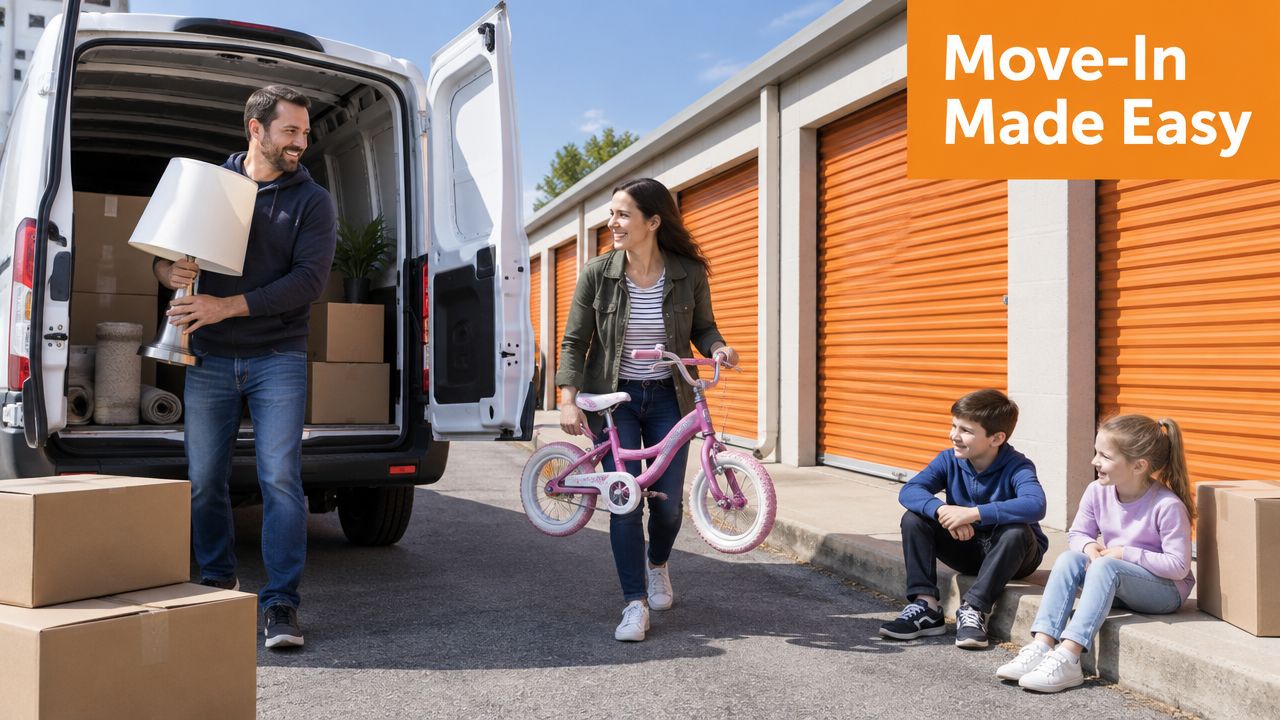
A family arrives at a Grantham storage compound on a bright Saturday in spring. Their Transit van is packed with labelled cartons, a dismantled bed, a lamp, garden chairs and one bicycle that never fitted comfortably in the new hallway. Instead of unloading beside a reception desk and hunting for a trolley, they pull into a bay facing a row of orange roller doors.
The door rises with a mechanical rattle. The path from the van's rear doors to the unit is flat and short. One person carries boxes while another slides the heavier furniture across the threshold. There are no corridors, lifts or awkward corners to negotiate, and the vehicle can be repositioned as the load changes.
Why Grantham suits vehicle-level storage
Grantham works well for this model because it serves both households and practical businesses. The A1 and A52 connect the town with surrounding communities, industrial estates and regional routes. A facility near those corridors can reduce unnecessary detours for a tradesperson collecting tools, a market trader replenishing stock or a household making several trips during a move. Local facilities already promote proximity to the A52 and access to the A1 for business storage users (Grantham business storage access).
Spring and autumn are natural pressure points for home moves, renovations and clear-outs. Summer brings more household activity, while January often prompts decluttering after Christmas. The right unit lets you spread the work across several visits instead of trying to keep every item inside a packed hallway or garage.
Local rule: If your vehicle will visit repeatedly, direct access matters more than a smart reception area.
For a wider view of the local offer, compare the practical features outlined by Orange Box Self Storage's Grantham guide. The decisions that follow are straightforward: understand the layout, match the unit to your largest items, check security properly, compare the cost with container storage and reserve before availability tightens.
What Drive-Up Storage Actually Means
Think of a drive-up unit as a single garage arranged inside a secure storage compound. You drive along a hard-standing lane, stop directly outside your roller door and load at vehicle level. The unit usually sits on the ground floor, with no internal staircase, shared hallway or lift journey between your vehicle and the storage space.
That physical arrangement creates the main benefit. A sofa, tool chest, pallet or stack of boxes travels a few metres from the van rather than through a communal building. Wide drive lanes also make it easier to open rear doors and organise a load before putting it away.
The three formats to distinguish
Indoor corridor storage places units inside a building. It can suit boxes, documents and belongings that need a more controlled indoor environment, but every visit may involve trolleys, corridors and shared access points.
Drive-up storage sits between indoor rooms and open-yard containers. It offers direct vehicle access without requiring you to hire an entire shipping container, making it a sensible compromise for movers, tradespeople and small firms that load often.
Container storage normally gives you a large, weathertight external box with direct access from a yard. It can be attractive for bulky equipment and semi-rural sites, but the internal dimensions, ventilation, condensation control and loading arrangement need checking before you commit.
Who should consider it
A Grantham home mover benefits when furniture and cartons need to go in and out quickly. A renovator gains space for flooring, tools and room contents. A market trader or small e-commerce seller can keep stock close to a vehicle and avoid carrying heavy goods through an indoor facility.
The deciding feature isn't the label on the website. It's the route between your vehicle and your belongings. If that route will be used regularly, drive-up access deserves serious consideration.
Choosing the Right Unit Size in Grantham
Size decisions go wrong when renters count boxes but forget the shape and weight of the load. Start with the largest single item, then allow room to walk, stack safely and open the door without unloading half the unit.
A one-bedroom flat overflow or a single van load from a move around Manthorpe Road may fit within the 25 to 50 square foot range. That usually means cartons, small furniture and seasonal items rather than a complete household. A 75 to 100 square foot unit is more appropriate for a three-bedroom house in transition, a tradesperson's tools and materials, or a business holding equipment between jobs.
A full household during a renovation, or a small shop storing seasonal stock, points towards 125 to 150 square feet. Small-business overflow, archive pallets or a short gap while a house is being prepared for sale may require 200 square feet or more. Don't fill the unit to the shutter. Leave a usable route to the items you'll need first.
| Unit Size | Best For | Largest Item It Takes |
|---|---|---|
| 25 to 50 sq ft | One-bedroom flat overflow, cartons and smaller furniture | Armchair, dismantled bed or compact shelving |
| 75 to 100 sq ft | Three-bedroom move, trade tools and materials | Sofa, wardrobe or substantial tool chest |
| 125 to 150 sq ft | Renovation contents or seasonal shop stock | Multiple furniture pieces or several stock stacks |
| 200 sq ft plus | Business overflow, archives or staging during a sale | Palletised goods, large furniture groups or bulky equipment |
Avoid paying for empty corners
A common mistake is renting too much because a drive-up unit appears easy to fill. Keep the load compact, use uniform boxes and stack stable items vertically. But don't under-size either. Garden furniture, ladders, mattresses and awkward sofas can consume more usable floor space than their box count suggests.
Use the Orange Box storage unit size guide to check dimensions, then ask the facility for a visual fit-check before paying. A quick conversation about your largest item, vehicle type and expected visit frequency is more useful than guessing from a generic household inventory list.
Security and Access Features That Matter
Vehicle access improves convenience, but it also changes the security question. You're not just assessing a locked room. You're assessing the gates, perimeter, lighting, cameras and traffic pattern around the loading bays.
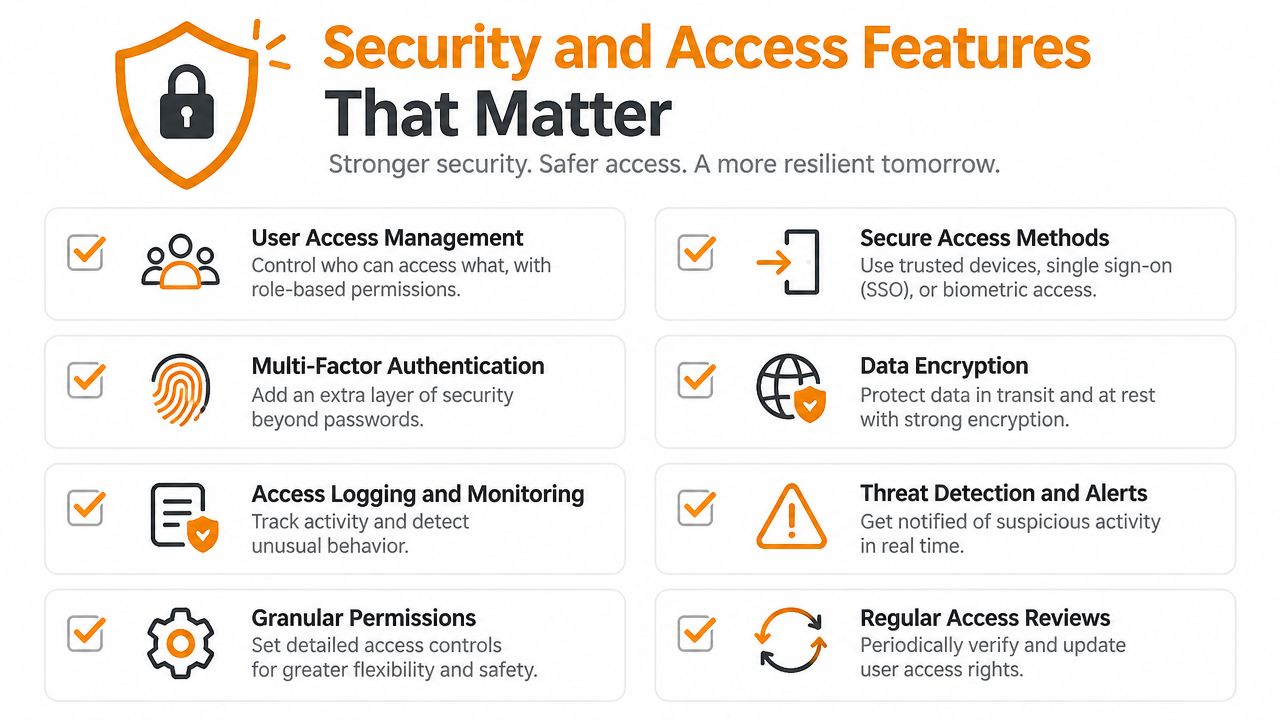
A sensible Grantham site should combine controlled perimeter access, monitored CCTV, suitable lighting and individual unit security. The UK self-storage safety guidance recommends controls such as 24-hour CCTV, logged access control, unit alarms, secure fencing and good lighting, while also pointing to compliance with Approved Document B and the voluntary BS EN 15696:2008 self-storage standard (UK self-storage safety guidance).
Ask what the system actually does
- Perimeter fencing: Check that the fence protects the whole compound, not just the main entrance. This matters when valuable tools and trade stock remain in a van-accessible unit.
- Camera coverage: Ask whether cameras cover drive lanes, gates and shutter fronts. A camera at reception alone doesn't tell you much about activity beside your unit.
- Individual protection: A private lock and, where offered, an individual alarm provide more useful protection than one block lock securing several units.
- Gate controls: PIN or app-controlled entry should create an access record and prevent casual drive-in access.
- Lighting: Well-lit loading bays make winter visits safer and give cameras a clearer view, particularly during misty or rainy conditions.
- Vehicle geometry: A long-wheelbase Transit needs a drive aisle that allows a clean approach, door opening and departure without repeated reversing.
Staff presence during stated hours still matters. Automated entry can't answer a question about a damaged shutter, a delivery problem or an unfamiliar vehicle blocking your bay. For broader practical guidance on how to protect belongings in storage, focus on layered controls rather than a single security feature.
Before signing: Ask to see the access route, confirm the hours in writing and find out exactly what happens if CCTV records an incident.
What Drive-Up Storage Costs in Grantham
Storage pricing needs a careful comparison because unit size, access hours, contract terms, insurance and promotions can change the final figure. The supplied market evidence doesn't provide verified Grantham weekly prices or a like-for-like table of indoor and drive-up rates, so it would be misleading to present invented price bands.
The more reliable benchmark is national revenue per lettable square foot. The Self Storage Association UK's 2026 industry report records 3,143 stores, 67.5 million square feet of lettable space and £1.3 billion in turnover for the 2025 trading year. It also gives average annual revenue of £27.40 per square foot excluding VAT, with domestic customers representing 76% of UK demand (UK self-storage market context).
| Unit size | Grantham drive-up weekly | Grantham standard weekly | UK average drive-up weekly |
|---|---|---|---|
| 25 to 50 sq ft | Request a current quote | Request a current quote | No verified weekly figure supplied |
| 75 to 125 sq ft | Request a current quote | Request a current quote | No verified weekly figure supplied |
| 150 to 250 sq ft | Request a current quote | Request a current quote | No verified weekly figure supplied |
When paying for access makes sense
Drive-up storage earns its premium when you're moving bulky furniture, collecting trade materials regularly or handling stock that enters and leaves by van. Repeated lifting and carrying quickly makes a cheaper but inconvenient unit expensive in time and labour.
Standard indoor storage is the smarter choice for archive boxes, rarely accessed belongings and items that benefit from a more controlled internal environment. You can also reduce the bill by choosing only the space you can stack safely, negotiating a longer contract where appropriate and checking whether access hours are included rather than charged separately.
Use the UK self-storage cost guide to understand the questions to ask, then compare the complete quote, not just the advertised weekly figure.
Booking and Preparing for Your Unit
Book storage around the job, not after the van is loaded. Grantham demand can tighten during busy moving periods, especially when households coordinate completions, removals and renovations at the same time. If your date is fixed, reserve early rather than relying on a last-minute unit with the wrong door position or access arrangement.
A practical booking checklist
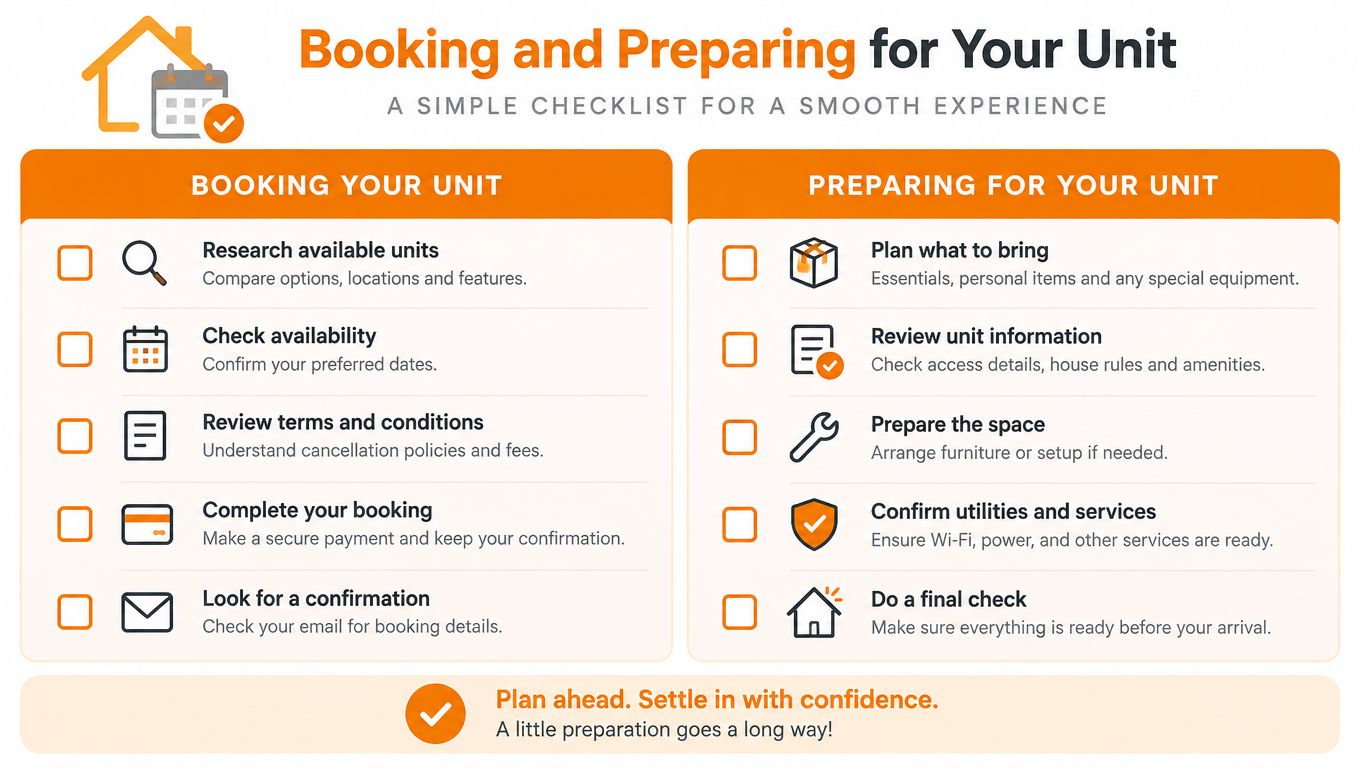
- Measure the load. Note the largest furniture, garden items, appliances, boxes and trade equipment.
- Choose a little spare capacity. A tightly packed unit becomes difficult to use, especially when you need the box at the back.
- Reserve online. Orange Box's online system can be used to make a reservation and manage the storage account.
- Set up payment. Direct debit helps avoid missed payments during a busy move.
- Download the access app if required. Complete this before arriving with a full van.
- Confirm access hours. Don't assume advertised availability means unrestricted vehicle entry at every site.
Pack for retrieval, not just maximum capacity. Label each box on more than one side, wrap furniture where it could rub against other items, use a sturdy padlock and keep a torch available for checking the rear of the unit. Pallet wrap helps hold loose furniture components together, but don't seal damp items inside plastic before they're dry.
Your first visit
Arrive with your booking confirmation, access details and lock. Inspect the empty unit, photograph its condition, place the items you'll need soonest near the front and leave a clear central route. Check the shutter closes smoothly before you drive away.
Don't forget garden furniture, ladders or unusually long items. These are the pieces that make an apparently adequate unit unusable. A quick fit-check before moving day prevents a costly second trip.
Matching Drive-Up Storage to Your Situation
The right choice depends on how often you'll visit and what you'll carry, not on the amount you own. Grantham households and businesses tend to fall into clear groups.
| Customer situation | Recommended format | Sensible size band | Contract approach |
|---|---|---|---|
| Home mover | Ground-level drive-up | 75 to 150 sq ft | Short stay covering the move |
| Downsizer | Drive-up for furniture, indoor for boxes | 25 to 75 sq ft | Short to medium term |
| Tradesperson | Drive-up or container | 75 to 150 sq ft | Ongoing business use |
| Seasonal-stock business | Drive-up for frequent dispatches | 125 to 200 sq ft plus | Seasonal or flexible term |
A home mover should choose drive-up access if heavy furniture, appliances and cartons will arrive in several van loads. A downsizer may need less floor space, but awkward wardrobes and sofas still favour a ground-level door. Don't pay for a large vehicle-accessible unit if the remaining belongings are mostly labelled boxes that won't be touched for months.
Tradespeople gain the most from direct access. Saws, ladders, fixings and materials can go straight from the vehicle into storage, particularly when work expands around spring refurbishment projects on the A1 corridor. Small businesses with seasonal stock should prioritise loading space and a route for palletised goods over decorative reception facilities.
Book drive-up storage if you'll load or unload more than four times a month, or if a single item exceeds 25kg and would otherwise require repeated trolley handling.
Choose standard indoor storage for climate-sensitive archives, electronics-heavy household contents and long-term belongings that rarely need access. Container storage can suit bulky tools and equipment, but inspect the internal environment and access conditions before choosing it over a drive-up unit.
Grantham Drive-Up Storage FAQs
Is drive-up storage better than a container?
Not automatically. Drive-up units usually offer a direct roller-door layout with easier repeated access, while container storage can provide a large external space for bulky equipment. The better option depends on vehicle access, ventilation, weather protection, internal dimensions and how often you need to retrieve items.
Container storage is expanding in semi-rural markets. The 2025 UK container census recorded 652 operators, 1,212 sites and 111,500 containers, while commentary identifies container storage as the fastest-growing segment because rural and semi-rural sites can expand more easily (2025 UK container census). In Grantham, compare the whole arrangement rather than assuming the container is cheaper.
How early should I book?
Book as soon as your move date is firm for summer activity, house completions or January clear-outs. Local availability can narrow when several customers need units at the same time, and the most convenient drive-up sizes disappear before less practical options.
Do I need to be present for every visit?
Usually, you need authorised access to enter the compound, but you don't necessarily need staff present. Check whether your facility uses a PIN, app or another access method, and confirm the permitted vehicle hours before sending a colleague or contractor.
What about valuable tools?
Tell the operator what you're storing and check the insurance terms. High-value tools may need specific cover, and your existing business policy may exclude unattended storage unless the facility meets stated security requirements.
What happens if my van arrives late?
Don't rely on the gate opening outside published hours. Call ahead and confirm whether late access is available, then keep your booking confirmation and access credentials ready.
Will winter weather prevent access?
Frost and heavy rain can affect driving surfaces, shutter operation and safe loading. Ask how the site manages drainage, lighting, gritting and surface maintenance, especially if you'll visit early in the morning or carry heavy items.
For any uncertain load, call before reserving. Give the facility your vehicle type, largest item and expected visit pattern, then ask for a quick fit-check instead of discovering on move-in day that the chosen unit is too narrow or too small.
Orange Box Self Storage offers bookable storage at its Grantham Venture Way site, including a drive-up unit with an electric shutter, lighting, a power socket, a pedestrian door and 24/7 access. Match those features against your vehicle, load and visit schedule, then visit Orange Box Self Storage to check availability and reserve the space that fits your move or business.