


You're halfway between two homes already. The current place still works day to day, but every room is starting to show what has accumulated over the years. The spare bedding in the airing cupboard. The duplicate pans at the back of the kitchen units. The loft boxes nobody has opened since the last move. The garage full of things kept “just in case”.
That is usually the point where people in Grantham start asking the wrong question. They ask, “How do we pack all this?” A better question is, “What needs to come with us?”
Leaving that decision too late is what makes a move feel chaotic. People end up boxing items they do not want, paying to move furniture that will not fit, and carrying sentimental things into the new house without any clear plan for them. It creates pressure at the worst point of the move, when exchange dates, school routines, work, and removals are all competing for attention.
A steadier approach starts before the boxes arrive and before every decision feels urgent. Decluttering is not only about getting rid of things. For plenty of households, the sticking point is the middle category. Items you are not ready to sell, donate, or throw away, but do not want crowding the new place on day one.
That is where storage earns its keep. A self storage unit works as a fifth box alongside keep, sell, donate, and dispose. It gives you a buffer for family furniture, inherited pieces, seasonal gear, business stock, or boxes with emotional value that need more time and a clearer head.
Used properly, storage is not a last resort. It is a practical tool that makes the rest of the move simpler, especially if you are downsizing, waiting for works to finish, or moving into a property with less built-in storage than you have now.
Your Stress-Free Grantham Move Starts Here
Saturday morning, the removals quote has landed, and the spare room suddenly looks expensive. Every extra box, every flat-pack unit you forgot about, every chair that probably will not suit the next place adds cost, time, or both.
A calmer move starts with one clear decision. Only move what earns its place in the new home.
In Grantham, I see the same pressure points again and again. Garages packed with old DIY supplies. Loft boxes nobody has opened in years. Good furniture that fits the current house but not the next one. The stress usually comes from the awkward middle group. Items that are useful, valuable, or sentimental, but not right for day-one move-in.
That is why decluttering before a move works best as a sorting job, not a clearing frenzy. Keep what you use and want. Sell what still has value. Donate what can help someone else. Dispose of what is broken or no longer safe. Then add a fifth option. Storage.
A storage unit works as a buffer zone while the move settles down. It gives you somewhere sensible to put family pieces, seasonal gear, business stock, inherited furniture, or boxes you are not ready to make a final decision on. For many households, that is the difference between forcing rushed choices and making good ones.
If you want a wider second opinion, this practical guide to decluttering covers the basics well. For a local step-by-step approach, our own advice on how to declutter your home before moving goes further on sorting with storage in mind.
Set small targets. Finish one wardrobe. One run of kitchen cupboards. One shelf in the shed. That pace keeps decisions sharp and stops the common mistake of half-emptying the whole house at once.
Some choices are straightforward. Some need time. Give the difficult items a proper category instead of letting them hold up the move. That is how you keep control of the job, the budget, and the first week in your new home.
Your 8-Week Decluttering Timeline for Moving
A good move rarely falls apart on moving day. It usually starts going wrong weeks earlier, when every room is half-sorted, sale items are still by the front door, and nobody has decided what is coming to the new house.
That is why the eight-week run-up matters. It gives enough time to sort properly, book collections, sell the worthwhile pieces, and set aside anything that should go into storage rather than force its way into the new place on day one.
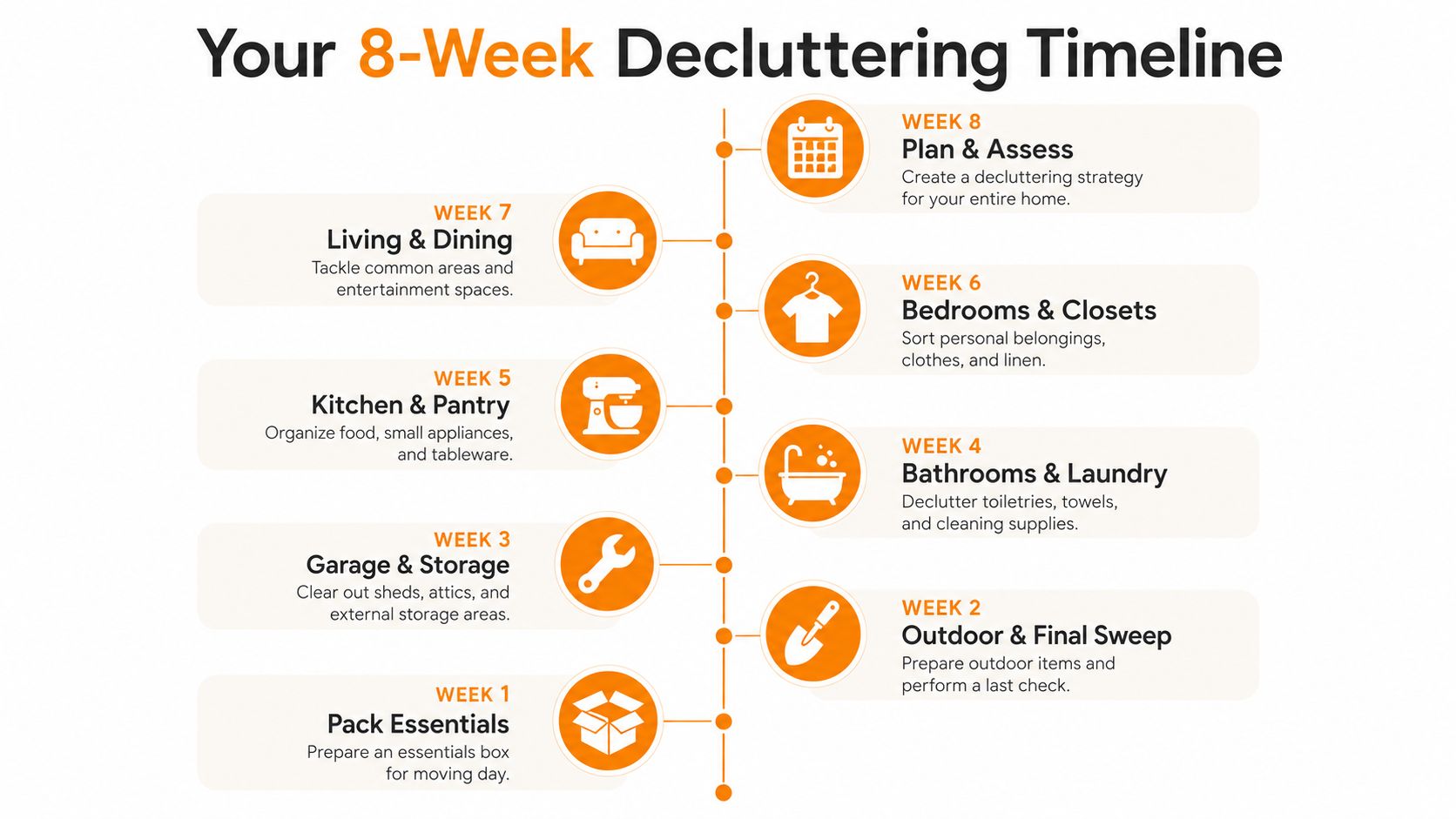
Weeks 8 and 7
Start with the spaces you use least and avoid opening everything at once. In Grantham homes, that often means the loft, garage, shed, under-stairs storage, filing cupboards, and the spare room that has become a dumping ground.
These first two weeks are for volume and visibility. You are looking for the easy removals, but also for the awkward items that need a plan.
- Set sorting rules before you begin: Decide what stays, what goes, and what may need temporary storage.
- Clear obvious rubbish straight away: Broken tools, expired paint, damaged toys, and unusable electronics only slow down the rest of the job.
- Create separate exits: Keep rubbish, recycling, donation bags, sale stock, and storage items apart so they do not creep back into the house.
If a piece of furniture is good but will not suit the new layout yet, do not let it clog up a spare room for weeks. Put it into the storage category early and move on.
Weeks 6 and 5
Now deal with bedrooms, wardrobes, linen cupboards, and then the kitchen. These rooms take longer because the decisions are less obvious. Clothes can be expensive, sentimental, or tied to a version of life that has changed. Kitchen cupboards are usually full of duplicates people forgot they owned.
Work by category, not by mood. Pull out all the mugs. All the food containers. All the bedding. Seeing the full amount makes the decision clearer.
A practical routine works better than a long weekend of forced enthusiasm:
- Choose one category at a time.
- Take everything out so duplicates are visible.
- Put back only what you use, need, or definitely want in the next home.
Short sessions keep standards up. Tired people keep too much.
Weeks 4 and 3
By this stage, the house should start looking lighter. If it does not, the problem is usually follow-through, not sorting. Bags for donation are still sitting in the hallway. Items for sale have not been photographed. Boxes marked "decide later" are multiplying.
Use these weeks to clear living rooms, bookcases, TV units, children's play areas, home office storage, and sideboards. Then finish the jobs that remove items from the property.
A simple destination check helps:
| Destination | What belongs there |
|---|---|
| Keep | Items you use regularly and know will suit the new home |
| Sell | Good items worth the time and effort to list |
| Donate | Clean, usable belongings someone else can benefit from |
| Dispose | Broken, unsafe, expired, or incomplete items |
| Store | Furniture, sentimental boxes, seasonal gear, or useful items not needed straight away |
The fifth option matters. Storage stops the usual mistake of treating every item as a final yes or no. For many moves, especially when downsizing or waiting to see how the new rooms work, that buffer keeps the process calm and sensible.
Weeks 2 and 1
The final fortnight is for tightening up, not reopening old debates. Finish the last cupboards, run down food stocks, sort bathroom products, and separate what you will need for the first night and first morning.
Keep the focus narrow:
- Finish open categories: One unresolved drawer in each room turns into a full day at the end.
- Pack an essentials box: Kettle, mugs, chargers, medication, paperwork, toilet rolls, basic tools, and clothes for the next day.
- Keep pathways and surfaces clear: It makes cleaning easier and gives movers room to work.
By the last week, the house should feel controlled. If there are still a few uncertain items, that is usually a storage decision, not a reason to stall the whole move.
Mastering the Four-Box Method Room by Room
On moving day in Grantham, the houses that cause delays usually have the same problem. Half-cleared cupboards, loose piles on the landing, and too many items nobody has properly decided on. The four-box method fixes that because every item gets a destination before the van arrives.
Use four clear labels: Keep, Sell, Donate, Bin. Then add a practical fifth option in your head: Store. That extra category matters when you have furniture that may not suit the new layout, family items you are not ready to part with, or seasonal gear you do not need straight away. A short-term storage unit gives those awkward items somewhere sensible to go, instead of forcing a rushed decision.
The rule is simple. Once something is sorted, it leaves the room or goes straight into the right container. It does not return to the drawer, wardrobe or shelf “for now”.

Ground rules that stop re-cluttering
Set yourself up properly before you start. Use actual boxes, bags or tubs, not loose piles on the bed. Work in focused bursts so decisions stay sharp. Keep a marker pen and tape nearby so each container is labelled as you go.
One more rule helps in almost every house move. Do not create a vague “decide later” pile. If you are unsure, that is often a storage decision, not a reason to stall the whole room.
For extra practical tips on setting up a workable sorting routine, this home decluttering guide for moving house covers the basics well.
Bedrooms and wardrobes
Bedrooms usually give the quickest early win. Clothes, shoes and bags are easy to judge because daily use tells the truth fast.
Start with wardrobes, then drawers, then under-bed storage. Keep what fits, gets worn, and suits how you live now. Occasionwear needs a stricter test. If it no longer fits your life, it should not be taking up paid space in a removal van.
Duplicates are where a lot of volume hides. Five similar black jumpers, spare handbags, extra bedding, and old coats soon fill boxes. Keep the best version, not every version.
Sentimental clothing is different. Wedding outfits, baby clothes, inherited items, and keepsakes do not need to compete with your everyday wardrobe. If you want to keep them but do not want them filling the new cupboards from day one, store them properly and review them later.
Kitchen and utility room
Kitchens cost more to move than people expect because they hide a lot of dead weight. Single-use gadgets, chipped mugs, spare containers without lids, old spices, worn tea towels, and duplicate utensils all add up.
Work by category, not by cupboard. Pull out every mug together. Then every pan. Then every food container. Seeing the full amount makes the decision easier and stops you keeping six of something when you only use two.
Be firmer than you think you need to be. If an item has sat untouched at the back of a cupboard for years, it is unlikely to earn its place in the new kitchen. The exception is quality cookware or appliances you expect to use once you are properly settled. Those can go into storage if the new house has less space at first.
Utility rooms need the same approach. Throw out empty bottles, dried-up products, broken laundry baskets, odd pegs, and anything expired or leaking. These items are messy to pack and pointless to move.
Living room and home office
Living spaces tend to mix useful things with emotional ones. That is why people get stuck here.
Start with obvious function. Bookshelves, TV units, drawers, cable boxes, and paperwork trays. Keep the items you use and the pieces that suit the new house. Decorative items should be chosen on purpose, not carried along because nobody wanted to decide.
Paperwork needs a hard edit. Keep legal, financial, medical, and property documents. Shred outdated papers. Digitise where it saves space and makes access easier. Home offices also collect dead pens, old notebooks, mystery cables, empty boxes, and outdated tech. Clear them without overthinking.
Large furniture often creates the biggest hesitation. A sofa, sideboard or desk might be good quality but still wrong for the next property. Storage works well here because it buys time. You can move in, see how the rooms work, and decide later whether to keep, sell or replace it.
Garage, shed and loft
These are the easiest spaces to postpone and the hardest to finish quickly. Go in with a plan or they will absorb a full weekend.
Do a first pass for obvious waste. Broken furniture, rusted tools, scraps of timber, dead plant pots, old fixtures, dried-up paint, and damaged garden equipment should be dealt with straight away if they are safe to handle. Then do a second pass for proper decisions on the items that remain.
A simple usage test helps. If you have not used it in a long time and it is easy to replace locally, it probably does not need to move with you. Be more careful with expensive tools, family furniture, bikes, and seasonal equipment. Those items often belong in storage if the new place has less outdoor space, no loft, or a smaller garage.
That is the practical advantage of treating storage as a buffer zone rather than a last resort. It keeps the move moving. You clear the house, reduce packing pressure, and avoid making poor decisions just because the handover date is close.
Local Grantham Resources for Selling and Donating
Once you've sorted properly, the next challenge is getting items out of the house quickly. Many good decluttering efforts often stall at this stage. Bags for charity sit by the stairs. Sale items gather in the spare room. Recycling gets postponed until “next weekend”. In practice, clutter only leaves when there's a clear destination for it.
Where to donate in Grantham
For clean, usable household goods, clothing and smaller home items, local charity shops are often the simplest option. Grantham town centre usually gives people a few straightforward donation routes, including branches associated with charities such as British Heart Foundation and St Barnabas Hospice, along with other local charity shops that regularly accept clothing, books and bric-a-brac.
Before loading the car, it's worth checking what each shop can take. Some accept small furniture, some don't. Some will take electricals if they're tested or in good order, while others focus on clothing and accessories only. Calling ahead saves a wasted trip.
If you're donating furniture, larger bags, or a house-clearance volume of items, ask whether collection is available. That's often the difference between items leaving this week and staying in your dining room until after the move.
Where to sell unwanted items locally
Some belongings are worth selling, but only if the process is realistic. Grantham sellers often do best with local collection options because they avoid courier arrangements and reduce the chance of fragile items being damaged in transit.
Good candidates for sale include:
- Furniture in decent condition
- Working small appliances
- Quality children's items
- Garden equipment and tools
- Branded homeware
Facebook Marketplace is often the fastest local route, especially for bulky items. Local Grantham buy-and-sell groups can also work well for quick clearances. If an item hasn't sold after a fair attempt, it's usually better to donate it than keep carrying it forward.
Selling should support the move, not slow it down. If listing, messaging and no-shows are creating stress, move the item on another way.
Recycling and responsible disposal
For the things that can't be sold or donated, Grantham residents usually rely on the Household Waste Recycling Centre on Mowbeck Way. It's the practical answer for broken furniture, general non-reusable household waste, and categories that charity shops won't take.
Responsible disposal is part of decluttering, not a separate task for later. If old paint tins, damaged shelving or bags of unusable textiles stay in the garage “for after the move”, they often become a problem you carry into the new place.
A good rule is simple. Every decluttering session should end with items assigned to a real exit route. That's how progress stays visible.
Why Self Storage Is Your Secret Weapon for Moving
Most decluttering advice treats the process as a strict yes-or-no decision. Keep it, or get rid of it. Real moves aren't that tidy.
Some items absolutely belong in your life, but not necessarily in the next house on day one. That could be a dining table that's too large for the new layout, sentimental furniture you're not ready to part with, boxes from a child's old bedroom, or seasonal belongings that only get in the way during the move itself. For these situations, storage stops being a last resort and starts acting like a smart buffer.
A useful sign that this applies to you is when the item isn't junk, but it also isn't helping the move.

The fifth box that reduces pressure
Think beyond the usual four boxes. Add a fifth option: Store.
That changes the whole feel of decluttering before moving house in Grantham because it removes false urgency. You no longer have to make permanent decisions about every sentimental or awkward item while contracts, packing and logistics are all happening at once.
The logic is simple:
| Option | Best for |
|---|---|
| Keep | You'll use it immediately in the new home |
| Sell | It has value and you're ready to let it go |
| Donate | It's useful but not worth moving |
| Bin | It's broken, unsafe or worn out |
| Store | You want time, space or flexibility before deciding |
That “Store” category is often the difference between a controlled move and a chaotic one.
When storage makes practical sense
Storage is especially useful in a few common situations:
- Downsizing: Furniture may be good quality, but the new rooms won't take everything at once.
- Chain gaps or delayed access: You might need belongings out of one property before the next is fully ready.
- Unfurnished or partly prepared homes: Decorating, flooring or basic works can make immediate move-in awkward.
- Family decisions still in progress: Sentimental items often need time and a clearer head.
This isn't unusual. A 2024 UK Self Storage Association report indicates that 42% of personal storage users in the East Midlands cite moving house as their primary reason, as referenced in this Good Housekeeping decluttering article. That tells you plenty. People don't just use storage because they have too much stuff. They use it because moving rarely happens in one clean, perfectly timed step.
How to use storage well
The mistake is treating storage like a second junk room. Used properly, it should make decisions easier, not postpone them forever.
A better approach is to store by purpose:
- Sentimental boxes together: Family keepsakes, photo albums, memory items.
- Furniture by room or function: Dining pieces together, occasional furniture together.
- Seasonal items grouped cleanly: Christmas decorations, patio cushions, winter gear.
- Clearly labelled cartons: So retrieval is quick and deliberate.
If you're comparing options locally, it helps to look at what makes a facility practical for an actual move, not just cheap on paper. Access, security, flexibility and unit choice all matter. This overview of the best storage facility in Grantham shows the sort of details worth checking before you commit.
The main benefit is mental as much as physical. Storage gives you breathing room. You can move house without forcing every uncertain belonging into a rushed final decision.
The Ultimate Pre-Move Decluttering Checklist
A week before moving day is the worst time to decide what to do with an old armchair, three bags of cables, or boxes of family keepsakes from the loft. By then, every delayed decision turns into extra packing, extra lifting, and extra cost. A solid checklist cuts that down and gives you a clear order to follow.
Use this as a working list. Tick things off as you go.
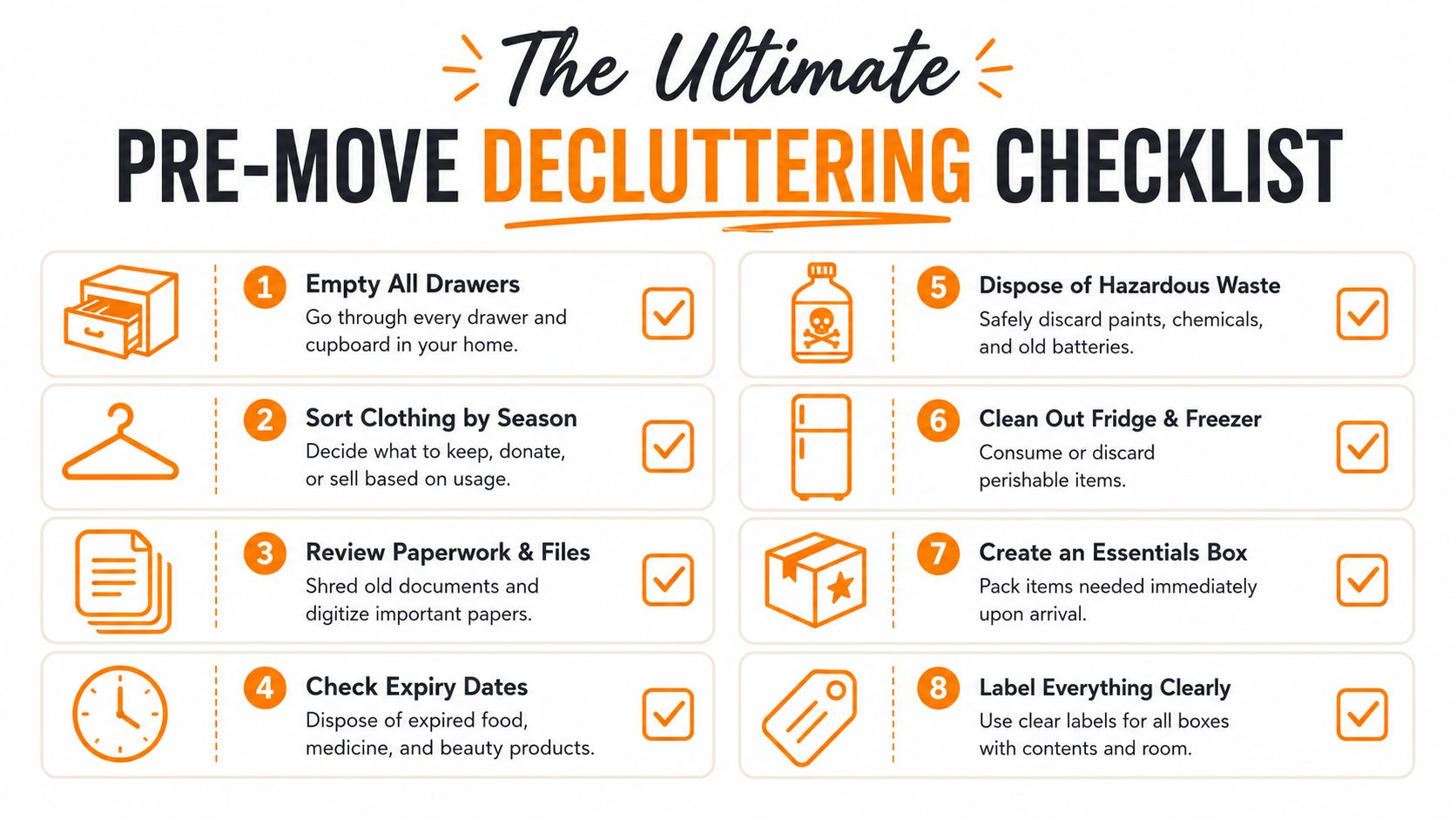
The checklist
- Start early: Give yourself the full run-up, not a rushed final fortnight.
- Plan room order: Begin with loft, garage, shed and spare spaces before tackling daily-use rooms.
- Set up your categories: Keep, Sell, Donate, Bin, and Store if you need a buffer.
- Empty storage spaces fully: Drawers, cupboards, wardrobes and under-bed areas hide more than you think.
- Apply one decision rule consistently: If you haven't used something in the past year, question whether it deserves the cost and effort of moving.
- Break sessions down: Short, focused sorting blocks beat tired decision-making.
- Move sorted items out fast: Donation bags, sale items and rubbish should leave the house, not sit in piles.
- Check expiry dates and condition: Food, toiletries, medicines, cleaning products and damaged household goods should be reviewed carefully.
- Deal with paperwork properly: Keep what matters, shred what doesn't, digitise where practical.
- Pack an essentials box: Include what you'll want the first night and first morning.
- Label every box clearly: Room name plus contents is better than vague labels.
- Keep one final sweep for the end: Cupboards, fridge, freezer, garden storage and utility areas usually need a last pass.
Be strict with anything that lands in a maybe pile. Indecision adds volume quickly, and it usually shows up later as boxes you pay to move but still do not really want in the new house.
The fifth category, Store, is what makes this process easier for many Grantham moves. It gives good furniture, sentimental items, inherited pieces and awkward extras somewhere sensible to go while you settle in. That is often better than forcing a rushed keep-or-discard decision under pressure.
Final reminders that save hassle
Two habits save the most stress at the end:
- Finish categories completely. Half-sorted rooms drag on and create repeat work.
- Keep decluttering and packing separate. Sort first, then pack what has earned its place.
Once the sorting is done, follow these tips for packing when moving house so the final load is easier to handle and easier to unpack.
A successful move is about taking the right things, in the right order, without filling the new house with delayed decisions.
If you stay methodical, decluttering before moving house in Grantham becomes far more manageable. One room at a time works. One clear decision at a time works. That is how you keep control of the move.
If you need extra breathing room during your move, Orange Box Self Storage offers secure, flexible storage that can take the pressure off while you sort, pack and settle into your new home. It's a practical option when you're not ready to part with good furniture, sentimental belongings or boxes that don't need to be under your feet on moving day.