


If you're in the middle of a move in Long Eaton, there's a good chance your house already feels split between two lives. The kettle is still out, half the wardrobe is in boxes, and you're waiting on keys, exchange dates, a van slot, or a landlord to confirm exactly when you can get in. That awkward gap is where moves become stressful.
Temporary storage during a home move in Long Eaton gives you breathing room. Instead of forcing every item to move in one go, you can stage the job properly. Furniture can go first. Non-essentials can leave early. The things you need for the last few days can stay with you until the final push.
That matters because moving isn't usually difficult for one single reason. It's difficult because several small problems pile up at once. Storage helps separate them.
Why Temporary Storage Can Simplify Your Long Eaton Move
A lot of families only start looking at storage when a moving plan has already gone off schedule. Completion dates drift. Rental agreements overlap badly. A buyer wants an earlier handover. A seller needs more time. Suddenly every room is full of boxes and nobody can see a sensible route through the house.
In practice, a storage unit works like a pause point. You don't have to solve every part of the move on the same day. You can move the dining table, spare beds, seasonal clothes, toys, archived paperwork, and packed boxes out first. That leaves you with a manageable home instead of a packing depot.
The wider pattern backs that up. The UK self-storage market has reached £1.2 billion, and 40% of all storage usage is tied directly to moving homes, with secure facilities linked to reducing moving-related stress by as much as 20% according to Orange Box's overview of flexible self-storage.
The real situations where storage helps most
Three move scenarios come up again and again in Long Eaton.
- Completion dates don't line up: You have to leave one property before the next is realistically ready.
- Viewings are still happening: You need to make your current home look bigger, calmer, and easier to imagine living in.
- You want to split the move into stages: Bulky or low-priority items go first so moving day itself is smaller.
That third case is often the one people overlook. A staggered move is usually easier on children, easier on older relatives, and easier on anyone trying to keep working while packing.
Temporary storage isn't just extra space. It's extra control.
If you're comparing different temporary storage options before locking anything in, it's worth looking at how providers handle short stays, access, and awkward in-between periods rather than only focusing on headline price.
Why it can be cheaper than a rushed move
People often see storage as an added bill. Sometimes it is. But a rushed move creates its own costs. Extra van time, repeated trips, damaged items, emergency packing supplies, and paying for a larger unit than you need because you booked in a panic all add up quickly.
Used properly, temporary storage during a home move in Long Eaton is less about renting space and more about removing pressure. Once the pressure drops, better decisions usually follow.
Deciding What to Store and When to Start
The best way to avoid overpaying is simple. Don't start by choosing a unit. Start by deciding what needs to go into it.
Most households don't need to store everything. Research shows 68% of UK movers store only 30 to 40% of their household volume during transitions, and assessing items properly can cut storage costs by up to 45% for average households in the East Midlands, as noted in Access Storage's moving-home guidance.
That one point changes the whole approach. If you treat storage like an overflow shed, you'll pay for wasted space. If you treat it like a planned holding area, you'll book far more efficiently.
Use four clear categories
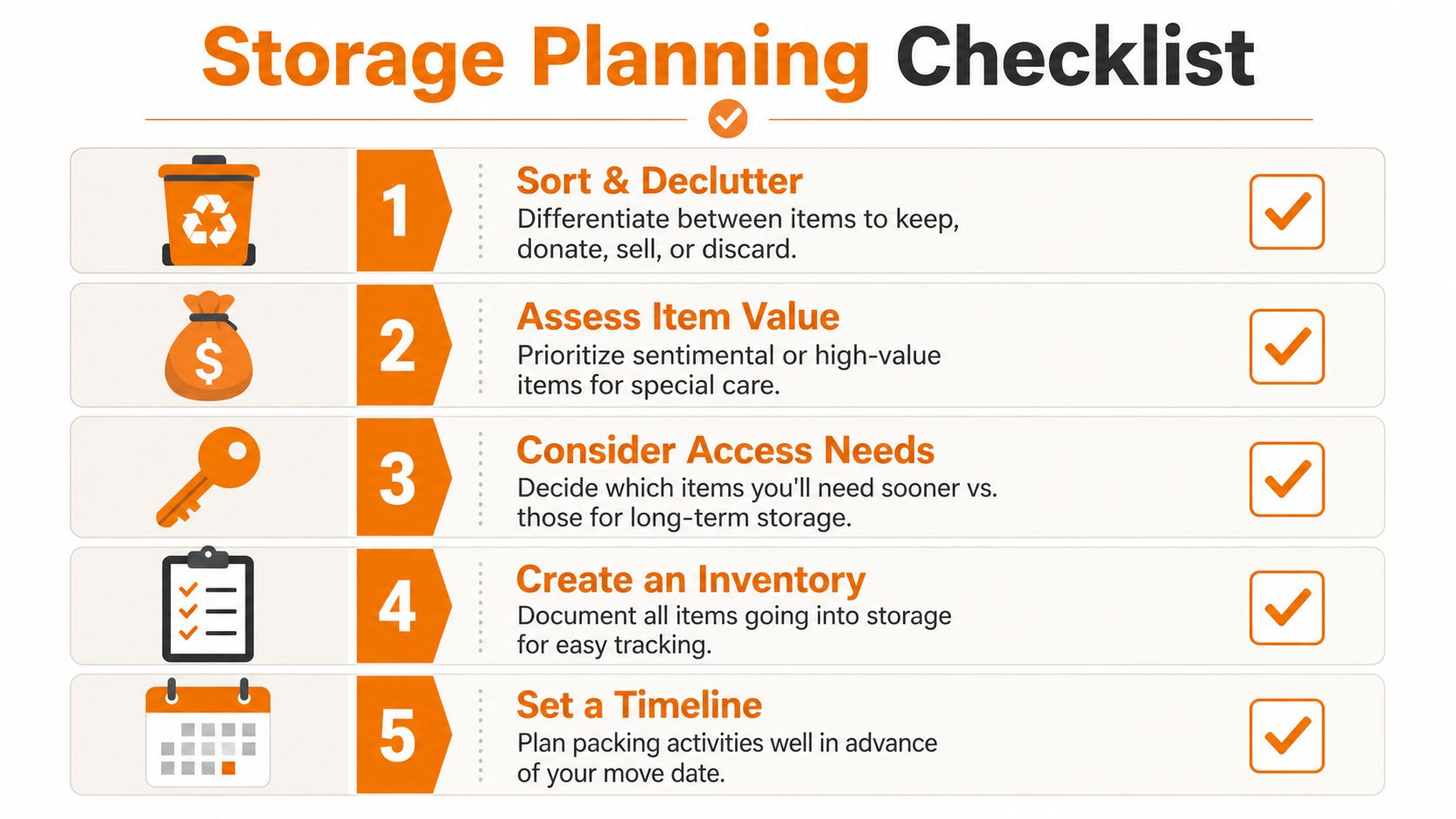
I recommend sorting every room into four groups:
Immediate need
Kettle, bedding, medicine, chargers, school items, work kit, basic cookware, cleaning supplies, and a few days of clothes.Store for now
Things you won't need before or immediately after the move. Spare chairs, out-of-season clothing, books, decorative items, boxed kitchenware, guest bedding, and duplicate furniture usually land here.Donate or sell
Anything you don't want to pay to move twice. If it hasn't earned its place, let it go now.Discard
Broken items, unusable flat-pack pieces, expired supplies, old paperwork you no longer need, and anything damp or damaged beyond saving.
A lot of households get stuck because they only use two labels: keep or throw away. That creates indecision. Four categories give you a middle ground and keep the process moving.
Start earlier than feels necessary
If you wait until the final week, you'll make expensive decisions. Start the storage sort as soon as the move looks likely. That gives you time to identify awkward furniture, estimate box count, and separate genuine short-term storage from items that should leave the household altogether.
A practical timeline looks like this:
- Early stage: Walk room by room and mark obvious storage items.
- Middle stage: Measure large furniture and note anything that can be dismantled.
- Final stage before move: Pack only the agreed storage category, not the whole house at random.
Practical rule: If you can't name when you'll next need an item, it probably belongs in storage rather than in the final-week scramble.
Build an inventory that helps you later
Keep the inventory simple. Box number, room, broad contents, and whether you'll need fast access. That's enough.
If you're also clearing a property as part of the move, outside help can save time. Useful checklists from expert Manchester clearance guidance can help you separate storage items from disposal and donation jobs before they become one messy pile.
What works is a short written list and clear labels. What doesn't work is writing "misc" on ten different boxes and hoping you'll remember later.
Choosing the Right Storage Unit in Long Eaton
Completion has slipped by ten days, the removals van is booked, and half the house is already boxed. At that point, the wrong storage unit costs money twice. First in rent, then again in extra handling because the space is awkward, overfilled, or larger than the job needed.
A good fit comes down to three things. How much you are storing, how often you will need access, and how long the overlap is likely to last. In Long Eaton, plenty of moves only need short-term space for part of the house, so booking a full-house unit "just in case" often means paying for empty floor area.
A practical size guide
Use this as a starting point, then adjust for bulky furniture and how well items can be dismantled.
| Unit Size (sq ft) | Equivalent To | Typically Holds |
|---|---|---|
| 25 | Small cupboard or locker space | Boxes, suitcases, documents, small household extras |
| 50 | Small shed or compact spare room | Boxes, dining chairs, bedside units, folded items, small appliances |
| 75 | Large shed or half garage feel | Contents from a partial move, light furniture, bikes, stacked cartons |
| 100 | Single garage style footprint | Furniture and boxes from a flat or smaller house move |
| 200 to 300 | Full-home move range | Larger furniture sets, appliances, mattresses, multiple rooms of contents |
These sizes are only guides. A dismantled bed, stackable dining chairs, and boxed soft furnishings use space very differently from wardrobes, white goods, and heavy book boxes. I usually advise people to choose for the actual shape of the load, not the number of rooms on the estate agent listing.
Match the unit to the move you are actually making
A partial move usually suits a smaller internal unit. That keeps the cost under control if you are only clearing spare-room furniture, seasonal items, or boxes to make the sale and the move easier.
A full-house overlap is different. If almost everything has to come out before the new place is ready, loading access matters as much as square footage. In that case, a larger unit with straightforward vehicle access can save hours of carrying and re-stacking, which matters if you are paying movers by the hour.
Sensitive contents need better conditions. Paperwork, electronics, solid wood furniture, fabrics, and anything that will react badly to damp should go into a unit suited to that type of storage, even if the weekly rate is a little higher. Paying slightly more for the right environment is often cheaper than replacing damaged items.
Avoid paying for space you do not need
The usual mistake is rounding up too far. People picture the contents spread across a house and assume they need that same footprint in storage. They do not. Storage works vertically, provided furniture is dismantled and boxes are stacked safely.
The other mistake is going too tight. If the unit is packed wall to wall with no access gap, every retrieval turns into a full unload and reload. For a short sealed storage period, that can be fine. For a move with uncertain dates, it quickly becomes frustrating and expensive.
A simple rule works well. Choose a unit that fits the inventory, leaves room for stable stacking, and gives you a narrow walkway if you may need anything back before completion.
What to ask before you book
Before signing anything, ask practical questions that affect the final bill:
- How is the rental charged? Weekly and four-week rolling terms are often better value for uncertain completion dates than a longer fixed commitment.
- Can you move up or down a size easily? Flexibility matters if the volume changes after final packing.
- How often will you need access? Frequent visits can make a slightly larger, easier-to-use unit the cheaper option overall.
- What is the ceiling height and door access like? A well-shaped unit can hold the same amount more efficiently than an awkward one.
- Are there minimum notice periods or admin fees? Small contract terms can wipe out the saving from a cheap headline rate.
If you want to compare local options before booking, this guide to finding self storage in Long Eaton is a useful place to review nearby facilities and availability.
The right unit is rarely the biggest one you can afford. It is the one that matches your inventory, your access needs, and your likely moving timeline without charging you for space or time you will not use.
How to Pack for Storage to Prevent Damage
Packing for transport and packing for storage aren't the same job. Moving day packing is about surviving the journey. Storage packing is about surviving time, temperature shifts, and weeks of being stacked under other items.
The biggest mistake I see is people treating a storage unit like a garage. That usually ends with crushed boxes, musty fabrics, and furniture that comes out dirtier than it went in.

Industry data shows 68% of storage-related damage claims in the UK stem from moisture trapped in uncleaned fabrics or damp items, and disassembling large furniture can save 25 to 30% of unit volume, according to Dickens Self Storage's long-term storage tips.
What works well
A few habits make a huge difference.
- Use proper moving boxes: Sturdy cardboard boxes stack better than supermarket cartons or delivery boxes.
- Clean everything first: Upholstery, garden furniture, white goods, and soft furnishings must go in dry and clean.
- Take furniture apart where possible: Bed frames, dining tables, and shelving units waste space when stored assembled.
- Wrap fragile items separately: Bubble wrap, paper fill, and clearly marked boxes stop breakage and make loading safer.
- Keep textiles sealed correctly: Vacuum-sealed bags can help with clothing and bedding if the contents are fully dry before sealing.
What causes trouble fast
Avoid these shortcuts:
Plastic bags for general storage
They trap moisture and collapse when stacked.Wet last-minute packing
A damp tea towel, recently cleaned rug, or wiped-down chair can create problems once enclosed.Random loading
If boxes are mixed by weight and shape, the stack shifts and crushes weaker cartons.No aisle
If you fill the unit wall to wall, every later retrieval becomes a full unload.
For extra detail on materials and loading methods, packing tips for moving house can help you tighten up the basics before move day.
A simple packing order
Start with large, sturdy furniture at the back or sides. Add uniform boxes next. Put fragile items near the front so they don't end up trapped under heavier loads. Keep essentials in clearly marked boxes that stay out of storage entirely.
Store clean, dry, boxed, and labelled. Most storage damage starts when one of those four gets skipped.
Mastering Security Insurance and Logistics
A common Long Eaton moving problem looks like this. Completion gets pushed by four days, the van is booked once, and a family needs quick access to school uniforms, chargers, paperwork, and a kettle while the rest sits in storage. Security matters, but so does being able to get in, find what you need fast, and avoid paying for cover you already have elsewhere.
Poor storage logistics usually show up as extra cost. People rent longer than planned because the unit is hard to work through. They replace missing or damaged items because no one recorded what went in. They pay for insurance twice because they never checked what their home policy already includes.
Key Security Features to Look For
Start with the basics, then ask how the site runs day to day.
- 24/7 CCTV: Good as a baseline.
- Controlled access: Keypad entry, staffed reception, gated access, or an individual code all help limit who gets near your unit.
- Proper locks and clear responsibility: Ask whether you provide the lock, whether the site sells approved locks, and who can access the unit.
- Well-lit loading areas: This matters on winter evenings and rushed after-work drop-offs.
- Clear access hours: A cheaper rate can stop looking cheap if restricted hours force you into another van hire or time off work.
That last point gets missed often. Flexible access is not just convenience. It can stop repeat trips across Long Eaton, missed contractor slots, and rushed collections that turn a tidy plan into an expensive one.
Insurance and inventories
Site security protects the building. It does not automatically mean your contents are covered for every risk.
Check three things before move-in day:
- What your home insurance covers while belongings are stored away from the property
- Whether the facility requires separate contents cover
- What value limits, exclusions, and proof-of-value requirements apply
If you want the small print explained in plain English, this guide to contents insurance for self-storage is a useful place to start.
An inventory saves time as much as it protects you. List each box by number, note the room it came from, and photograph valuable items before they go in. For family moves, I usually recommend a simple phone note or spreadsheet rather than anything elaborate. If you cannot find the pushchair, tax papers, or router on a stressful weeknight, a basic inventory pays for itself immediately.
If you cannot identify what is in box 14 without opening five others, the inventory needs more detail.
Logistics that make access easier
Set the unit up for retrieval, not just for loading day. Keep a narrow aisle. Put high-access items near the front. Store documents, chargers, tool kits, and temporary living essentials together so they are easy to collect in one trip.
Label by priority as well as room. "Open first", "can stay stored", and "fragile" tells you more than "bedroom" on its own. If the move is likely to drift, that simple system helps you avoid upgrading to a larger unit or extending the rental because the space became unusable halfway through.
One practical rule helps here. Load the van in the reverse order you want to unload at the storage site. It saves handling, shortens access visits, and reduces the chance of damaging boxes while shifting everything around to reach one item.
Money Saving Tips for Your Temporary Storage
The smartest way to save money isn't chasing the lowest advertised rate. It's matching the unit, term, and protection level to your actual move.
New 2025 industry data shows 52% of UK renters prefer weekly rather than monthly contracts due to unpredictable moving timelines, especially in volatile markets around Greater Nottingham, according to Big Yellow's moving-home page. That's worth paying attention to if your dates still feel soft.
The smart mover's checklist
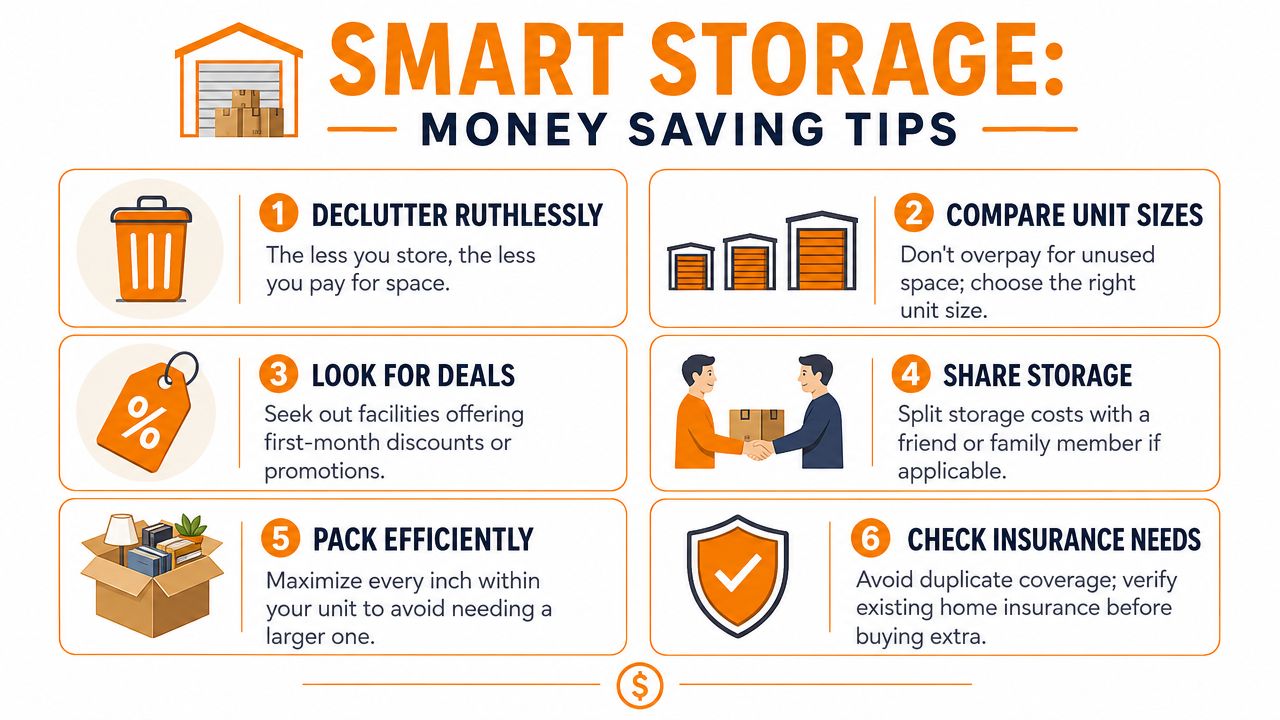
- Choose by inventory, not guesswork: If you're only storing part of the household, don't rent for a full-house scenario.
- Ask about weekly flexibility: A shorter rental structure can stop you paying for unused time when dates shift.
- Declutter before you book: Every box you remove before storage lowers the space you need.
- Pack to the full height safely: Wasted vertical space often pushes people into the next size up.
- Check insurance properly: Duplicate cover is still an unnecessary cost.
- Consider location in the round: A slightly better-placed site can save repeat fuel costs, time, and hassle.
Temporary storage during a home move in Long Eaton works best when you stay disciplined. Store less. Label better. Rent for the move you have, not the one you're worrying about in your head.
A calm move usually costs less than a chaotic one.
If you need a practical starting point for your move, Orange Box Self Storage offers short-term storage in the Long Eaton area with a range of unit sizes, climate-protected options, and flexible terms that can suit awkward moving timelines. It's worth checking availability early, especially if you want to match unit size closely to what you're storing rather than paying for spare space you won't use.