

You usually start looking for self storage in Long Eaton when something at home or work has stopped functioning properly. The spare room is now a box room. The garage has become a holding area for furniture, tools, bikes, and things you meant to sort months ago. Or you're between tenancies, renovating, growing a small business, or trying to get through a student move without dragging everything back and forth.
That's when storage stops being a “maybe useful one day” service and becomes a practical fix. Good storage gives you breathing room without forcing a rushed clear-out or a bigger property decision. In Long Eaton, that matters because people often need flexible space that works around commuting, moves, family life, and business turnover.
Why Self Storage Is the Answer to Long Eaton's Space Problem
You see the need for storage in Long Eaton at the point daily life starts getting awkward. The pushchair is blocking the hallway. Stock has taken over the spare room. Tools are stacked in the garage, but the car still needs to go in at night. At that stage, extra space is not a luxury. It is a practical way to keep the house or business working.
Long Eaton has a steady demand for self storage for a simple reason. People here often live in one place, work in another, and need flexible space in between. Commuters heading towards Nottingham or Derby want somewhere easy to reach. Students need short-term space between terms. Families in nearby areas such as Breaston and Sawley often need temporary room during decorating, extensions, or a move that does not line up neatly. Orange Box also reports that many customers keep a unit for more than just a few weeks, which shows storage is often a medium-term fix rather than a last-minute stopgap.
A key issue is usually usable space, not just square footage. A loft full of fragile boxes, a damp shed, or a spare bedroom packed with furniture does not solve much if you cannot get to what you need or trust it to stay in good condition.
Practical rule: If you need to move three things to reach one thing, your storage setup is already costing you time.
That cost shows up in different ways. A homeowner delays putting the house on the market because every room looks crowded. A tradesperson leaves tools in the van overnight and takes on extra risk. A student pays for repeated train journeys or van hire because there is nowhere sensible to leave their belongings over summer. A small retailer starts using living space as overflow stock space and loses the ability to work efficiently from home.
Good self storage solves those problems when it is used with a clear purpose. Store the items you need to keep, but do not need at arm's reach every day. That could mean furniture during a renovation, boxed records, seasonal stock, bikes, sports kit, or student belongings between tenancies. If you want to judge what space would fit your items before booking, a storage unit size guide for common household and business loads helps you avoid paying for space you will not use.
Security and access also matter more than many people expect. For business users in particular, controlled site access, lighting, and systems such as remote gate entry solutions make a noticeable difference to how safe and manageable a storage site feels.
When storage makes sense
- During a move or renovation you can clear rooms properly, protect furniture, and keep trades working without constantly shifting belongings around.
- For growing families you can free up a bedroom, nursery, or home office without rushing into a loft conversion or house move.
- For small businesses and tradespeople you can separate stock, tools, samples, and records from your living space and keep better control of what is where.
- For students you can store the basics locally between terms instead of paying for repeated transport or asking family to absorb the overflow.
Storage works best as a deliberate space decision. Keep what earns its place, move out what you still need, and avoid paying month after month for things you should have sold, donated, or cleared.
Choosing the Right Unit Size and Features
Choosing a unit goes wrong when people shop by price first and size second. That usually leads to one of two mistakes. They rent too small and waste time trying to stack everything like a puzzle, or they rent too large and pay for empty air. A better approach is to match the unit to what you're storing, how often you need access, and whether the contents are sensitive to damp, temperature swings, or rough handling.
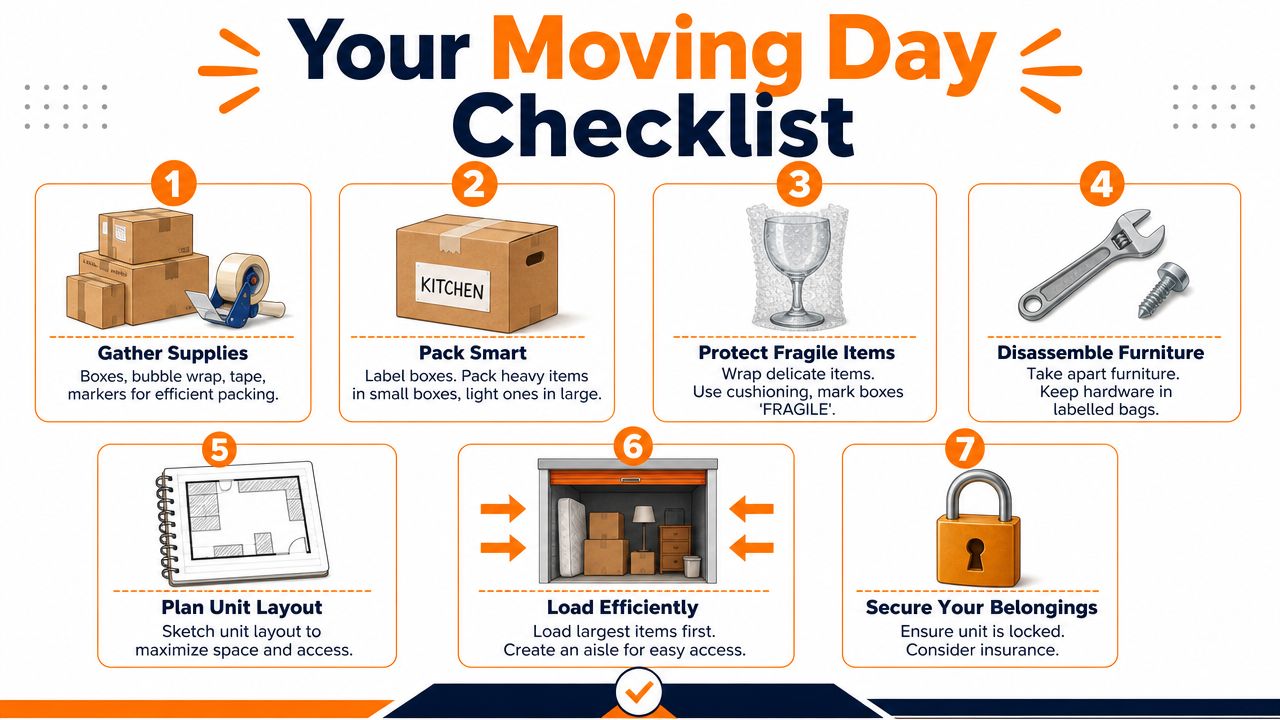
Here's a quick visual checklist for move-in day.
Start with what the unit needs to hold
The easiest way to size a unit is to think in room contents, not floor measurements. If you want a more detailed breakdown, a proper storage unit size guide can help you compare options before booking.
| Unit Size (sq ft) | Equivalent To | Ideal For Storing |
|---|---|---|
| Locker | A few cupboards or suitcases | Documents, boxes, sports gear, seasonal items |
| 25 | A large garden shed | Student belongings, boxes, a bike, small furniture |
| 50 | A small van load or one-bedroom flat contents | Sofa, mattress, white goods, stacked boxes |
| 75 | Around a larger flat or partial house contents | Furniture from several rooms, appliances, business stock |
| 100+ | A substantial house move or business overflow | Full household contents, palletised stock, bulky equipment |
That table is a guide, not a promise. Two homes with the same number of rooms can need very different storage depending on whether the contents are mostly flat-pack furniture and boxes, or large solid pieces, tools, and awkward shapes.
Pick features that match the risk
Security features sound similar across providers, but they aren't all equal in practice. CCTV matters. Controlled access matters. Gated entry matters. What matters most is how these layers work together. In many modern facilities, access control includes tools similar to remote gate entry solutions that help operators manage who enters and when, instead of relying on a basic open-and-close system.
Look for these points:
- Access control: Ask who can enter the site, how entry is logged, and whether access is restricted to customers.
- CCTV coverage: Ask whether cameras cover only the main gate or also internal routes and loading areas.
- Lighting and layout: A secure site should also feel practical to use in poor weather or late daylight hours.
- Unit position: Ground-floor or drive-up access is handy for heavy items, but convenience should still sit inside a secure setup.
A cheap unit with awkward access often costs you back in time, hassle, and repeat trips.
When climate protection matters
Not everything needs climate-protected storage. If you're storing metal shelving, boxed clothing for a short period, or durable household items, standard secure storage may be perfectly suitable. If you're storing wooden furniture, electronics, papers, artwork, archived records, or anything that can suffer from damp, climate protection is worth serious consideration.
Use this simple rule of thumb:
- Must-have: papers, books, electronics, soft furnishings, wood furniture
- Nice-to-have: clothing, household boxes, business stock in cardboard packaging
- Usually less critical: tools, sealed equipment cases, bulky durable items
The best choice isn't the unit with the longest feature list. It's the one that fits the contents, the access pattern, and the actual risk.
Understanding the True Cost of Storage in Long Eaton
The headline price is rarely the full price. That catches people out all the time. You see a low weekly rate, compare it with another low weekly rate, and assume you've done the maths. Then your actual quote arrives and includes VAT, insurance, and possibly a lock, deposit, or move-in charge. That's why total cost transparency matters.
A useful local point from Quick Self Storage's Long Eaton cost guide is that many providers advertise low rates without highlighting the full bill, even though final cost often includes VAT, insurance, and sometimes deposits or lock fees. That's exactly the right way to think about quotes. Not “what's the weekly rate?” but “what leaves my account each month, and what do I pay up front?”
What to ask for in writing
When comparing self storage in Long Eaton, ask every provider the same questions:
- Monthly rent: Is the quoted figure before or after VAT?
- Insurance: Is it mandatory, and can you use your own cover?
- Padlock: Included, optional, or required as a one-off purchase?
- Deposit or reservation fee: Payable up front, refundable, or non-refundable?
- Access terms: Do extended access arrangements affect the price?
If a provider answers these clearly, that's a good sign. If they stay vague and keep returning to the promotional rate, be cautious.
A worked way to compare quotes
Don't compare one advert with another. Compare one complete move-in cost with another complete move-in cost.
Build your own checklist:
- Start with the advertised rental figure.
- Add VAT if the figure excludes it.
- Add insurance if required.
- Add any one-off lock cost.
- Add any deposit or reservation payment.
- Ask whether there are penalties or notice requirements at move-out.
That approach works better than focusing on a “cheap” first impression. For a broad example of how hidden charges can reshape an apparent bargain, this Sydney storage costs guide is worth a look because the comparison method is sensible even though the market is different. For a UK-focused breakdown of what makes up a quote, this storage unit cost guide helps frame the questions you should ask before you commit.
Cost check: The cheapest advertised rate often isn't the cheapest real monthly cost.
A practical tip from the manager's side of the desk is this. If you're storing for a short spell, one-off fees weigh more heavily. If you're storing longer, access convenience and the suitability of the unit matter more because you'll live with those conditions month after month. Cheap and awkward can become expensive in time and frustration.
Who Uses Self Storage and Which Unit Is for You
A student leaving halls for the summer, a family trying to clear two rooms before builders arrive, and a plumber who needs tools ready for a 7am start do not need the same kind of storage. That is where people go wrong. The right unit depends on what you are storing, how often you need it, and how much hassle you can tolerate on access days.
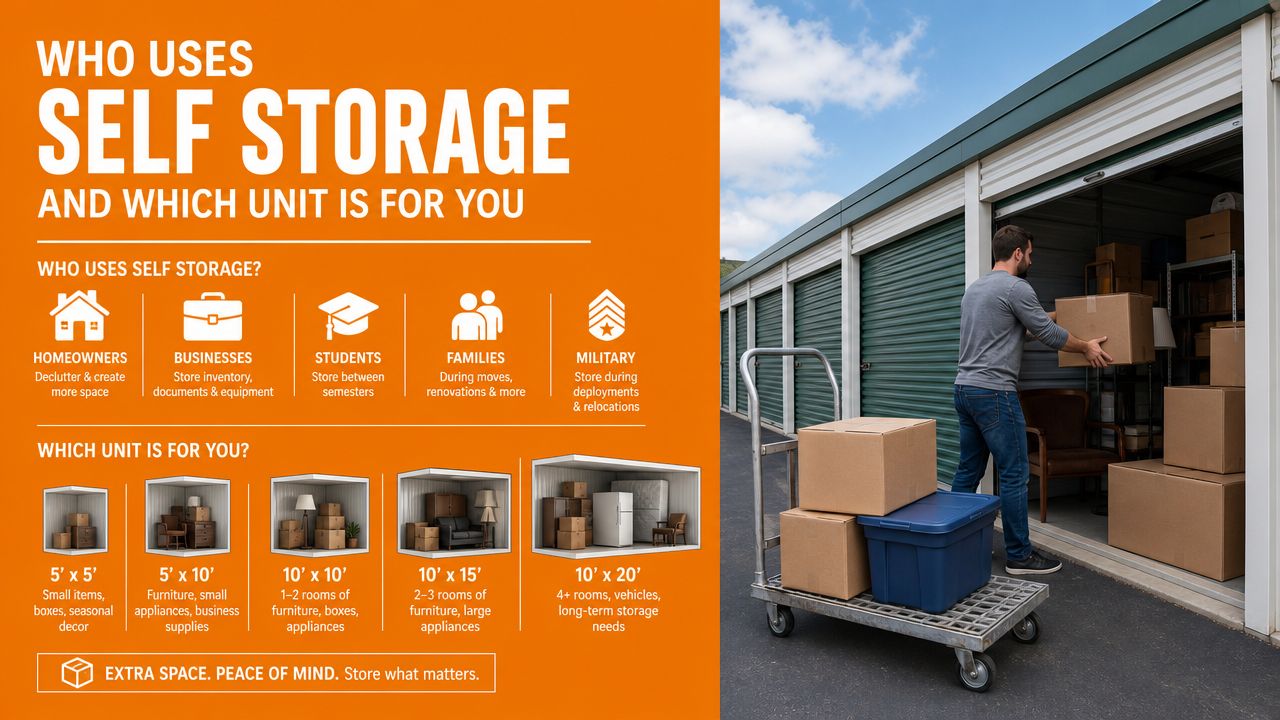
In Long Eaton, the usual storage customers fall into four clear groups. Homeowners, students, small businesses, and tradespeople. Each group tends to make different compromises on size, access, and protection, so it pays to choose by use case rather than by whatever unit sounds cheapest.
Homeowners and growing families
Families usually need storage during a change. A renovation, a house move, a new baby, a relative moving in, or a period of sorting after a bereavement. In those cases, a medium unit often works better than going as small as possible, because you need enough room to store bulky furniture properly and still get to the items at the back.
The aim is not to empty the whole house unless you have to. It is to remove the pieces that stop a room working. Sofas, dining tables, beds from spare rooms, boxes of toys, seasonal items, and baby equipment are common candidates.
A tight fit can look cheaper on paper. In practice, it often means damaged corners, crushed boxes, and a miserable hour every time you need one item from the back.
Students between terms
Students usually want short stays, simple pricing, and a unit that is easy to share if two people are splitting the cost. A small unit is often enough for bedding, kitchen gear, books, clothes, and a few lightweight furniture items. If you are storing with a flatmate, moving up one size can be better value than trying to cram everything into the smallest option.
The main cost question for students is replacement value. There is no point paying month after month to store cheap chairs, half-used food, or damaged bits you would not take to your next place anyway.
Pack with collection day in mind. Flat-packed furniture, labelled boxes, and stackable bags save time. If you are moving out of a student house as well as storing, these practical packing tips for moving house will help you avoid wasted space and last-minute mess.
Businesses that have outgrown the spare room
Small businesses often reach the same point. Stock is filling the hallway, archive boxes are under desks, and spare equipment is living in the garage. Storage gives you room to run the business without turning your home or office into a storeroom.
The right unit depends on what drives your day-to-day work. Retail stock needs clean, organised shelving space. Archived records need dry, secure storage and sensible retrieval. Event kit and promotional materials need room for awkward shapes. If you are carrying mixed stock, leave an aisle so staff can get to what they need without unpacking the whole unit.
Orange Box Self Storage is one local option offering personal, business, container, and student storage in Long Eaton. The useful point for business owners is flexibility. You want space that fits your stock level now, with the option to change size later if the business grows or your busy season passes.
Tradespeople who need access and security
Tradespeople have a different priority list, caring less about presentation and more about access, security, and shelter from weather. Tools, materials, fittings, and job-specific equipment should be quick to load, quick to lock, and easy to collect before a job.
For this group, convenience can matter as much as floor area. A slightly smaller unit with straightforward access may save more time than a larger unit that turns every pickup into a chore. On the other hand, if you are storing expensive power tools, electrical items, or materials that do not like damp, better protection is worth paying for.
A good trade unit supports the working day. You should be able to reverse the van up, get in, get out, and move on.
If you are unsure, start by listing what you need to store, how often you will visit, and whether speed or storage volume matters more. That usually makes the right choice much clearer than picking a unit by square footage alone.
Packing and Moving In Like a Pro
Packing badly makes storage expensive. Not because the rent changes, but because damaged items, wasted space, and awkward access create problems you could have avoided in one afternoon of preparation.
This checklist helps keep move-in day efficient.
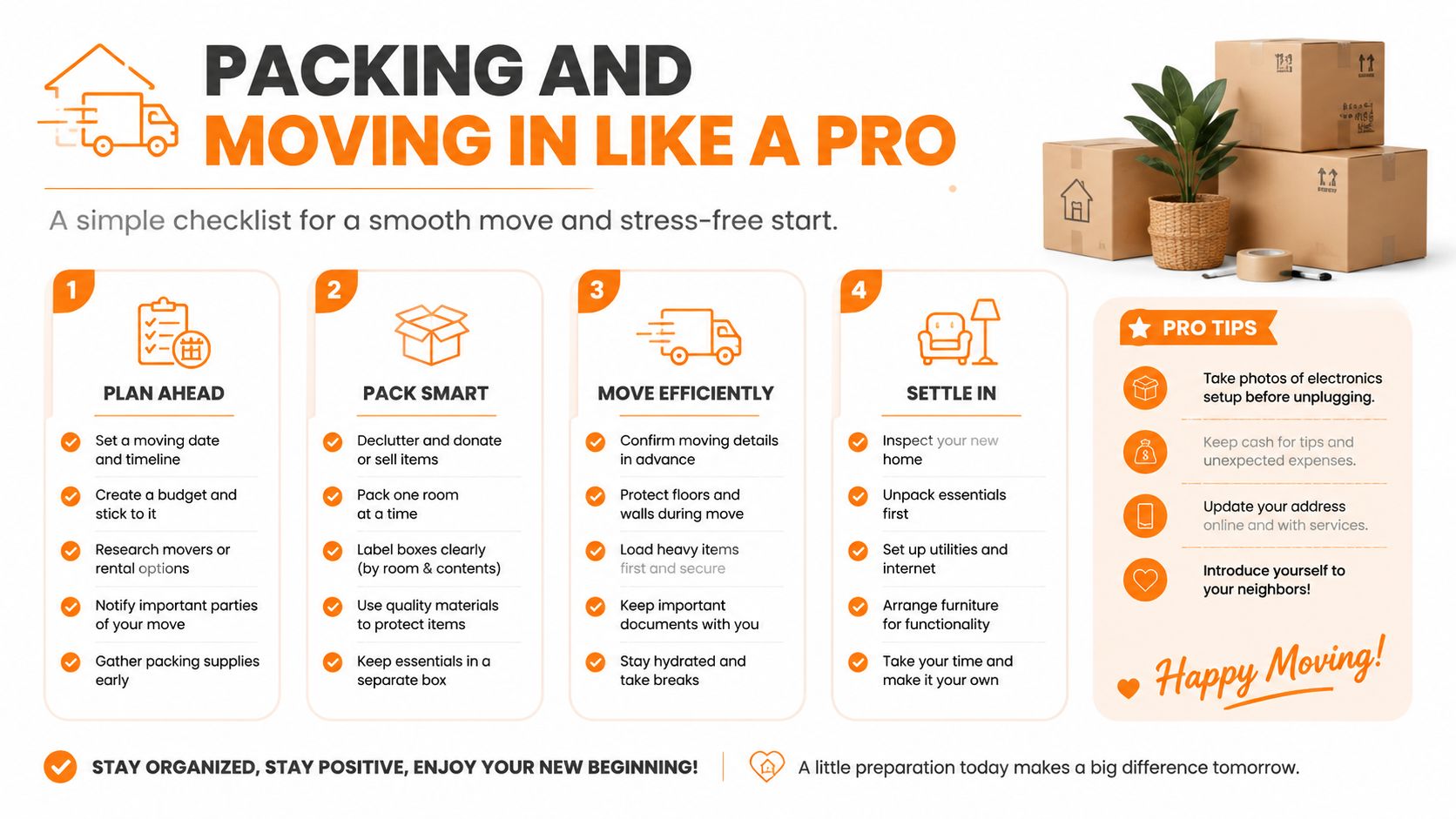
Pack for stacking and access
Use sturdy boxes of similar sizes where possible. Uniform boxes stack better, waste less height, and are less likely to collapse under uneven loads. Label every box on more than one side, not just the top, so you can identify it once everything is stacked.
A few habits make a big difference:
- Photograph contents: Take quick photos before sealing boxes, especially mixed ones.
- Keep essentials separate: Put chargers, documents, tools, and anything you may need soon in clearly marked boxes near the front.
- Bag hardware: If you dismantle beds, tables, or shelving, tape labelled fixings bags to the item or keep them together in one small container.
Protect items properly
Furniture should be clean and dry before it goes into storage. Sofas and mattresses need breathable covers, not airtight wrapping that traps moisture. Fragile items should be cushioned inside the box so they don't move about, not just wrapped on the outside.
For household and moving preparation, these packing tips for moving house are a useful reference if you want a fuller checklist before move-in day.
Load the unit with a plan
Put heavy, strong items at the back and bottom. Keep lighter and more fragile boxes higher up. Leave a narrow access lane if there's any chance you'll need items before the end of the rental.
Store by retrieval order, not by what was nearest the van door when you loaded it.
That single habit saves a lot of frustration later. People often load the unit to maximise density, then realise the one box they need is behind a wardrobe, under a table, beside ten sealed cartons.
If you're storing for more than a quick stopgap, make a simple phone note of the layout. “Christmas boxes left wall, files rear right, bike front corner” is often enough.
Why Orange Box Is the Smart Choice in Long Eaton
Long Eaton is a competitive storage area. One industry source says there are 67 self-storage stores within 20 miles of Long Eaton in a local comparison context, which means customers have options and providers need to stand out on trust, access, and security according to Neighbor's industry statistics roundup. In a market like that, the decision usually comes down to whether a facility makes day-to-day use straightforward and whether the quote feels clear from the start.
Orange Box makes sense for Long Eaton users because it covers the main practical needs discussed above. There are unit options for household storage, student storage, business stock, and larger container-style needs. The service area is also relevant. The site is positioned for Long Eaton and nearby communities linked into the wider Nottingham and Derby corridor, so it works for people who need storage that fits ordinary travel patterns rather than adding a detour.
What matters most in practice
- Range of unit types: Useful if your needs may change during the rental.
- Security layers: Important for tools, stock, documents, and family belongings.
- Flexible terms: Helpful when the end date depends on a house move, project, or term schedule.
- Clearer comparison: Easier to evaluate against the local market when you know what you're paying for.
If you want to get more from any unit you rent, these tips on how to maximize storage unit space are practical and easy to apply. The main point is simple. In a crowded local market, the smart choice is the provider that handles the basics well and makes the whole process easier, not just the one with the lowest first glance price.
Your Long Eaton Storage Questions Answered
How do I reserve a unit online?
Most modern facilities let you check availability, choose a unit size, and submit your details online. If you're unsure on size, ask before booking rather than guessing and correcting later.
What items can't usually go into storage?
Rules vary by provider, but hazardous, illegal, perishable, and flammable items are commonly restricted. If you're unsure about tools, paints, chemicals, or powered equipment, ask first.
Do I need insurance?
Often, some form of contents cover is required. The important question is whether you must buy it through the facility or whether your existing policy or another suitable policy can be used.
Which unit is usually best for short-term use?
Short-term users usually do best with a unit that matches the exact volume needed and keeps move-in simple. Convenience matters more when the rental is brief and every extra trip wastes time.
How do I get the best value?
Compare the all-in cost, not the headline rate. Then check access, security, and whether the unit type suits what you're storing.
If you're looking for straightforward, secure Orange Box Self Storage in the Long Eaton area, the simplest next step is to check availability online or speak to the team about what you need to store. A quick conversation can usually narrow down the right size, likely costs, and the most practical setup for your move, business, or short-term storage job.