


Your van is full before the day has even started. The combi drill is wedged against a box of fixings, a laser level is sliding around near the side door, and the spare cable reel you meant to keep dry has spent the night under a sheet in the back garden. That setup works for a week or two. It doesn't work when you're pricing jobs properly, carrying serious kit, and trying to get out to Ilkeston, Awsworth, Sandiacre or over towards Nottingham without wasting the first hour of the morning.
That's where container storage starts earning its keep. Used properly, it becomes your working base, not just somewhere to dump spare gear. You can keep stock out of the house, free space in the van for the day's actual job, and lock up tools without relying on a driveway, garage, or whatever corner of a site the client says is “probably fine”.
For trades, that matters because speed matters. Security matters more. You need somewhere you can get to without faffing about through corridors, lifts, or reception desks. You need to pull up, open the unit, load, and go.
Your Professional Base of Operations in Ilkeston
A lot of tradespeople in Ilkeston are still working from a halfway arrangement. Some tools stay in the van. Some are in the garage. Materials are stacked wherever there's room. Then a wet week hits, a job overruns, or you take on two sites at once and the whole thing turns messy fast.
A container unit fixes that by giving you a single controlled base. Your SDS drills, pipe benders, tile cutters, breakers, ladders, boxed stock, sealants, cable, fixings and PPE all live in one place. You know what's in there. You know what's in the van. You stop double-buying materials because you couldn't find the last lot.
Container storage also isn't some fringe option. In the UK market, the Self Storage Association UK reported 1,135 container sites out of 2,915 total self-storage sites in 2024, with an estimated £1.2 billion industry turnover, which shows this format is established and widely used rather than a niche add-on, as noted in this UK container storage market summary.
What this changes in the working day
When the unit is set up properly, your routine gets cleaner:
- Morning loading is faster because your stock is grouped by job type, not buried under household clutter.
- Your van carries what you need today instead of acting as permanent storage for everything you own.
- End-of-day lock-up is simpler when expensive kit goes back into a secure container instead of sitting on the drive overnight.
- Buying becomes more organised because you've got room for sensible quantities of consumables and backup parts.
Practical rule: If your van is your only storage system, you're usually one messy week away from lost time, damaged kit, or buying the same materials twice.
Tool control matters as much as square footage. If you want a sensible framework for keeping track of expensive equipment across vans, sites and storage, Value Tools Co's asset tracking guide is worth reading. It's useful once your tool count gets beyond what you can track from memory.
Choosing the Right Container Size for Your Trade
The wrong unit size costs you money in two ways. Too small, and you'll stack everything badly, damage gear, and waste time pulling half the contents out to reach one box. Too big, and you're paying for empty air.
For most trade use, it helps to choose by how you work, not by abstract measurements.
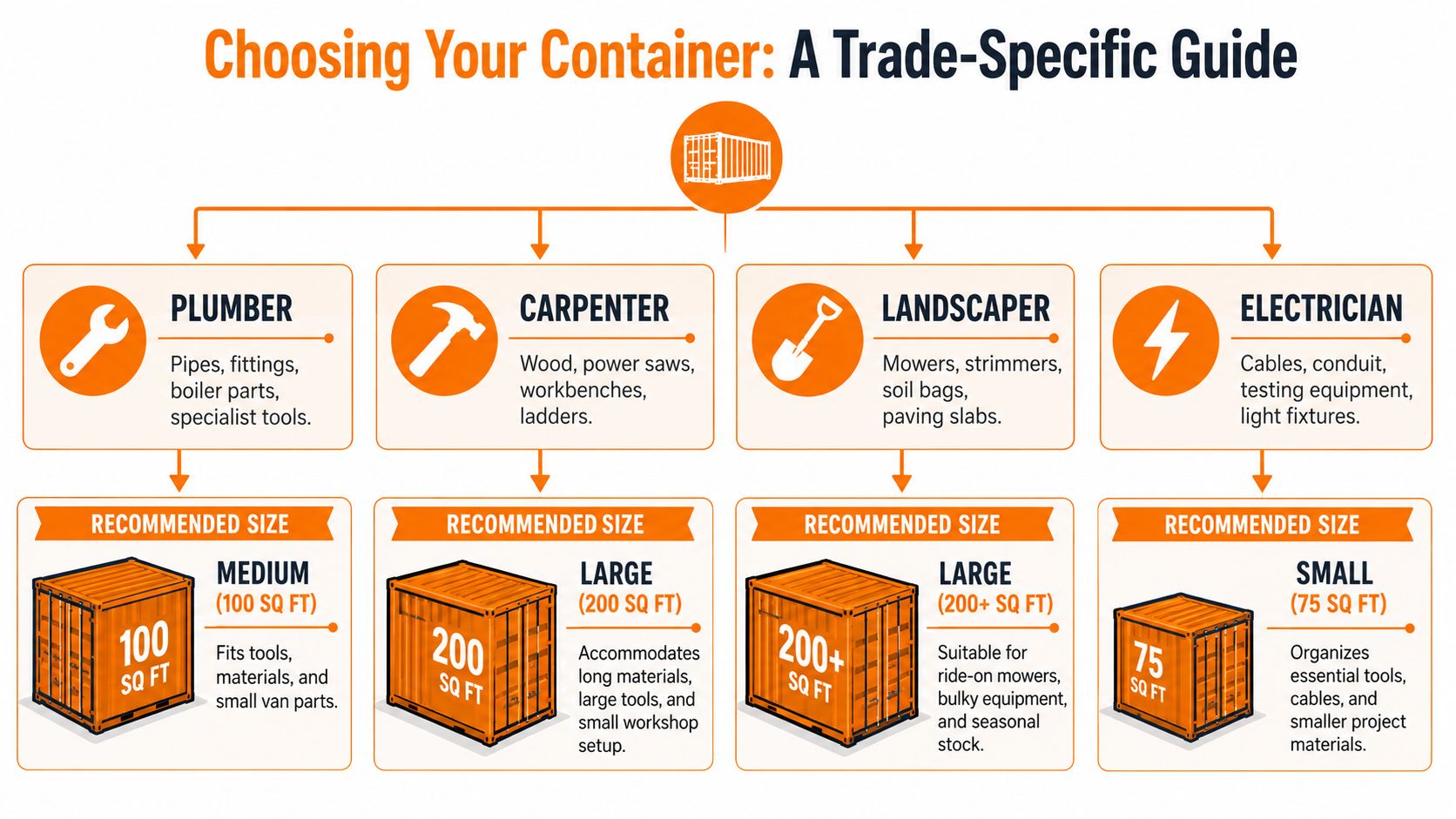
Construction-focused guidance says a 20-foot container is the standard recommendation for most residential and light construction projects, holding about 1,150 cubic feet, while larger multi-trade jobs often suit a 40-foot unit or two 20-foot containers, according to this construction container sizing guide.
Small trade setups
If you're an electrician, decorator, flooring fitter, or doing smaller reactive maintenance work, you usually don't need a huge footprint. What you need is clean separation between tools, spares and stock.
A smaller unit works when your storage list looks like this:
- Hand tools and power tools in stackable boxes or metal chests
- Consumables such as screws, clips, tapes, glands, connectors, sealants or sanding stock
- Smaller job materials that turn over regularly
- A few awkward items like steps, vacs, or testing kit
This kind of setup is about access. If you can't reach your tester, drill case, or pipe fittings without shifting eight other things, the unit is too tight or badly laid out.
Medium to larger trade use
Builders, joiners, groundworkers, bathroom fitters and roofing contractors tend to outgrow small units quickly. Long materials, site boxes, breakers, saw stands, compact plant, spare van stock and bulk consumables eat space.
A 20-foot container is often the sensible benchmark because it gives room for both storage and movement. That matters more than people think. You need a walkway, not a jammed steel box where every visit becomes a reshuffle.
A practical layout usually includes:
| Trade type | What tends to fill the space | Best fit |
|---|---|---|
| Electrician | Cables, conduit, testers, fittings, light stock | Smaller unit if stock levels stay lean |
| Plumber | Pipe, fittings, boilers parts, press tools, tubs of consumables | Mid-sized unit with racking |
| Carpenter | Timber lengths, sheet materials, bench tools, saws, ladders | Larger unit or 20-foot container |
| Landscaper | Strimmers, mowers, fuel-safe approved accessories, hand tools, seasonal stock | Larger unit with wide access |
For a more visual way to judge space before you commit, Orange Box has a useful storage unit size guide that helps you compare typical unit sizes against what you need to store.
What works and what doesn't
What works is planning the unit like a small stores area. Put daily-use gear nearest the door. Keep boxed consumables on shelving. Stand long items to one side if the container allows it safely. Leave floor space for loading.
What doesn't work is treating the unit as a dead pile of overflow.
A good trade unit should let you load tomorrow's van in minutes, not force a Saturday morning clear-out every other week.
Security and Access Features Every Tradesperson Needs
You're not storing old furniture. You're storing the tools that keep your invoices moving. That changes the standard. A tradesperson should look for layered security and practical access, not just a padlock on a metal door.
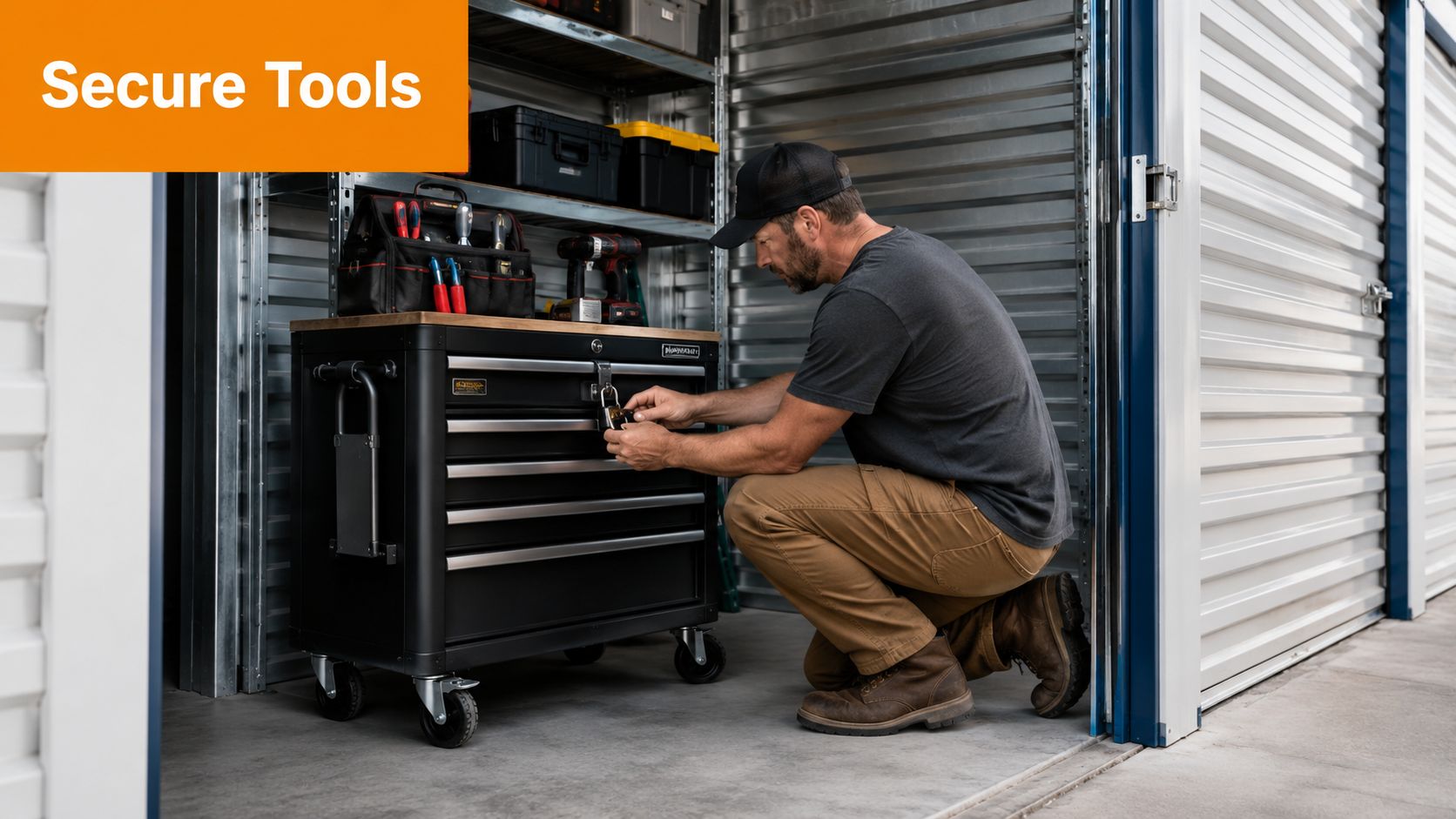
The security basics you shouldn't skip
One feature on its own isn't enough. Good sites stack protection in layers.
Look for these as a minimum:
- Perimeter protection with proper fencing and a controlled entry point
- Gate access control so not everyone can wander onto the site
- CCTV coverage across entry routes and container rows
- Strong individual locking points on each unit
- Good lighting so early starts and winter evenings don't leave you loading in the dark
The point is to make access controlled at every stage. First the site boundary. Then the gate. Then your own unit.
If a provider is vague about insurance terms, check the small print before you move in. This guide to insurance for contents in storage units is a useful place to start when you're working out what cover your tools and stock need.
Access is part of security
Tradespeople often focus on theft and forget the day-to-day problem of awkward access. If you can't get the van close to the door, you'll spend more time exposed while carrying kit across open ground. You'll also hate using the unit after a long day.
Drive-up access makes a real difference because you can:
- Pull up beside the unit.
- Open up with the van doors facing the container.
- Transfer heavy kit straight across.
- Lock and leave without dragging gear through shared internal areas.
That setup is safer for your tools and easier on your back.
Weather protection and site systems
A trade container also has to cope with British weather. Doors should seal properly. The unit should stay dry enough for boxed materials, power tools and stored equipment. If moisture control is poor, you'll see it quickly in rust marks, damp packaging and damaged stock.
Site systems matter too. Storage facilities rely on dependable connectivity for access controls, monitoring and security hardware. If you're interested in the kind of infrastructure behind those systems, this piece on robust IT for autonomous buildings gives a useful look at why reliable wireless coverage matters in secure managed environments.
Security isn't just about stopping break-ins. It's about being able to arrive early, load quickly, and leave without exposing expensive kit any longer than necessary.
Strategic Location Planning Around Ilkeston
The nearest container isn't always the right container. In Ilkeston, location works best when it matches your job pattern, your suppliers, and your routes out.
If most of your work is spread between Ilkeston, Long Eaton, Stapleford, Heanor, Eastwood and the Nottingham fringe, you want a storage point that cuts across those journeys instead of adding another detour. The right site should sit naturally between home, merchants, and your main work areas.
Think like a dispatcher, not just a renter
A useful trade location usually does three things well:
- It shortens the gap between storage and site
- It sits near your regular merchants or wholesalers
- It avoids awkward town-centre loading and traffic delays
If you're regularly on routes that feed into the A610 or heading towards the M1, a poorly placed unit can cost you time every single day. A well-placed one becomes a staging point. You collect stock, stop at the merchant, then head straight to site.
What to map before you choose
Before signing anything, mark these on your phone map:
| Consideration | Why it matters |
|---|---|
| Main job clusters | Cuts repeated cross-town driving |
| Supplier stops | Lets you combine collection and loading |
| Early and late travel routes | Reduces hassle at the start and end of the day |
| Van-friendly approach roads | Helps if you carry bulky kit or tow equipment |
A lot of tradespeople choose storage close to home out of habit. That can work. But if your jobs are usually in the opposite direction, you're building dead mileage into every morning.
Put the unit where it supports your working loop. Home, supplier, storage, site. If that loop is clean, the storage pays for itself in saved hassle alone.
Decoding Container Rental Prices and Contracts
The monthly figure only tells you part of the story. For container storage for tradespeople in Ilkeston, the contract matters just as much as the rate. A cheap unit with the wrong terms can cost more than a slightly higher-priced unit that fits your workflow.
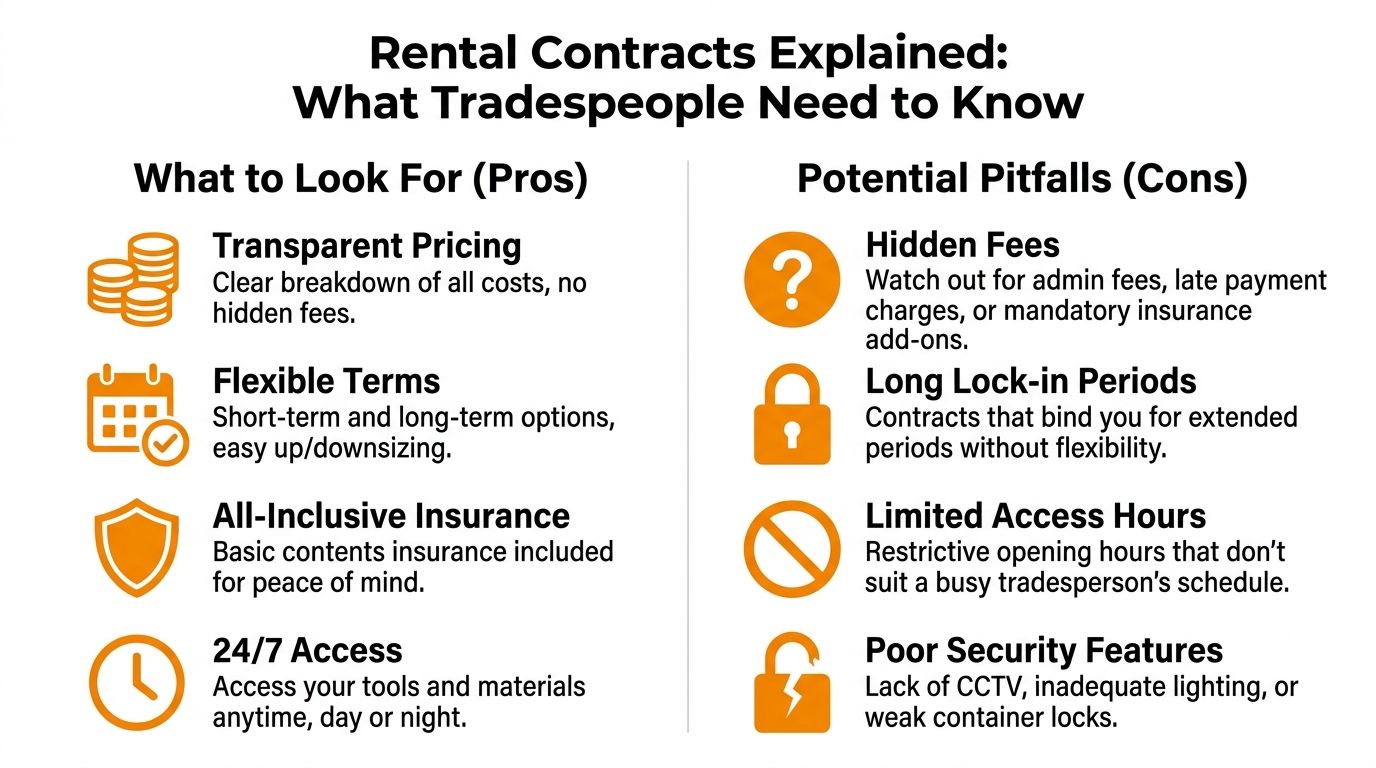
According to a 2025 UK Construction Industry Survey by the Federation of Master Builders, 42% of small contractors in the East Midlands undertake short-duration projects of under four months, which makes long minimum rental periods financially awkward for a big slice of the market, as referenced in this East Midlands short-term construction survey summary.
Rolling rental versus long tie-in
If your work changes month to month, flexibility matters more than headline price. A rolling agreement suits:
- Short project bursts where you only need storage for the life of the job
- Seasonal trades where stock levels rise and fall
- Growing firms that may need to upsize or change layout quickly
A longer agreement can still make sense if your business has a stable base stock and the unit will be in constant use. The problem starts when the contract outlasts the work.
Here's the comparison that matters most:
| Contract type | Where it works well | Where it causes trouble |
|---|---|---|
| Monthly rolling | Project-based work, uncertain timelines, changing stock levels | May not be the lowest headline rate |
| Longer fixed term | Stable ongoing storage need | Poor fit if jobs finish early or workload shifts |
Questions worth asking before you sign
Ask these directly. If the answer is woolly, keep looking.
- What exactly is included in the monthly price
- Is insurance separate or bundled
- Are there access restrictions outside standard hours
- Can you switch unit size if your workload changes
- What notice period applies when you leave
For trades installing containers on private yards or temporary job locations, the groundwork can affect the overall storage cost as much as the unit itself. If you're weighing that route, Firm Foundations for container bases gives a practical overview of base considerations.
If you want a local benchmark for what influences pricing, Orange Box also has a breakdown of the cost of storage in Ilkeston, including the sort of extras worth checking before you commit.
What works best for most independent trades
For many sole traders and small contractors, the sweet spot is simple. Take the unit that gives you the access you need, the security you need, and enough contract flexibility that you're not paying for dead months.
What doesn't work is chasing the lowest sticker price while ignoring notice periods, add-ons, or awkward access rules.
Why Orange Box is the Tradesperson's Choice in Ilkeston
Tradespeople don't need a fancy storage pitch. You need a site that fits the way real jobs run. That means enough space for tools and materials, direct access with a van, security that makes sense, and terms that don't trap you when a project changes.
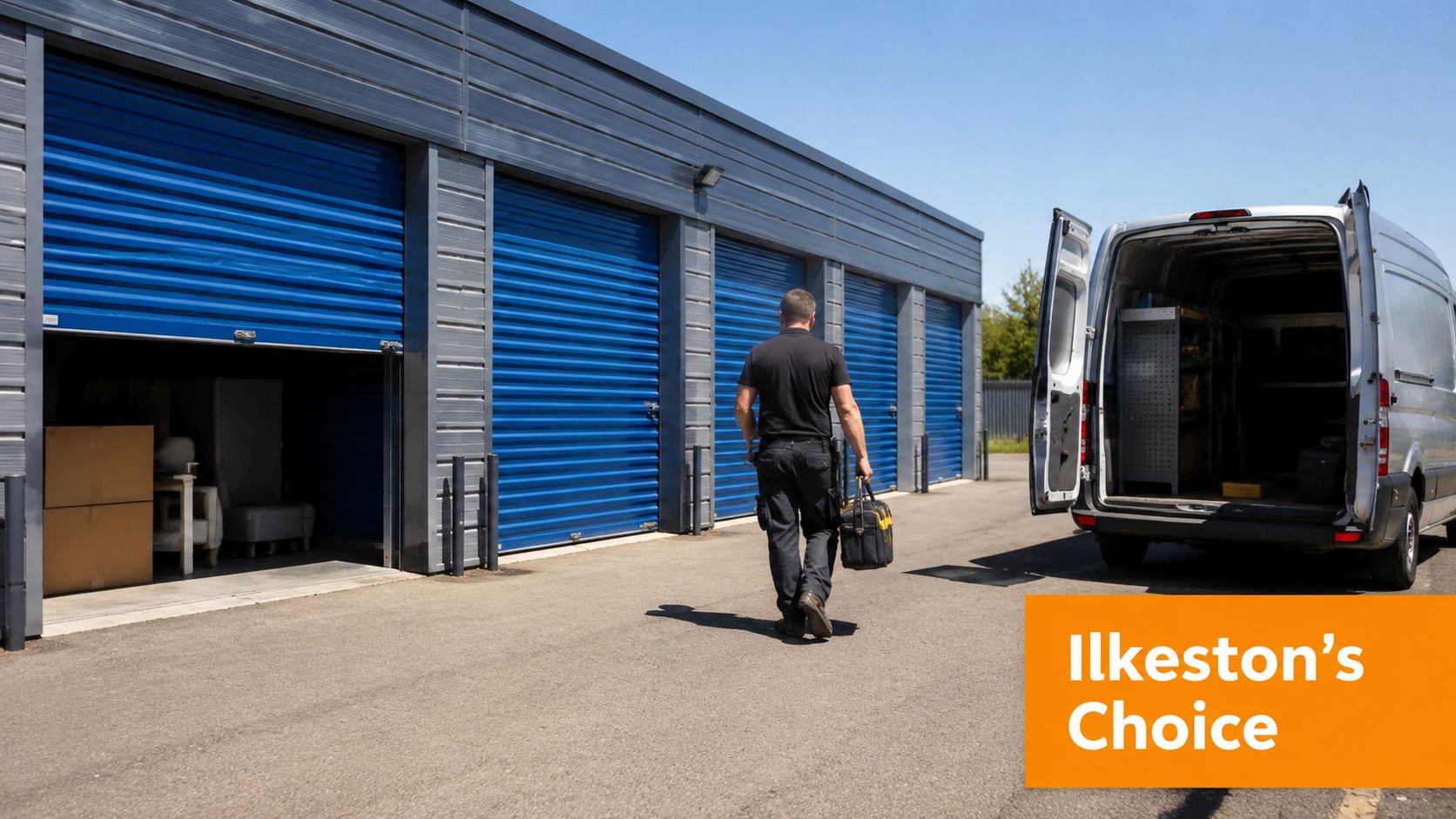
Orange Box Self Storage is one local option built around that practical model. The company offers container storage alongside other storage types, with secure sites, access controls, online booking, and unit sizes aimed at both domestic and business use. For a tradesperson, the useful part isn't the branding. It's that the setup is aligned with how vans, tools, and stock need to move.
Why that matters in daily use
A proper trade-friendly storage setup helps when:
- You want the van loaded for the next day, not permanently packed with every tool you own
- You need somewhere dry for materials that shouldn't be left on site
- You're working across Derbyshire and Nottinghamshire and need one reliable hub
- You've outgrown the garage but don't need a full workshop lease
The value is operational. You separate long-term stock from daily kit. You keep better control of expensive items. You reduce the mess that builds up when your home, van and job sites are all being used as makeshift stores.
The trade-offs to judge honestly
No storage provider solves bad stock control, poor labelling, or a habit of chucking everything into one unit. You still need to organise the space properly. That means shelving where allowed, boxed consumables, tool inventory, and a clear loading zone near the doors.
What works well is using the container as a staging area. Keep slower-moving stock deeper in the unit. Keep daily-use gear near the front. Group materials by trade or by active project. Once you do that, the unit stops being storage in the passive sense and starts acting like a small depot.
The best storage setup is the one that saves you ten awkward minutes every morning and keeps your tools off the risk list every night.
If you're based locally and need container storage for tradespeople in Ilkeston, the sensible next move is to compare the access model, security details, location and contract terms against how your week actually runs. If those line up, the unit will earn its keep quickly.
Frequently Asked Questions from Ilkeston Tradespeople
Can I install racking or shelving inside the container
Usually, you'll need to ask first. Some sites allow certain non-damaging storage setups, while others restrict anything fixed to the walls or floor. The right approach is simple. Check before you move in, then build your layout around stackable shelving, tool chests and labelled bins if permanent fixing isn't allowed.
What can't I store in a trade container
Rules vary by provider, but hazardous, flammable, explosive, illegal or perishable items are commonly restricted. That usually means fuels, gas bottles, certain chemicals, and anything that creates a fire or contamination risk. Always get the prohibited-items list in writing.
Is there electricity inside the unit
Don't assume there is. Many container units are for storage, not workshop use. If you need power for charging batteries, running equipment or lighting while loading, ask directly whether electricity is available and what use is permitted.
How much insurance do I need for tools
Cover should match the replacement value of what you're storing, not a rough guess. Go through your main toolkits, specialist equipment, and any stored materials with resale value. If your stock changes often, review the value regularly so you're not underinsured after a busy spell.
Can I use the unit for short-term project storage
That depends on the contract. Some providers are better suited to project-based use than others. If your jobs run for a few weeks or a few months at a time, ask about rolling terms, notice periods, and whether you can change unit size if the project grows.
Is container storage better than leaving tools in the van
In most cases, yes. A dedicated unit gives you more space, better separation of tools and stock, and a more secure overnight setup than relying on the van as your only base. It also means you can keep the van set up for the next job instead of carrying everything all the time.
If you need a secure, practical base for tools, stock and materials, Orange Box Self Storage is worth a look. Compare the unit sizes, access arrangements and contract options against your normal working week, then choose the setup that keeps your gear protected and your mornings moving.