
You’re probably searching self storage near me because something at home or work has stopped fitting your life.
Maybe you’re downsizing from a family house in Derby and the spare bed, bikes, and boxes of keepsakes suddenly have nowhere to go. Maybe you’re a student in Nottingham facing the end of term and don’t want to drag everything back home for a few weeks. Or maybe your business stock has taken over the hallway, the office, or the garage.
That’s usually how storage starts. Not as a grand plan, but as a practical fix for a space problem that’s become impossible to ignore.
In the East Midlands, that problem tends to look very local. Flats with limited storage. Terraced homes without loft space. Shared student houses with no spare room. Trades vans packed too tightly to work efficiently. When space shrinks, a good storage unit gives you breathing room without forcing rushed decisions about what to keep, sell, or move.
Is Your Space Shrinking? Why Self Storage Is the Answer
A lot of people wait too long before getting storage. They try stacking boxes in the dining room, squeezing furniture into a relative’s garage, or leaving business stock in places that were never meant for it.
That usually creates two new problems. First, your everyday space becomes harder to use. Second, your belongings become harder to protect.

When everyday life starts overflowing
A growing family in Nottingham might need the nursery set up before they’re ready to part with older furniture. A couple in Long Eaton might be renovating and need somewhere clean and dry for sofas, books, and kitchen equipment. A student in Beeston might only need a short-term unit between tenancies.
Self storage works because it gives you time, space, and flexibility. You don’t have to make permanent decisions in a temporary situation.
Practical rule: If clutter is stopping you from using a room properly, you’re no longer dealing with “a few extra things”. You’re dealing with a storage problem.
Why people choose storage instead of forcing more into the house
People often assume storage is only for moving house. In reality, it’s just as useful for everyday transitions:
- Home changes: moving, decorating, downsizing, probate clear-outs
- Student life: summer holidays, placements, study abroad, switching houses
- Work needs: stock overflow, archived files, tools, equipment, promotional materials
- Seasonal overflow: bikes, skis, garden furniture, Christmas decorations
The big benefit is simple. Your belongings stay accessible, but they stop taking over your living space.
That’s why local searches for self storage near me usually happen at stressful moments. People don’t want theory. They want a nearby solution that feels manageable, secure, and easy to book.
Understanding Modern Self Storage
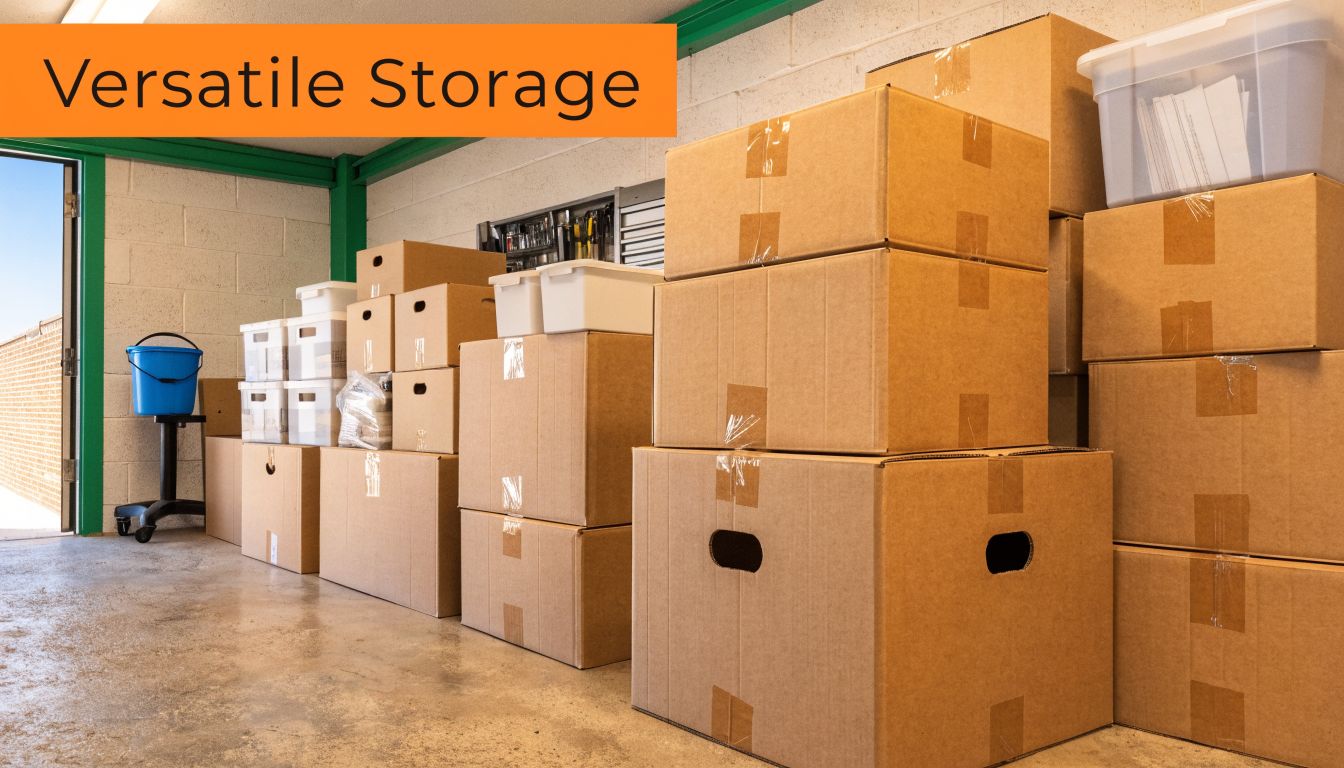
Think of self storage as a spare room you rent outside your home. You choose the size, move your belongings in, lock the unit, and keep access to your things for as long as you need the space.
That sounds simple because it is.
What self storage actually means
A modern self storage unit is private space inside a purpose-built facility. You rent only the amount of room you need, whether that’s a compact locker for documents and seasonal items or a much larger unit for the contents of a flat, a house, or a business.
The main difference between self storage and old-style storage is control. With self storage, you pack your own unit, organise it your way, and can usually access your items during the facility’s opening or access hours.
Why it’s become so common
Self storage isn’t a niche service any more. The UK market includes approximately 4,546 facilities as of 2025, with occupancy rates between 83 and 87%, which points to a well-established market with steady demand according to Stortrack’s 2025 self-storage industry statistics.
That matters for first-time users because it shows storage is no longer an unusual option. It’s a normal part of how households, students, and businesses handle limited space.
It’s often easier to rent space for your belongings than to change home, sign for bigger premises, or live around boxes for months.
How flexible contracts help
One reason people get confused is the idea of commitment. They assume storage means a long lease. In practice, many facilities offer flexible terms, which suits real life much better.
A few common examples:
- Short-term storage works well for moving, renovations, and university breaks.
- Medium-term storage helps during house sales, temporary work moves, or family transitions.
- Long-term storage suits archived business records, excess stock, and belongings you want to keep but don’t need at home.
The best way to think about it is this. You’re not buying extra property. You’re renting breathing space.
Choosing the Right Storage Unit Size and Type
The hardest part for most first-time customers isn’t whether they need storage. It’s choosing a unit that’s neither too small nor unnecessarily large.
A useful starting point is to think in rooms, not square footage. Ask yourself whether you’re storing a few boxes, the contents of one bedroom, or the contents of an entire home.
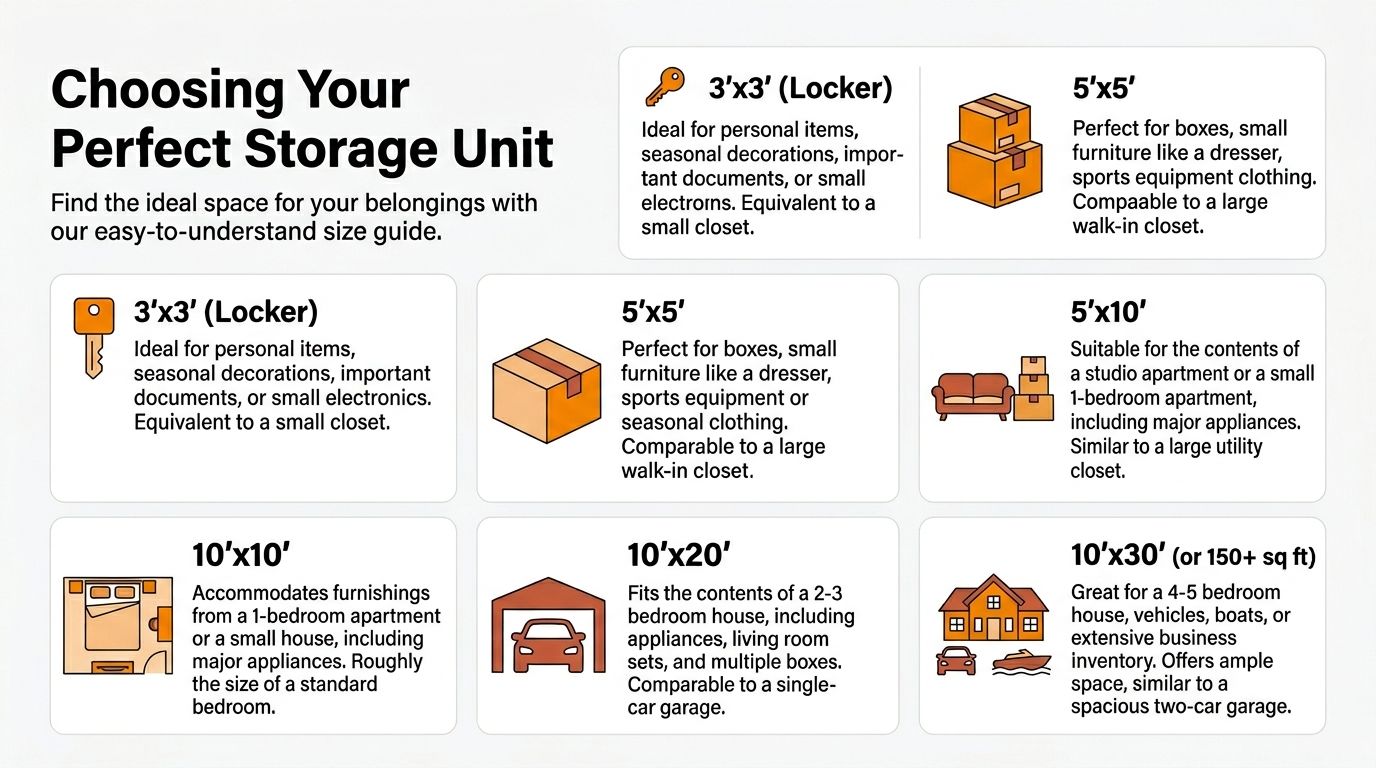
A simple way to picture unit sizes
Here’s a practical guide you can use before booking.
| Orange Box Self Storage Unit Size Guide | ||
|---|---|---|
| Unit Size (sq ft) | Typical Use Case | Analogy |
| Small locker | Documents, a few boxes, tech items, seasonal storage | Like a hallway cupboard |
| Around 25 sq ft | Student belongings, sports kit, boxed clothes, small furniture | Like a large walk-in wardrobe |
| Around 50 sq ft | Studio flat contents, white goods, bikes, stacked boxes | Like a generous shed or utility area |
| Around 100 sq ft | One-bedroom flat or small house contents | Like a standard bedroom |
| 150+ sq ft | Family home contents, bulky furniture, business stock | Like a garage-sized room |
If you want a more detailed breakdown, a dedicated self storage unit size guide can help you match common household and business items to the right space.
Standard units or climate-protected units
Size is only half the decision. The other half is the type of environment your items need.
A standard unit suits many everyday belongings, especially items that aren’t sensitive to temperature or moisture changes. But if you’re storing paper archives, electronics, textiles, wood furniture, instruments, or anything you’d worry about leaving in a damp garage, climate protection matters.
According to this climate-controlled storage reference, climate-controlled units maintain temperatures between 13-21°C and humidity at 40-55%. The same source notes that humidity above 60% can cause 25-30% faster paper embrittlement and mould growth, and that climate-protected storage can reduce replacement costs for sensitive goods by up to 35%.
When climate protection is worth it
Choose climate-protected storage if you’re keeping:
- Paper records: business files, certificates, coursework, legal documents
- Electronics: monitors, printers, speakers, gaming equipment
- Furniture with natural materials: wood, leather, upholstered pieces
- Textiles: clothing, curtains, bedding, samples, stock
- Sentimental items: photos, books, artwork, memory boxes
If you’d hesitate to leave it in a British loft, garage, or shed through winter, it probably belongs in a climate-protected unit.
A common sizing mistake
People usually make one of two errors. They either book too small and create a stressful game of box Tetris, or they book too large because they don’t stack vertically or dismantle furniture.
Disassemble bed frames, use uniform boxes, and leave a narrow access path if you’ll need regular visits. That often makes a smaller unit work far better than expected.
Essential Features of a Secure Storage Facility
Price matters, but security matters more. A cheap unit stops being cheap the moment access is poor, the site feels exposed, or you’re constantly worrying about what you left behind.
Good storage should feel routine, not risky.
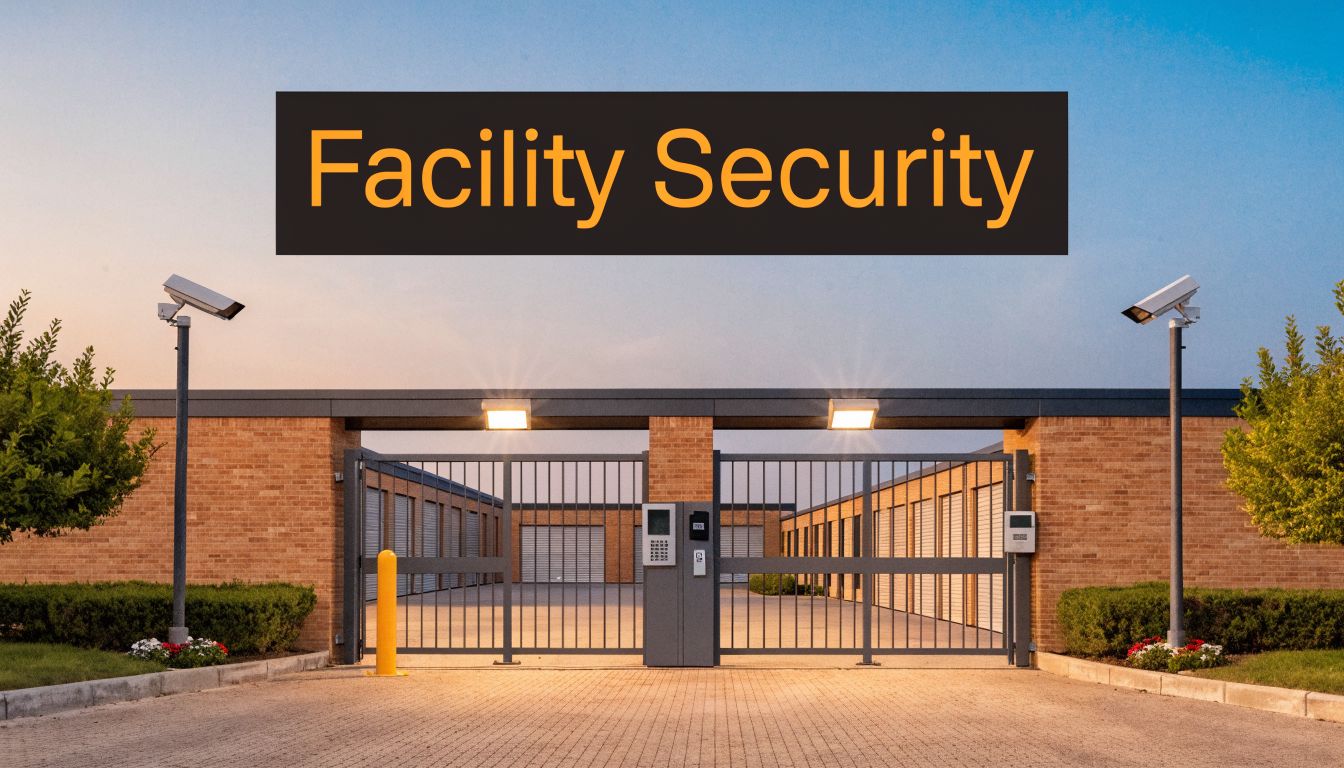
What strong storage security looks like
The basics should be visible before you even rent a unit:
- 24/7 CCTV: cameras covering entrances, exits, corridors, and loading areas
- Controlled entry: PIN access, gated entry, or managed access points
- Good lighting: inside corridors and around the perimeter
- Solid unit construction: secure doors, dependable locks, clean shared areas
- Staff support: someone available to answer practical questions if something goes wrong
These aren’t luxury extras. They’re part of what makes a facility trustworthy.
Why access control matters
A lot of customers notice CCTV but overlook entry systems. Yet the way a site controls who comes in often makes the biggest difference day to day.
If you want a plain-English overview of how these systems work, this guide to an access control system gives a useful explanation of why managed entry points are a core part of modern site security.
The numbers behind monitored sites
Security features don’t just look reassuring. They reduce risk. According to this security benchmark reference, 24/7 CCTV and PIN-gate systems reduce unauthorised entries by 72%. The same source says monitored facilities see 0.8 theft incidents per 1,000 units annually, compared with 4.2 in non-monitored sites.
That’s a big practical difference if you’re storing tools, stock, archived records, or anything expensive to replace.
A secure facility should make casual access difficult, traceable, and obvious.
Access isn’t just about convenience
There’s another point people miss. Security and accessibility have to work together.
A facility can be secure and still be awkward if loading areas are cramped, corridors are dim, or you can’t get to your unit when you need your things. That matters for business users collecting stock, parents rotating household items, and tradespeople picking up equipment before an early start.
When comparing local options, look beyond the phrase self storage near me and ask better questions:
- How is entry managed?
- Are loading and unloading areas practical?
- Can you reach your unit without hassle?
- Does the site feel well maintained?
A clean, organised facility usually tells you a lot about how seriously the operator takes the rest of the service.
Specialised Storage for Students Business and Trades
Not every storage customer needs the same setup. A student storing bedding and kitchenware for the summer has very different priorities from a contractor storing equipment or a shop owner managing stock overflow.
That’s why the most useful approach is to match the storage type to the person using it.
Student storage in Nottingham and Derby
A typical student problem is timing. Tenancy ends in June. The next place isn’t ready. Home may be in another city or another country. Taking everything with you for a short gap is expensive, inconvenient, and tiring.
For students, storage works best when it’s simple:
- Short-term flexibility: useful between term dates or while travelling
- Manageable unit size: enough for clothes, bedding, books, kitchen items, and a desk chair
- Easy loading: especially important if you’re moving without a van full of helpers
Students usually do best with a clearly labelled, box-first approach. Pack by category, keep documents and chargers separate, and place essentials near the front if you’ll need to collect them later.
Business storage for stock and records
A growing business often reaches the same point. Stock takes over the office, fulfilment materials pile up, and archived paperwork ends up in random cupboards.
Business storage helps in three ways.
First, it separates operations from clutter. Your workspace becomes easier to use. Second, it creates room to scale without rushing into larger commercial premises. Third, it gives structure to stock management if you shelve properly and label by product line or month.
A practical business setup often includes:
- Shelving inside the unit for faster picking
- Aisles between stock groups so you can retrieve items quickly
- Separate zones for packaging, archive boxes, and active inventory
Businesses usually outgrow space gradually. Storage gives them a buffer before property decisions become urgent.
Trades storage and container storage
Tradespeople have different needs again. They need quick access, ground-level practicality, and enough protection for tools, materials, and equipment that can’t be left in a van overnight.
Container storage often suits electricians, plumbers, builders, outdoor contractors, and decorators because loading is straightforward and bulky items are easier to move in and out. It can also help keep vehicles less crowded, which makes each working day more efficient.
For this type of use, the most important questions are practical ones:
- Can you load heavy items without carrying them through long corridors?
- Is there enough room for awkward equipment?
- Does the site feel suitable for regular working visits?
Matching the unit to the job
A student usually values short-term convenience. A retailer values organisation. A contractor values speed and reliable access.
Those are all valid uses for storage, but they point to different unit choices. The best fit comes from your routine, not just from the square footage.
Understanding Storage Prices Insurance and Booking
Storage prices can feel confusing at first because the monthly rent isn’t always the full picture. The actual cost depends on the unit size, the storage type, the length of stay, and whether you need cover for the contents inside.
That’s where many first-time renters get caught out.
What affects the price
Rates vary by location and unit type, but market context helps. The UK self-storage sector entered 2026 with improving conditions after the first sustained rental rate increases in late 2025. By October 2025, advertised rates were up 0.7% year over year, and new-customer rates averaged £136 per month for climate-controlled units and £120 per month for non-climate-controlled 10×10 units, according to Steelblue’s 2025 recap and 2026 outlook.
Those figures are useful as broad market context. Your actual quote will depend on the space and specification you need locally.
The insurance point many renters miss
Many renters assume the facility’s own cover protects everything stored inside their unit. Often, it doesn’t work that way. You may need contents insurance specifically for your stored goods, especially if your home policy excludes off-site storage.
This is one of the most important details to check before booking. A useful starting point is this guide on how to read an insurance policy, which can help you spot exclusions, limits, and wording that affects off-site cover.
For storage-specific cover, this page on contents insurance for self storage is helpful for understanding what to look for in a policy.
Admin fees and total budgeting
Another thing to check is whether there are any setup or admin charges. Recent FCA-related disclosure requirements have pushed clearer pricing presentation, and that’s good news for customers because it makes comparing facilities easier. When you ask for a quote, ask for the full move-in cost, not just the monthly headline rate.
A simple checklist helps:
- Monthly rent
- Insurance requirement
- Any admin or setup fee
- Lock cost if not included
- Notice period for leaving
The best quote isn’t always the cheapest headline number. It’s the one you can understand clearly before you commit.
Booking without stress
Online booking is usually straightforward. You choose a location, select a size, review the terms, add any required insurance details, and confirm your move-in date.
Before you click reserve, make sure you know three things. What you’re storing, roughly how long you’ll need the unit, and whether you’ll want regular access or mainly long-term holding space. Once those are clear, booking becomes much easier.
Your Local Storage Partner Across the East Midlands
A good storage decision comes down to a few basics. Choose a unit that fits your belongings properly. Pick the right environment for what you’re storing. Don’t compromise on security. Read the full cost carefully, including insurance and fees.
That matters even more when you’re choosing from local search results for self storage near me across Nottingham, Derby, Beeston, Long Eaton, and the wider East Midlands. The closest option isn’t always the best one. The best one is the facility that fits how you’ll use the space.
If you’re comparing current and upcoming local options, it’s worth keeping an eye on facilities expanding across the region, including storage in Grantham from Orange Box Self Storage. Growth in places like Ilkeston, Grantham, and Nottingham city centre is a sign that demand for flexible local storage keeps rising.
A little research at the start saves a lot of hassle later. The right unit should solve a space problem, not create a new one.
Frequently Asked Questions About Self Storage
What items are usually prohibited in a storage unit
Most facilities won’t allow hazardous, illegal, flammable, perishable, or living items. That often includes fuel, fireworks, paint that isn’t permitted under site rules, gas cylinders, and anything that could leak, rot, or create a safety issue.
Always check the facility’s prohibited items list before move-in day. It saves wasted trips and awkward repacking in the car park.
Do I need to provide my own lock
Some facilities expect you to bring your own padlock. Others sell suitable locks on site or include one as part of the move-in process.
If you’re buying your own, choose a lock that fits the unit door properly and feels durable enough for long-term use. Don’t assume any household padlock will do.
How should I pack the unit
Use strong boxes, label every side, and place heavier items at the bottom. Keep frequently needed items near the front and avoid stacking fragile things under furniture.
If you’re storing for more than a short period, leave a narrow walkway so you can reach the back without unpacking everything.
Can I access my belongings whenever I want
Access depends on the facility’s stated hours and setup. Some offer extended access, while others work within fixed times.
Check this before booking if you’ll need regular visits for business stock, tools, or seasonal swaps.
What happens when I want to move out
Most move-outs are simple. You give the required notice, clear the unit, remove your lock, and leave the space empty and clean.
It’s smart to confirm the notice terms at the start, not at the end. That way, there are no surprises when your plans change.
If you’re ready to find practical, secure storage in Nottingham, Derby, Long Eaton, Beeston, or nearby East Midlands locations, explore Orange Box Self Storage for flexible units, clear options, and an easy online booking process.