


Your Stress-Free UK Move Starts Here
You might be dealing with a half-packed spare room, a tenancy end date that will not move, a delayed completion, or a student checkout that lands in the same week as exams. The stress usually does not come from one hard task. It comes from ten smaller tasks colliding at once: booking, paperwork, access, packing, utilities, insurance, and handover checks.
A good moving list uk plan brings those jobs into the right order. That is the difference between a move that feels chaotic and one that stays manageable. The aim is not to do everything early. The aim is to make the early decisions that protect your time, budget, and options later.
Storage belongs near the front of that plan. Used properly, it is not a last-minute overflow fix. It gives homeowners room to stage a property and handle gaps between sale and completion. It gives renters breathing space if tenancy dates do not line up cleanly. It gives students a short-term base between term dates, summer travel, and new accommodation.
Different movers need different priorities.
Homeowners usually need to coordinate chains, access times, and insurance while keeping the property presentable. Renters need a clean exit, evidence for deposit disputes, and a clear handover. Students usually need compact storage, flexible timing, and a plan that works around limited transport and fixed checkout dates. The framework stays the same, but the pressure points change.
The ten steps below work as a project plan, not just a checklist. Follow them in order, adjust them to your timeline, and treat storage as part of the move strategy from the start.
1. Arrange Your Moving Day and Book Storage Early
A move starts to go wrong when the date exists in your head but nowhere else. You may be waiting on a completion date, a tenancy agreement, or university accommodation details, but once you have a likely week, start booking the parts that are hardest to replace at short notice.
In practice, that means removals and storage first. Leave those too late and the choice narrows fast, especially if you want a Friday move, a month-end slot, or access during a busy holiday period. Early booking gives you better timing, more control over cost, and fewer compromises on unit size or collection times.
Storage should be part of the first plan, not the backup plan. Homeowners use it to clear rooms before photos and viewings, or to handle gaps in a chain. Renters use it when tenancy dates overlap badly or keys are not released on time. Students use it to bridge the period between checkout, travel, and the next room.
Orange Box Self Storage has locations in Nottingham, Derby, Long Eaton and Beeston, with online booking for reserving a unit. If you need to prepare before that, their guide on how to declutter your home before a move helps you judge what should go to storage early and what should travel on moving day.
The trade-off is simple. Booking early may mean making a few assumptions before every detail is confirmed. Booking late usually means paying more, accepting a poorer time slot, or forcing everything into one difficult day.
Use this approach:
- Set a target moving date or date range: A provisional date is enough to start lining up removals and storage.
- Book storage alongside the move: Treat it as part of the route from old address to new one, especially if dates may shift.
- Check flexibility before you commit: Ask how date changes, access hours, notice periods, and payment terms work.
- Get written confirmation: Keep the unit size, quoted price, access details, and booking terms in one place.
- Match the space to your situation: Homeowners often need room for furniture and staged overflow. Renters may need short-term cover for a tenancy gap. Students can often cut costs with a smaller unit or shared storage if access and transport are practical.
If you are in a property chain, plan for movement in the timetable. A storage booking with sensible access terms gives you room to handle delays without turning moving day into a scramble.
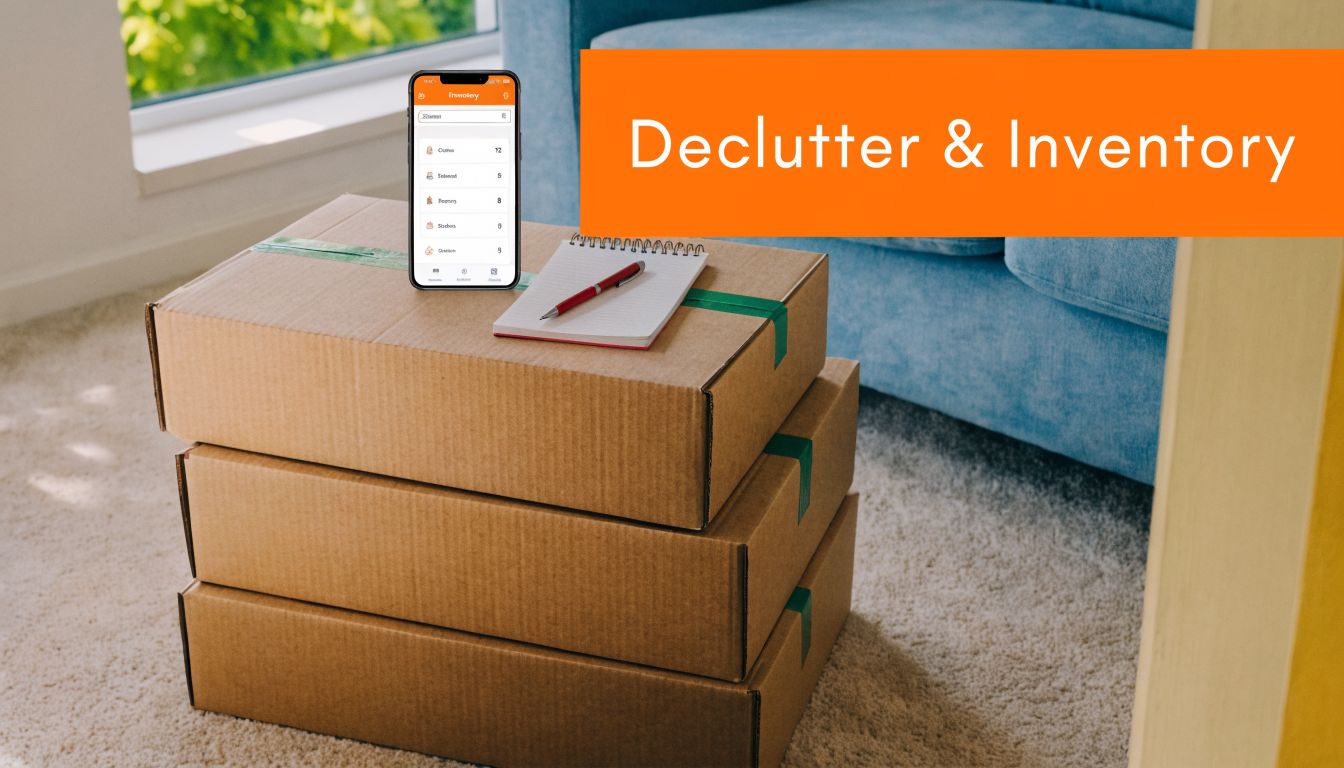
2. Sort, Declutter, and Inventory Your Belongings
Packing before decluttering is how people end up paying to move things they don’t even want. Sort first. Pack second. If storage is part of the plan, this step matters twice, because every unnecessary item costs space, time, and effort on both ends of the move.
The cleanest method is simple: keep, sell, donate, discard, and store. That fifth category matters. Some belongings don’t belong in daily use, but they also shouldn’t be thrown out in a rush. Seasonal items, inherited furniture, business records, and student room contents often fit that middle ground.
A practical starting point helps. Orange Box Self Storage has a useful guide on how to declutter your home if you want a room-by-room framework before you begin.
Build an inventory you can actually use
It's common to make one of two mistakes. They either write no inventory at all, or they make one so vague it’s useless later. “Kitchen stuff” won’t help when you need a specific pan, legal file, or student laptop stand from storage.
Instead, list by box or item. Number boxes. Photograph valuable items. Keep a simple spreadsheet or note on your phone with three fields: box number, contents, destination. For storage, add a fourth field for approximate location within the unit if you know it.
Try this approach:
- Start with low-emotion rooms: Bathrooms, utility areas, and spare rooms are easier wins than lofts full of memory boxes.
- Photograph high-value items: Images help with insurance records and condition tracking.
- Separate genuine storage items from delay items: Some belongings need storage. Others just need a decision.
- Declutter before buying more boxes: Fewer items usually means fewer packing materials and a smaller unit.
Students should be ruthless here. Term-time storage should hold what’s worth keeping, not everything that happened to be in the room on move-out day. Renters should pay special attention to anything that affects cleaning and deposit return. Homeowners should decide early which bulky items will stage better out of the house.
A labelled inventory saves time twice. Once when you load the unit, and again when you need something back.
3. Obtain Building Insurance and Moving Insurance Quotes
Insurance is easy to neglect because it doesn’t feel urgent until something goes wrong. On a move, that’s expensive thinking. You need to know what’s covered in transit, what’s covered once items are in storage, and when your new property cover starts.
Homeowners usually need buildings and contents arrangements to line up with completion. Renters should check contents cover and any limits on possessions away from home. Students often assume accommodation arrangements cover everything, then discover they don’t cover goods in storage or transport.
Check the gaps, not just the headline cover
A removal quote that says “insured” isn’t the same thing as a policy for the full value and type of your belongings. Ask what protection applies to breakage, loss, delay, and temporary storage. If you’re using self-storage, tell the insurer that items will be stored off-site and ask exactly what conditions apply.
Orange Box Self Storage states that its facilities include 24/7 CCTV monitoring, access controls, and climate-protected units. Those are practical details worth mentioning when you ask an insurer whether stored items are eligible under a given policy.
Use this step to compare policies properly:
- Check transit and storage separately: One may be covered while the other isn’t.
- Declare valuable items clearly: Jewellery, electronics, tools, and specialist equipment often need special attention.
- Read exclusions: Some policies restrict certain goods or have strict packing requirements.
- Keep receipts where possible: If you need to make a claim, proof matters.
There’s another reason not to leave this late. Removal costs in England rose 27% year-on-year to £17,831 in 2025, according to Best Value Conveyancing’s review of 2025 moving lessons. When the wider cost of moving is rising, avoidable loss gets even harder to absorb.
A practical trade-off applies here. The cheapest cover can look fine until you read the conditions. The better option is often the policy that matches the move you are making, including any storage period.
4. Notify Relevant UK Authorities and Service Providers of Address Change
Admin causes a surprising amount of post-move stress. Not because any single task is difficult, but because there are lots of them, each with slightly different timing. Miss one bank, insurer, or account, and the problem tends to show up later when you’re trying to settle in.
Start a written address-change list. Include government bodies, employers, schools or universities, banks, insurers, subscriptions, GP, dentist, and any service provider that sends post or verifies identity by address. If you’re a renter, add your landlord or letting agent. If you run a business, add Companies House, HMRC, suppliers, and client records.
Prioritise the organisations that can create problems fastest
Some changes matter more than others in the first week. Banking, insurance, HMRC records, and electoral registration should go near the top. Mail redirection should also be done early, because it covers the inevitable account you forgot.
Use Royal Mail Redirection so important post follows you while the rest of your admin catches up. Then work through your list in batches instead of trying to do everything in one sitting.
A clean order looks like this:
- Identity and finances: Banks, credit cards, insurers, HMRC.
- Legal residency and voting: Electoral registration and tenancy or ownership records.
- Daily living: Employer, GP, dentist, school, university.
- Ongoing accounts: Utilities, phone contracts, deliveries, subscriptions.
People often underestimate how long this stage takes. It’s rarely hard work, but it is repetitive. That’s exactly why it should be done before moving week, when your attention is split.
One practical point if you’re using storage during a staggered move. Keep a stable correspondence address active and consistent while items are in transit. That reduces the risk of bills, insurance notices, or account checks going to the wrong place.
Missed admin usually doesn’t fail loudly on day one. It fails later, when a payment, claim, or letter goes missing.
5. Arrange Utilities Disconnection and Connection Dates
Utility timing can ruin an otherwise well-planned move. Leave it too late and you’re chasing meter readings, broadband delays, and final bills while standing in a house full of boxes. Get ahead of it and the handover feels much cleaner.
Treat utilities as a timeline problem. You need end dates at the old property, start dates at the new one, and accurate records in between. Electricity, gas, water, broadband, mobile broadband if needed, and any monitored services should all go on the list.
Avoid paying for confusion
The most common mistake is assuming suppliers will “sort it out” from the moving date alone. They won’t. You need to contact them, give notice, provide the moving date, confirm the address details, and record any account references.
Broadband deserves special attention because installation windows can be awkward. If your work, study, or household depends on a fast connection, compare options early and choose an internet provider before moving week. Waiting until you’ve moved in can leave you using patchy temporary access for longer than expected.
A useful sequence is:
- Two to four weeks out: Contact gas, electricity, water, and broadband providers.
- A few days before the move: Confirm appointments and account details.
- On moving day: Photograph meter readings at the old property and the new one.
- After the move: Check final bills and opening statements against those readings.
This step matters for renters in particular. Clear readings and dated photos help if a landlord or supplier challenges usage. Homeowners in a chain should keep readings with their completion paperwork. Students should check whether utilities are included in accommodation before arranging anything independently.
There’s also a practical storage angle. If your move is staged and your main belongings are going into storage first, make sure your utility contact address and billing email remain accessible. You don’t want final bills landing at an address you’ve already left.
6. Pack Strategically Using Clear Labeling and Room-Specific Organization
Packing is where good intentions usually collapse. People buy boxes, fill them quickly, and promise themselves they’ll remember what went where. They won’t. A strategic moving list uk approach means packing for retrieval, not just transport.
The easiest way to stay in control is to label for three moments at once. The lift at the old property. The unload at the new property or storage unit. The first week when you need one specific item and don’t want to open six boxes to find it.
Orange Box Self Storage has practical advice on tips for packing when moving house that aligns well with this kind of system.

Label for people who don’t know your house
Your labels should help removers and your future self. “Bedroom” is not enough if there are three bedrooms. “Kitchen misc” is too broad. Use room name, brief contents, and whether the box is fragile, heavy, or open first.
If you want a visual system, use numbered boxes paired with a master list, or add colour coding with tape and stickers. Practical labels matter more than decorative ones, but if you want ideas for category systems, these storage box labels show how visual sorting can speed up unpacking.
Use these packing rules:
- Pack by room: Mixed boxes create chaos later.
- Write on multiple sides: Stacked boxes should still be readable.
- Keep heavy items in smaller boxes: Books and tools become unmanageable fast.
- Create open-first boxes: Kettle, mugs, chargers, bedding, cleaning basics, and toilet roll should never disappear into the general load.
For storage, think access, not just fit. Items you’ll want soon should go into clearly marked boxes and stay near the front. Long-term items can go deeper into the unit. Businesses should label archive boxes by function and retention need, not just by department name.
The best label tells a remover where it goes and tells you whether it’s worth opening today.
7. Confirm Moving Company Credentials and Finalize Moving Day Details
A quote isn’t a plan. Before moving day, turn the quote into a written operating agreement. Who arrives when. What vehicle is coming. What happens with delays. Whether items are going to one destination or split between a home and storage unit. Which access issues the crew already knows about.
Practical details trump generic reassurance. If your property has tight stairs, no lift, narrow hallways, shared parking, pedestrian access, or awkward loading, say so early and in writing. A remover who knows that beforehand can plan labour, vehicle size, and timing properly.
Ask the awkward questions before the lorry arrives
Some properties look straightforward on paper and aren’t straightforward at all in person. Restricted access is one of the biggest examples. Guidance on this is often weak, even though access issues can add time, labour, and cost. A summary in Leo Van’s moving checklist research notes that access delays were reported by a notable share of movers, with extra labour costs attached, and highlights the practical challenge of pedestrian-only paths, steep approaches, and narrow entrances.
That means your remover needs clear information on:
- Parking and approach: Can the van stop outside, or is there a carry distance?
- Vertical movement: Stairs, loft conversions, upper-floor flats, no lift.
- Bulky items: Sofas, appliances, desks, wardrobes, gym kit.
- Split delivery: Which items go to the new home and which go straight to storage.
If you’re using Orange Box Self Storage for part of the load, confirm the facility address, access arrangements, and contact details with the removal company in advance. Businesses should also confirm how confidential records, equipment, or stock will be handled.
Written confirmation is where disputes get avoided. Not because anyone expects a problem, but because the moving day environment is noisy, rushed, and easy to misunderstand. Good removers welcome clarity.
8. Create Moving Day Emergency Kit and Important Documents Box
Your emergency kit should not be large. It should be reliable. Keep it with you, not in the removal van, not in storage, and not mixed into the general packing. If the move goes long, keys are delayed, or you need paperwork quickly, this box or bag is what keeps the day workable.
For families, that means medication, chargers, snacks, water, wipes, basic cleaning supplies, kettle essentials, and one night of clothes. For renters, add tenancy documents, inventory reports, and deposit paperwork. For homeowners, keep completion documents, ID, insurance details, and contact numbers for solicitor, agent, and removers. For students, include accommodation papers, university ID, medication, chargers, and one set of bedding basics.

Keep original documents out of the main load
Important papers disappear easily during a move because they’re usually flat, light, and mixed with other files. Put passports, tenancy agreements, mortgage paperwork, insurance records, medical information, and banking details in a waterproof folder that stays with you.
A short paper backup is still worth having, even if most records are digital. Phones die. Signals drop. Apps log you out at bad moments.
Keep this list visible:
- Identity documents: Passport, driving licence, student ID if relevant.
- Property documents: Tenancy agreement, inventory, completion papers, keys record.
- Money and contact details: Bank cards, emergency cash, key phone numbers.
- Health and care items: Prescriptions, medication, child essentials, pet supplies.
I’ve seen moves run smoothly on paper and still feel chaotic because people couldn’t find chargers, lease documents, or pain relief when they needed them. This box fixes that.
Keep one bag as if you’ll spend the first night without access to the rest of your things. Sometimes that’s exactly what happens.
9. Measure Storage Unit and Plan Layout Before Moving Day
A storage unit can save a move or complicate it. The difference is usually decided before the van arrives.
If the unit is part of your move plan, treat it like a temporary room with a clear purpose, not an overflow space for whatever will not fit on the day. That matters whether you are a homeowner between completion dates, a renter managing a chain break, or a student storing half a room over summer. Good layout planning cuts repeat handling, lowers breakage risk, and makes retrieval far easier.
Go to the unit in advance if possible. Measure the internal floor space, the usable height, the door opening, and the access around the entrance. A quoted unit size does not tell you whether a sofa clears the doorway, whether wardrobes can stand upright, or whether boxed kitchenware will need to be stacked lower than expected. For a realistic sense of capacity, use a self-storage unit size guide for UK moves, then sketch your own layout based on what you own.
Plan the load in retrieval order.
Items you may need within days should sit near the front. Long-term storage can go at the back. Fragile or high-value belongings need a protected position where nothing heavy can shift onto them. If you expect to visit the unit before the final move-in, leave a narrow walkway. Losing 10 percent of floor area to access is often a better trade-off than unpacking half the unit to reach one box.
A simple layout works well:
- Front of unit: Open-first boxes, cleaning supplies, tool kit, spare bedding, document copies.
- Middle: Strong, stackable boxes with labels facing out.
- Back: Seasonal items, archived paperwork, furniture you will not need for a while.
- Edges and upper stacks: Light, low-risk items only.
This is also the point to separate by mover type. Homeowners often need staged access because completion dates, decorating, and furniture delivery rarely line up perfectly. Renters usually benefit from keeping deposit-related cleaning supplies and basic household items near the front, especially if they are juggling handover timings. Students should keep next-term basics easy to reach, not buried behind cookware, posters, and storage crates. If end-of-tenancy cleaning is part of the plan, keep those supplies accessible and work from an ultimate moving cleaning checklist rather than guessing what still needs doing.
I advise writing a rough map on paper or in your phone before moving day. Mark where furniture, box groups, and breakables will go. Then hand that plan to the removers or whoever is helping. People load faster when decisions are already made, and fast decisions on the day are usually the ones that leave your kettle, screws, or laptop stand trapped behind three wardrobes.
Storage works best as part of the move plan from the start. Used properly, it gives you breathing room, better timing, and fewer expensive mistakes.
10. Complete Moving Day Walkthrough, Damage Assessment, Final Checks and Meter Readings
At 4:30 pm, the van is unloaded, everyone is tired, and the easiest decision is to assume the job is done. It rarely is. The last walkthrough is the point where missed damage, forgotten belongings, cleaning problems, and wrong meter readings turn into real costs.
Treat this stage like a handover, not an afterthought. Storage helps here as well. If part of your load is going into a unit rather than being forced into every spare corner of the new place, you can inspect rooms properly, spot defects before they disappear behind furniture, and keep the move under control.
Start at the old property once it is empty. Open every cupboard and drawer. Check the loft hatch, shed, garage, garden, under-stairs space, behind doors, and inside appliances that are staying. Fridge compartments, freezer drawers, washing machine drums, and outdoor bins catch more left-behind items than people expect.
Then inspect the new property before the boxes spread everywhere. Look at walls, flooring, windows, radiators, kitchen units, and bathroom fittings while access is clear. Test locks. Check that windows close properly. If anything is damaged or not as agreed, photograph it before your belongings make the timeline harder to prove.
Use the same sequence every time:
- Old property: Empty-room photos, final cleaning check, appliance check, meter readings, keys handover.
- New property: Arrival photos, visible damage record, meter readings, lock and window check, first-priority safety issues.
- Shared record: Email the photos and notes to yourself straight away. Renters should also send relevant images to the landlord or letting agent.
Photos do three jobs at once. They support deposit discussions, create a condition record for buyers from day one, and back up utility disputes if opening or closing readings are challenged later.
Meter readings need more than a number written on the back of a receipt. Take a clear photo of each meter, include the serial number if visible, and note the date and property address in your phone. Gas, electricity, and water should all be recorded if they are metered. Submit them to suppliers the same day where possible.
Cleaning still matters at this point, especially for renters trying to protect the deposit and for students leaving shared accommodation where responsibility gets blurred. Work from an ultimate moving cleaning checklist if the property needs a final pass, rather than relying on memory after a long day.
One practical rule applies to every mover type. Do not assume you will come back later for the last few checks. Homeowners are often pulled into completion calls and key issues. Renters are working to handover times. Students are usually balancing travel, collection windows, and shared move-out chaos. Finish the sweep while you still have access, good light, and a clear reason to be thorough.
UK Moving Checklist: 10-Item Comparison
| Task | Implementation complexity | Resource requirements | Expected outcomes | Ideal use cases | Key advantages |
|---|---|---|---|---|---|
| Arrange Your Moving Day and Book Storage Early | Low–Medium (advance planning & coordination) | Time (4–8 weeks), deposit/payment, internet access | Reserved unit and coordinated removals on moving day | Peak-season moves, families, students, businesses needing guaranteed space | Ensures availability, reduces day-of stress, enables direct delivery |
| Sort, Declutter, and Inventory Your Belongings | High (time‑intensive, detailed work) | Time (days–weeks), apps/spreadsheets, camera, packing supplies | Smaller storage needs, accurate inventory for insurance | Large households, businesses archiving, students minimizing items | Lowers costs, simplifies retrieval, supports insurance claims |
| Obtain Building Insurance and Moving Insurance Quotes | Medium (documentation & comparison) | Personal item lists, receipts/photos, budget for premiums | Financial protection for transit and storage; legal compliance | Mortgaged properties, high‑value items, long storage periods | Reduces financial risk, meets lender/insurer requirements |
| Notify Relevant UK Authorities and Service Providers of Address Change | Medium–High (many organisations) | Time (2–3 hours total), Royal Mail fee, account details | Continued services, correct tax/benefit records, reduced fraud risk | All movers, renters, homeowners, businesses | Prevents missed mail/bills, protects identity, maintains records |
| Arrange Utilities Disconnection and Connection Dates | High (scheduling multiple providers) | Contacting providers, meter readings, possible fees, time | Continuous services at new address, accurate final billing | Anyone changing residence, especially with tight move windows | Avoids service gaps and double billing, allows cost comparison |
| Pack Strategically Using Clear Labeling and Room-Specific Organization | Medium–High (systematic packing) | Boxes, labels, tape, time, inventory list | Faster loading/unloading, easier unpacking, lower damage risk | Families, users of storage units, moves with removers | Speeds move, simplifies retrieval, improves insurance documentation |
| Confirm Moving Company Credentials and Finalize Moving Day Details | Medium (quotes, checks, contracts) | Multiple quotes, accreditation checks, written agreements | Professional handling, clear expectations, insured transit | Long-distance moves, high‑value items, complex access requirements | Reduces disputes, ensures insurance cover, enables direct-to-storage delivery |
| Create Moving Day Emergency Kit and Important Documents Box | Low (simple preparation) | Small waterproof box/folder, essential documents, personal items | Immediate access to critical items, smoother first days post-move | All movers, especially when items go into storage | Protects vital documents, reduces immediate disruption |
| Measure Storage Unit and Plan Layout Before Moving Day | Low–Medium (site visit & sketching) | Visit time, tape measure, camera, simple floor plan | Efficient loading, avoids fit issues, optimized access arrangement | Booked storage users, tight or unfamiliar unit sizes | Prevents surprises, maximises usable space, guides removers |
| Complete Moving Day Walkthrough, Damage Assessment, Final Checks and Meter Readings | Medium (systematic inspection) | Camera/phone, checklist, time for walkthrough(s) | Evidence for deposits/claims, accurate final bills, secured property | Renters, sellers/buyers, anyone wanting deposit protection | Protects finances, prevents disputes, documents condition conclusively |
Beyond the Boxes: Settling Into Your New Home
You open the front door, the van has gone, and the boxes are inside. The move is not finished. It has entered the stage where small decisions shape how expensive, cluttered, or manageable the next month becomes.
Start by making the property work for daily life. Set up the bed, towels, toiletries, kettle, mugs, phone chargers, medication, work kit, study kit, and children’s basics before opening anything decorative. I have seen plenty of moves drift off course because people start on pictures and ornaments while still eating takeaway with no cutlery and no idea which box holds the bedding.
The first week needs a short, practical list. Register with a GP and dentist if you have changed area. Learn the bin collection day, parking rules, entry systems, and any building-specific access procedures. Test smoke alarms, heating controls, window locks, appliances, and internet setup. Renters should also log condition issues early and keep photos dated. Homeowners should note repair jobs before they disappear into the background.
This is also the point where storage proves its value as part of the plan, not as a last-minute overflow option. Do not rush every stored item back into the property just because you have the keys. Live in the space first. Then decide what earns space in the home, what should stay stored for a few more weeks, and what can leave altogether.
That trade-off matters for different reasons depending on the move. Homeowners often need breathing room while they decorate, wait for furniture, or work through snagging and repairs. Renters may be dealing with less storage, stricter layouts, or a gap between tenancies. Students often need a short-term buffer between term dates, summer travel, and the next house share. Businesses face the same issue with archive files, stock, and equipment that do not need to sit on the main premises from day one.
As noted earlier, UK movers are not one uniform group. Some move often and already know the pressure points. Others move rarely and underestimate how long the settling-in stage takes. A checklist gets you through the transaction. A project plan gets you through the first month without filling every room with unopened boxes and avoidable mistakes.
Use storage with a review date. Give yourself two to four weeks, then assess what you have used. If a box stays unopened and unmissed, that tells you something. It may belong in longer-term storage, donation, sale, or disposal. That approach usually saves money compared with forcing everything into the home at once, then paying again to remove what never fit the space or your routine.
A good move ends when the property works properly for the people using it. Storage can help you get there with fewer rushed decisions and less clutter. If that approach fits your move, Orange Box Self Storage is one option for household, student, business, and container storage across Nottingham, Derby, Long Eaton and Beeston.