


Beyond the garage, loft, and spare room, a common issue presents itself. There’s more stuff than usable space. A family starts packing for a move and realises half the house needs to disappear for a few weeks. A student finishes term and doesn’t want to drag a desk chair, bedding, and kitchen kit back home. A growing business fills every cupboard with stock, files, and equipment until the office stops working as an office.
That’s where self storage becomes practical, not just convenient. Used well, it gives you breathing room without forcing rushed decisions about what to keep, sell, archive, or move. It can act as a short-term buffer during change or a longer-term system for keeping important items secure and accessible.
In places such as Nottingham and Derby, that flexibility matters. People move between rentals, renovate older homes, launch side businesses from spare bedrooms, and need somewhere dependable for everything that doesn’t fit on site. A good unit isn’t just empty square footage. It’s a way to separate what you need daily from what you need safely stored.
If you’re weighing up options, Emmanuel Transport's storage guide is a useful companion read for thinking through broader storage scenarios.
Below are ten practical uses for self storage, with straightforward advice on what works, what doesn’t, how to pack properly, and how different users, from homeowners and students to tradespeople and larger organisations, can choose the right setup.
1. Personal Household Decluttering & Seasonal Storage
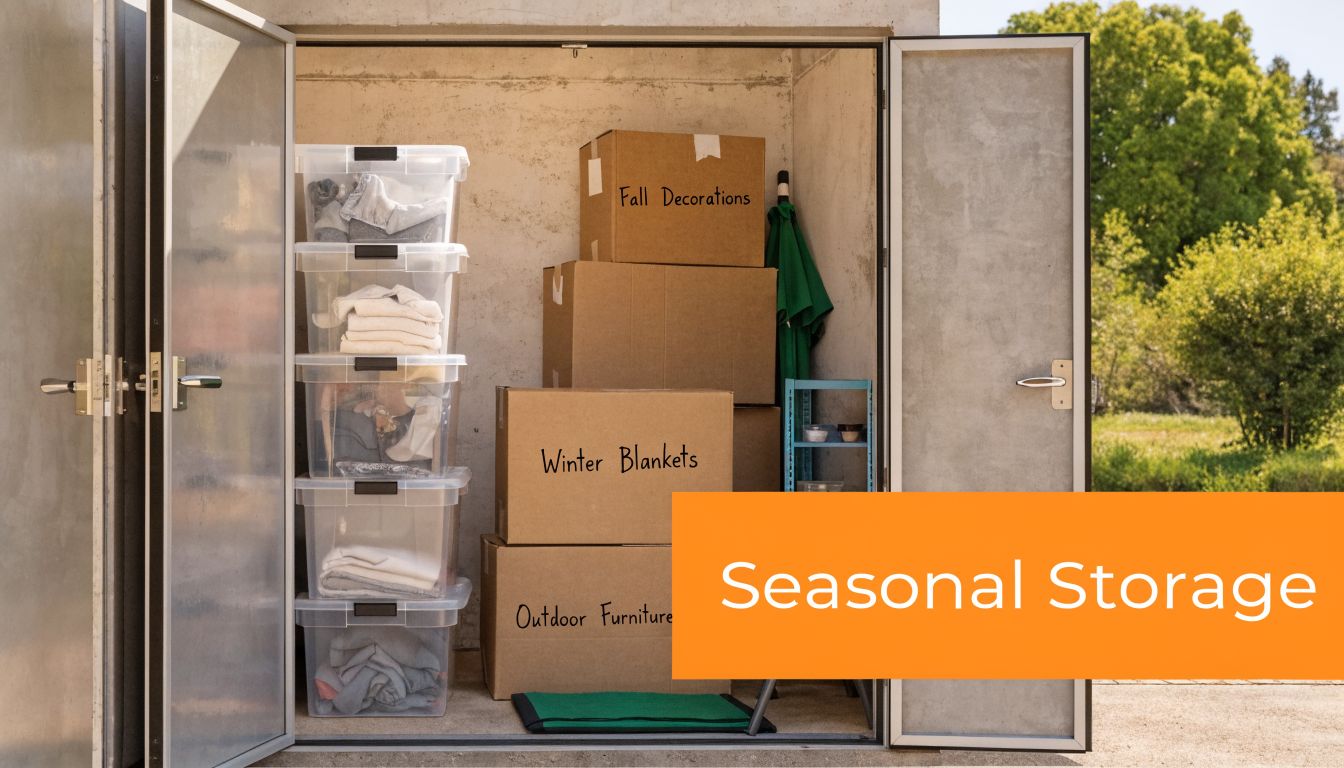
The most common use for self storage is still one of the smartest. You move out the items you need occasionally, not constantly. That might mean Christmas decorations in November, patio furniture through winter, suitcases, camping kit, kids’ outgrown toys, or the armchair that fits your next house better than your current one.
For homeowners and renters, this works best when the unit becomes an extension of the house, not a dumping ground. A small locker or compact unit suits boxes, soft furnishings, and decorations. Once you start storing dining sets, white goods, or multiple bikes, you’ll want enough room to stack safely and still reach the back wall.
What works in practice
Clear plastic tubs usually beat mixed cardboard boxes for long-term household storage. You can see what’s inside, they stack more cleanly, and they cope better with repeat handling. Label every side, not just the lid, and keep a phone note or spreadsheet with a simple inventory.
A basic layout saves a lot of hassle later:
- Front zone for frequent-use items: Keep decorations, travel bags, and sports kit nearest the door.
- Middle zone for medium-priority storage: Place spare kitchenware, occasional furniture, and archived household items here.
- Back zone for long-hold items: Put keepsakes, boxed baby items, and items you’re storing for future plans at the rear.
Practical rule: If you’ll need it within the next month, don’t bury it behind a sofa, ten boxes, and a dismantled bed frame.
Common mistakes
People often pay for storage, then lose the benefit by packing badly. Overfilled cardboard boxes split. Loose cables vanish. Furniture gets scraped because nothing was covered. The other frequent problem is choosing a unit that’s too small, then creating a floor-to-ceiling wall you can’t access.
For decluttering, storage should create calm at home. If it creates chaos in the unit, the system needs adjusting.
2. Student Storage for Term Breaks & Study Abroad
Students often need storage for one awkward gap. The tenancy ends before the next one starts, summer holidays run long, or a study abroad term means leaving a room set-up behind. Self storage solves that without repeated trips home or trying to squeeze everything into a friend’s garage.
This is especially useful for shared houses. One small unit can hold bedding, books, kitchen gear, desk lamps, sports kit, and flat-pack furniture from several people if everyone packs properly. If you’re planning around term dates, the smartest move is to reserve early, especially before end-of-term demand builds.

Best fit for student items
A compact unit usually covers the basics for one student. Shared storage makes more sense when you’re splitting the cost of larger items like mini fridges, desks, and common kitchen equipment. If you’re studying abroad, pack as though someone else may need to collect something on your behalf. That means clear labels, grouped boxes, and a shared inventory.
Orange Box Self Storage has a dedicated page on storage options for students that’s useful when comparing short-term storage around academic moves.
How students save money without making a mess
The cheapest option isn’t always the best one. A tiny unit packed carelessly can turn into a Tetris problem on move-out day. A slightly larger space can save time, damage, and arguments between housemates.
A few habits make a big difference:
- Book ahead of deadlines: Leave booking too late and your preferred unit size may not be available when term ends.
- Box loose items together: Shoes, chargers, stationery, and kitchen bits should never travel loose.
- Agree one inventory owner: One person should track what’s inside and where it sits in the unit.
Share the unit if it helps the budget. Don’t share responsibility so widely that no one knows where the kettle, passport folder, or tenancy papers have gone.
3. Business Document Archiving & Compliance Storage
Businesses rarely run out of office space because of desks. They run out because paper gradually takes over. Contracts, invoices, tax files, HR records, project folders, and legacy documents start in cabinets and end up in every spare cupboard. At that point, off-site storage stops being optional and starts being operational.
Purpose-built storage can work well for long-term business record retention, especially for tax documentation, legal files, and sensitive archives. Climate-controlled units are increasingly used by UK organisations to preserve paperwork while supporting retention schedules and data protection requirements, according to this document archiving overview. The same reference also notes that organisations can reduce administrative overhead by up to 40% by centralising records in purpose-built facilities rather than maintaining distributed filing systems across multiple office locations.
A better archive system
A storage unit full of anonymous banker’s boxes isn’t an archive. It’s delayed frustration. The better method is to create a simple index before anything moves off site. Each box gets a reference code, a date range, a department tag, and a destruction or review date where appropriate.
For teams managing regulated records, guidance on how long to keep business records helps when deciding what should stay, what can be reviewed, and what must never be boxed without proper retention checks.
What businesses should prioritise
Security matters, but retrieval matters too. If a file is needed for an audit, insurance claim, or legal query, staff should be able to locate it quickly without opening twenty boxes. That’s why shelving, aisle space, and digital indexing matter more than people expect.
Use this structure:
- Batch by retention category: Keep finance, HR, legal, and operational records separate.
- Mark destruction review dates clearly: Don’t rely on memory for compliance-led disposal.
- Protect mixed media properly: Hard drives, film reels, and other sensitive media need secure, stable storage conditions.
For law firms, clinics, accountants, and larger office-based teams, this is one of the most overlooked Uses for Self Storage because it saves both room and administrative effort when managed properly.
4. E-commerce Inventory & Stock Management
When a business starts online, stock usually lives wherever there’s space. First it’s the spare room. Then the landing. Then half the garage. Once picking orders starts affecting home life or office workflow, storage becomes the cleaner option.
Self storage suits e-commerce businesses that need flexibility without committing to a full warehouse. Clothing, beauty products, packaged gifts, printed merchandise, spare parts, and seasonal product lines all fit this model well. The key is not just where the stock sits, but how quickly you can count it, pick it, and restock it.
Set the unit up like a miniature warehouse
A good stock unit should have a simple flow. Goods in at one side. Active pick faces in the middle. Reserve stock at the rear or on higher shelving. If you’re storing boxed products, use racking that keeps cartons off the floor and leaves clear walkways.
FIFO matters for more than food. If packaging changes, labels update, or older variants need to clear first, the oldest stock should always be easiest to access. Businesses that skip this often end up with duplicate purchasing, hidden stock, or damaged packaging from too much reshuffling.
For growing retailers, inventory management for small businesses is worth reviewing before you choose unit layout, shelving, and stock controls.
Where operators get it wrong
The biggest mistake is treating storage as overflow rather than a system. If the unit becomes a place where random cartons go to disappear, it won’t support growth. Another weak point is underestimating how much room packing benches, labels, and order staging need.
A practical set-up usually includes:
- Clear bin locations: Each product family should live in one predictable place.
- Regular stock counts: Small, frequent checks catch discrepancies faster than occasional deep counts.
- Packing supplies in one zone: Tape, void fill, labels, and mailers should never be scattered around the unit.
Done properly, storage helps a small seller stay organised during busy periods without renting more commercial premises than they need.
5. Trades & Contractors Container Storage
Tradespeople need storage that handles rough use, early starts, and equipment that doesn’t fit neatly into domestic-sized units. Electricians, builders, outdoor contractors, plumbers, and fit-out teams often need secure space for ladders, tool chests, cable drums, fixings, and bulky materials that shouldn’t be left in vans or on site.
Container storage is often the most practical fit for this kind of work. It’s straightforward, durable, and easier to load with awkward equipment. For a sole trader, it can replace a cluttered driveway or overstuffed garage. For a small team, it becomes a working base between jobs.
Store tools for speed, not just security
A lot of contractors think first about theft prevention, and they should. But daily usability matters just as much. If every morning starts with twenty minutes of moving gear to reach one mitre saw, the container is working against you.
The best contractor set-ups usually include heavy-duty shelving for consumables, marked bins for fittings, and a serial number log for power tools. Silica gel packs in toolboxes help manage moisture around metal components, and clearly marked kit reduces confusion when multiple staff use the same storage space.
A separate logistics decision also matters. Some firms use storage alongside wider freight or customs arrangements. If that’s relevant, this guide on how to optimize cash flow with bonded logistics offers context around broader warehousing decisions.
Security starts with locks and access control. Efficiency starts with knowing exactly where the SDS drill bits, cable ties, and spare batteries are before the van leaves.
Good fits and poor fits
Container storage is ideal for sturdy equipment, boxed materials, spare fixtures, and site tools. It’s less suitable for delicate electronics, valuable paperwork, or anything highly sensitive to damp unless you’re using a more controlled environment.
If your stock includes adhesives, finishes, paperwork, or specialist instruments, split those out. Not everything should live in the same space just because it belongs to the same business.
6. Moving & Relocation Storage Solutions
Moves rarely line up neatly. Completion dates shift. Renovations run over. Keys are delayed. Office fit-outs take longer than planned. Storage gives you a buffer, and that buffer can remove a lot of pressure from an already stressful process.
For households, this often means storing furniture and boxed belongings between properties or during renovation works. For businesses, it may mean clearing old premises before the new space is ready, or phasing a move by department instead of trying to relocate everything in one day.
Pack for the next destination
The smartest move-related storage jobs are packed by room and by sequence. If you know the dining table won’t be needed until the final week of the move, it can sit further back. If the kettle, bedding, and tool bag are needed immediately on move-in day, they should be loaded last so they’re first out.
This also applies during refurbishments. If decorators, plumbers, or floor fitters are working through the property, label boxes with both contents and destination room. That cuts down on double-handling and stops everything ending up in one giant stack in the hallway when it comes back out.
Practical move-day habits
These habits save time:
- Reserve access in advance: If you’re using removals teams or larger vans, check loading arrangements early.
- Keep one essentials section: Cleaning supplies, documents, chargers, and basic tools should be easy to reach.
- Use protective covers: Sofas, mattresses, and wardrobes pick up dirt and damage fastest during transitional storage.
A storage unit gives you flexibility. It doesn’t replace planning. The people who get the most value from it still map out what goes in first, what comes out first, and what can stay boxed until the dust settles.
7. Vehicle & Recreational Equipment Storage
Not every vehicle belongs on the drive all year. Motorcycles, classic cars, bicycles, kayaks, camping trailers, and hobby equipment often need secure off-season storage, especially when weather exposure or limited parking starts becoming a problem.
This use case is about preservation as much as space. If you’ve invested in a classic vehicle, a quality road bike, or specialist gear, leaving it under a tarp in the garden usually isn’t the long-term answer. Storage gives you a more controlled environment and reduces the temptation to cram expensive equipment into hallways, sheds, or shared garages.
Protecting vehicles properly
Good storage starts before the item enters the unit. Clean the vehicle or equipment first. Dirt, road salt, moisture, and food residue all create avoidable problems over time. For motorcycles and cars, top up tyre pressure, use suitable covers, and maintain the battery as needed. For bikes and paddlesports kit, dry everything fully before storing.
For larger recreational vehicles, this broader complete RV winterization guide is a useful reference for seasonal preparation principles, even if your own equipment is smaller.
Storage habits that prevent damage
A few simple routines matter more than people expect:
- Use breathable covers: These help protect surfaces without trapping moisture.
- Lift items off bare floors when appropriate: Boards, stands, or racks can help reduce long stationary pressure.
- Schedule checks: Visit periodically to inspect tyres, batteries, and general condition.
If an item has rubber, seals, moving parts, or electrics, prepare it before storage. Don’t assume a locked unit alone is enough protection.
This is one of the more practical Uses for Self Storage for hobbyists and households with limited parking, especially when the item is valuable but only used part of the year.
8. Climate-Controlled Storage for Sensitive Goods
Some items need more than a dry room and a strong lock. They need stable conditions. That includes artwork, musical instruments, vintage textiles, electronics, antiques, collectibles, photographic archives, and some business media.
This matters in the UK because damp and condensation are real concerns, particularly in areas that experience seasonal humidity shifts. One gap identified in storage content aimed at UK customers is that Midlands conditions such as Nottingham and Derby can create specific preservation issues, while many general guides stay too broad. The same gap analysis notes that 67% of stored items suffer moisture damage annually, highlighting why climate protection becomes a key decision for vulnerable belongings, according to this review of climate-control content gaps.
Which items need extra protection
Not every customer needs climate control. Plastic patio chairs and sealed garden tools don’t need the same environment as a violin, film negatives, or a box of family photographs. The trick is matching the unit to the item, not paying for specialist conditions out of habit.
Climate-controlled space is usually worth considering for:
- Paper-based archives and photographs: Moisture and temperature swings can cause warping, sticking, or mould issues.
- Electronics and media: Hard drives, vintage audio gear, and specialist equipment benefit from stable conditions.
- Textiles, instruments, and collectibles: Natural materials and delicate finishes are more vulnerable to damp.
Packing matters as much as the room
Even in a climate-protected unit, poor packing can undo the benefit. Artwork should be wrapped in acid-free paper rather than plastic if breathability matters. Instruments should be stored in proper cases. Collectibles should never be packed tightly enough to chip, crack, or transfer colour.
This is the point where storage advice becomes less generic. Sensitive goods need both the right environment and the right handling. One without the other is only half a solution.
9. Event, Exhibition & Promotion Material Storage
Event equipment is awkward by nature. It’s bulky, fragile in parts, valuable in others, and only needed at specific times. Exhibition stands, pop-up backdrops, branded counters, literature holders, AV gear, banner bases, lighting, and giveaway stock can swallow office space very quickly.
For agencies, organisers, venues, and in-house marketing teams, self storage works well as an operational hub between events. It keeps materials together, protects branded assets from damage, and makes it easier to prep for the next show without digging through cupboards and meeting rooms.
Build a repeatable event storage system
The teams that get the most from this kind of unit treat it like kit storage, not dead space. Every stand component should be labelled. Every cable should be coiled and stored by type. Spare fixtures, branded tablecloths, screens, and printed graphics should each have a home.
A digital layout helps too. If one staff member can direct another to “shelf two, left side, blue crate, exhibition electrics”, handovers become much easier. That matters when prep often happens under tight deadlines.
How to avoid expensive damage
Event materials are often more delicate than they look. Printed panels scuff. Connectors go missing. Cables knot into useless piles. AV cases get raided for unrelated jobs and never fully rebuilt.
Use these habits:
- Disassemble and label all parts: Never leave modular stands half-assembled unless they’re designed for it.
- Store cables on racks or in marked cases: This saves time and extends cable life.
- Separate consumables from core kit: Leaflets, giveaways, and spare fixings shouldn’t be mixed with high-value display components.
Marketing teams often overlook storage until after an event. In practice, the best time to solve it is before the first stand ever leaves the office.
10. Disaster Recovery & Emergency Storage
Some storage is about convenience. This type is about resilience. Businesses that rely on critical hardware, spare devices, archived recovery documents, or emergency stock often need a separate location in case the main premises become unusable.
That might include encrypted backup drives, spare POS terminals, replacement networking equipment, printed continuity plans, or essential records that must remain available even if the office suffers fire or flood damage. The value is in separation. If everything sits in one building, one incident can disrupt all of it at once.
A practical continuity buffer
For emergency use, the unit should hold items that help the business restart or operate in a reduced but workable state. That’s different from storing only old IT equipment. The contents should be current, tested, and known to key staff.
Use a written access protocol. Decide who has authority to retrieve equipment, where keys or credentials are held, and how stored items are checked. An emergency unit nobody can access quickly isn’t much use when systems go down.
Keep an emergency contact list and key-holder details with the storage records, and make sure more than one senior person knows the retrieval process.
What to store and maintain
A sensible emergency storage plan usually includes:
- Verified hardware: Spare terminals, tested backup devices, and essential peripherals.
- Protected digital media: Encrypted drives stored securely and checked on a schedule.
- Core paperwork: Recovery procedures, supplier contacts, and critical operational records.
Review the contents regularly. Hardware becomes outdated. Password procedures change. Contact lists age badly. Emergency storage only works if it stays current.
Self Storage: Top 10 Uses Comparison
| Use case | Implementation complexity | Resource requirements | Expected outcomes | Ideal use cases | Key advantages |
|---|---|---|---|---|---|
| Personal Household Decluttering & Seasonal Storage | Low, simple rental and packing | Small to medium units, bins, vehicle trips | More living space, accessible seasonal items | Homeowners and renters with seasonal/bulky items | Flexible terms, secure access, variety of unit sizes |
| Student Storage for Term Breaks & Study Abroad | Low, short-term logistics aligned to semesters | Short-term contracts, packing supplies, online booking | Cost-effective temporary storage, avoids shipping | Students on term breaks or studying abroad | Affordable short-term options, shared units possible |
| Business Document Archiving & Compliance Storage | Medium–High, indexing and regulatory processes | Shelving, climate control, document indexing services | Regulatory compliance, freed office space, disaster resilience | Law firms, clinics, regulated businesses | Secure long-term retention, managed retrieval services |
| E‑commerce Inventory & Stock Management | High, integration with inventory and fulfillment | Wide-door units, forklifts, pick‑and‑pack services, WMS integration | Scalable stock control, faster order fulfilment | Online retailers, seasonal sellers, growing brands | Scalability, centralised fulfilment, peak demand handling |
| Trades & Contractors Container Storage | Low–Medium, robust on-site storage needs | Weatherproof containers, drive-up access, heavy‑duty locks | Secure tools and materials, fewer transport trips | Builders, landscapers, electricians | Easy vehicle access, secure overnight storage, durable containers |
| Moving & Relocation Storage Solutions | Medium, coordinated short-term logistics | Packing supplies, loading bays, trolleys, short-term contracts | Smoother moves, phased unpacking, reduced downtime | Home and business relocations, renovations | Short-term flexibility, dedicated loading facilities |
| Vehicle & Recreational Equipment Storage | Medium, vehicle prep and space requirements | Indoor bays, CCTV, servicing areas, charging points | Protection from weather/theft, frees home garage space | Classic cars, motorcycles, boats, bicycles | Secure climate options, 24/7 access, vehicle servicing |
| Climate‑Controlled Storage for Sensitive Goods | High, environmental controls and monitoring | HVAC, humidity controls, air filtration, monitoring | Preservation of delicate items, reduced degradation | Art dealers, wine collectors, archives, instruments | Stable environment, reduced mould/warping, peace of mind |
| Event, Exhibition & Promotion Material Storage | Medium–High, large-scale handling and staging | High‑ceiling bays, drive-in access, forklift services | Streamlined logistics between events, reduced urban warehousing | Trade shows, touring events, marketing agencies | Space for bulky items, centralised staging, on-demand handling |
| Disaster Recovery & Emergency Storage | High, security and redundancy planning | Vault-style units, fire/flood resistance, geographic redundancy | Business continuity, rapid recovery, reduced downtime | IT firms, retailers, businesses with critical assets | High security, rapid access to backups, minimized business interruption |
Making the Right Choice for Your Storage Needs
The best storage choice usually comes down to three things. What you’re storing, how often you’ll need it, and how long it needs to stay there. Once those are clear, most of the practical decisions become much easier.
For homeowners and renters, the main question is usually access. If you’re storing seasonal decorations, camping kit, spare furniture, or the contents of a room during renovation, you want a unit that’s easy to organise and easy to revisit. It’s worth paying attention to layout, not just size. A slightly larger unit can be better value than a smaller one packed too tightly to use properly.
Students usually need flexibility first. Shorter stays, shared units, and simple packing systems matter more than elaborate storage features. If several people are splitting one unit, the success of the arrangement often depends less on price and more on whether everyone agrees how items are labelled, grouped, and retrieved.
Tradespeople and contractors need durability and speed. If your working day depends on getting tools and materials in and out without delays, choose storage that supports loading, heavier items, and straightforward organisation. A secure container or larger-access unit often makes more sense than trying to force trade equipment into a domestic-style set-up.
For businesses, the storage decision is usually operational. Archived records need indexing and secure handling. Stock needs space to be counted and picked. Event kit needs labelling and repeatable layout. Emergency storage needs controlled access and regular review. In other words, the unit itself matters, but the system inside it matters more.
Climate control is where people most often either overspend or underspecify. Some items need stable conditions, especially sensitive archives, electronics, instruments, collectibles, and moisture-prone materials. Others don’t. The right choice is item-specific. If you’re unsure, list the contents by material and value before you book. That usually makes the answer clearer.
It also helps to be honest about timeline creep. A storage need that starts as “just for a month” often lasts longer during moves, refurbishments, academic transitions, or business growth. That doesn’t mean storage is the wrong answer. It means flexible terms and a realistic packing plan are worth prioritising from the start.
If you’re comparing options around Nottingham, Derby, Long Eaton, or nearby areas, Orange Box Self Storage is one relevant provider to look at for personal, student, business, and container storage. The practical advantage in speaking to a local provider is that you can match the unit to the actual job instead of guessing from square footage alone.
Good self storage should do one simple thing well. It should give you back usable space without making your life harder somewhere else. When the unit size, access pattern, security level, and packing method all fit the job, storage becomes less of a holding area and more of a working solution.
If you need help matching household items, student belongings, business records, stock, or contractor equipment to the right unit, Orange Box Self Storage offers flexible storage options across Nottingham, Derby, Long Eaton and Beeston, with a range of unit sizes and practical support for both short-term and long-term storage.